Purity Without Charcoal
Filtration
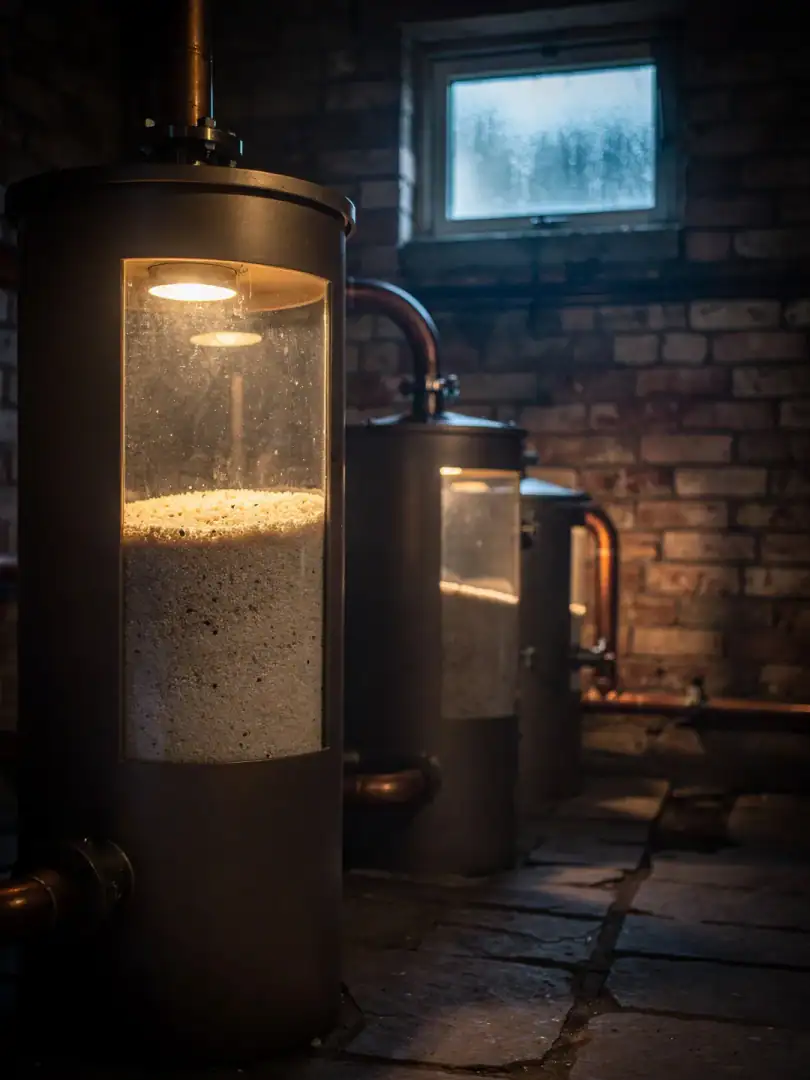
Many vodkas are filtered further after distillation. Some distilleries use birch charcoal, others wood charcoal, quartz sand, or even silver. This is meant to pull out any last unwanted aromas from the raw spirit that distillation alone didn't catch. In Åhus, the distillery takes a different path. According to the company, it largely skips this extra step. This choice is deliberate; it's meant to avoid blurring the character built by the column afterward.
The reason lies in the column itself, which has stood in Åhus since L.O. Smith's time. Because the mash runs through many plates continuously there, rather than being distilled just once or twice, it leaves the process already carrying very few fusel oils. What other distilleries have to filter out afterward is, according to the maker, already gone after this first step.
For most vodkas, filtration mainly removes one thing: the last bit of character left in the raw spirit after distillation. What remains is an alcohol that's as neutral as possible. Charcoal binds certain fusel oils, while quartz sand works more mechanically, like a sieve. Neither one is a miracle cure for a poorly made raw spirit, despite what some marketing claims.
The result from Åhus tastes accordingly very smooth and restrained. It lacks the smoky edge that charcoal filtration sometimes leaves behind. Anyone familiar with heavily filtered vodka from other countries will find a purer, but also quieter, style here. Its character comes more from the clean base spirit than from any extra purification step afterward.