Distilling King & Conglomerate
Region & History
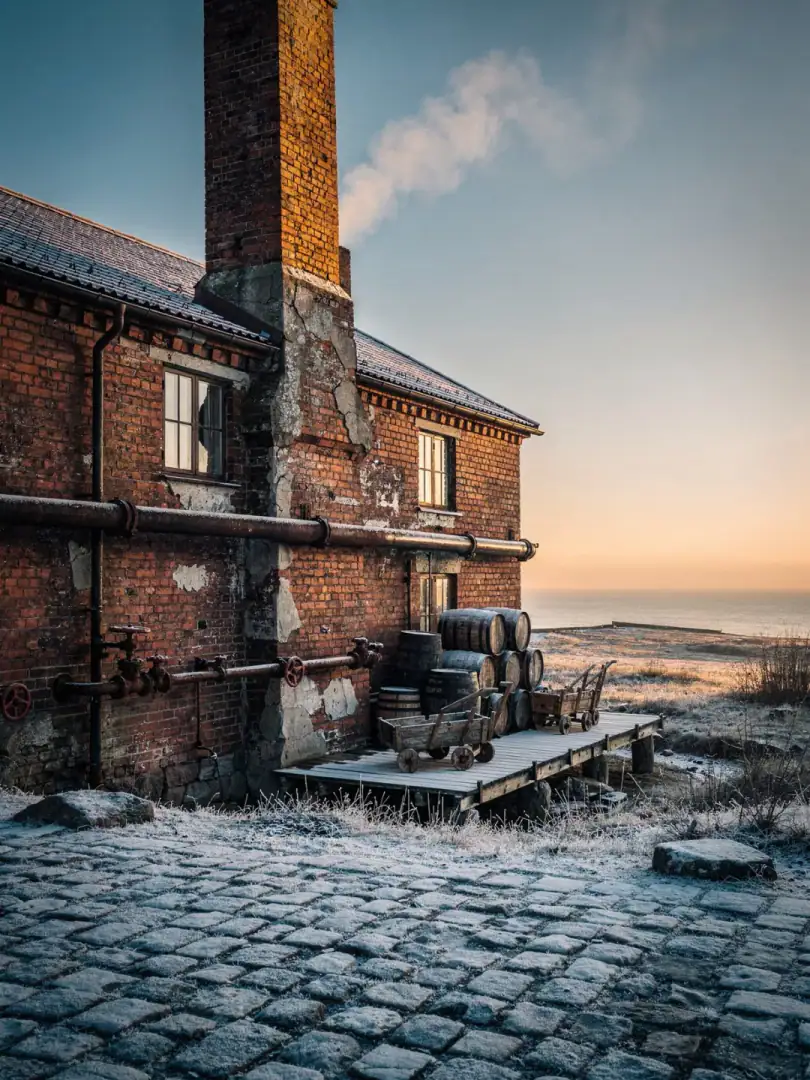
In Åhus, a small harbor town on Sweden's southern coast, the air has smelled of distilled grain since 1879. Here, Lars Olsson Smith built his distillery, the Smithska Bränneriet. He sold a vodka he called Absolut Rent Brännvin, absolutely pure spirit. Smith relied on a new technique, continuous distillation in a column. People soon called him Brännvinskungen, the distilling king. Hardly anyone in Sweden sold as much spirits as he did at the time.
Sweden had long regulated alcohol strictly. In 1917, the state founded the company AB Vin- & Spritcentralen. It received a monopoly over the production and distribution of spirits across the entire country. Private distilleries like Smith's were absorbed into it. Well into the 20th century, a single state company determined what came out of Åhus and into the bottles. Anyone in Sweden who wanted to drink vodka ultimately bought it from a government agency. Still, the name on the label kept the memory of the old distilling king alive.
In 1979, Vin & Sprit brought the modern brand Absolut Vodka to the US. The bottle was kept simple, like an apothecary bottle without a large label. In 1985, the artist Andy Warhol discovered this very bottle in a New York bar. He painted it as a screen print, an image later known as Absolut Warhol. A year later, Keith Haring took over, with dancing red figures on blue and yellow. A distillery from the Swedish provinces had turned into an art project with worldwide fame.
In 1995, Sweden joined the EU, and the state production monopoly fell. In 2008, the French group Pernod Ricard bought the company Vin & Sprit. It paid around 5.6 billion euros for it. That ended almost a century of state ownership of the brand from Åhus. Distilling still happens right there to this day, only the owner has since been based in Paris. The name of the old distilling king still appears on every bottle.