Wheat from Skåne
Raw Material
Around four hundred farms supply the distillery in Åhus with their winter wheat. They lie within a radius of about fifty kilometers around the town. Together, roughly eighty thousand tons of grain come together each year. This proximity is no accident. The shorter the journey from field to mill, the less the grain changes along the way. This lets the distillery know exactly which farm each batch comes from. That's exactly what a vodka needs if it's meant to taste the same every year.
These farms lie in one of the flattest and most fertile landscapes in Sweden, the plain around Kristianstad. The winter wheat is sown in autumn. It isn't harvested until the following summer. The plant survives the Swedish winter under a blanket of snow. In spring it sprouts again, without any new sowing. This flatness makes the vast fields ideal for large, modern harvesters, which can bring in entire farms' worth of crop within a few days.
Winter wheat brings more starch and less protein than rye. That's exactly what you taste later in the glass. Vodka made from wheat comes across as rounder and slightly sweet. Rye, on the other hand, feels edgier and spicier, while potato tends to be heavier and oily. Anyone familiar with a Polish rye vodka who then tries a vodka from Åhus usually notices the difference from the very first sip. These differences come from the composition of the grain, each type bringing its own mix of starch, protein, and oil into the mash.
Beneath the fields lies mostly sand, a legacy of the last ice age. The proximity to the Baltic Sea also shapes the soil. Sandy soils warm up quickly in spring and drain water well. This gives the winter wheat a fast, even start. Add to that a mild climate without extreme heat. The grain ripens slowly in it, storing its starch evenly. This water later also seeps into the distillery's deep wells, from which the finished vodka is ultimately diluted.
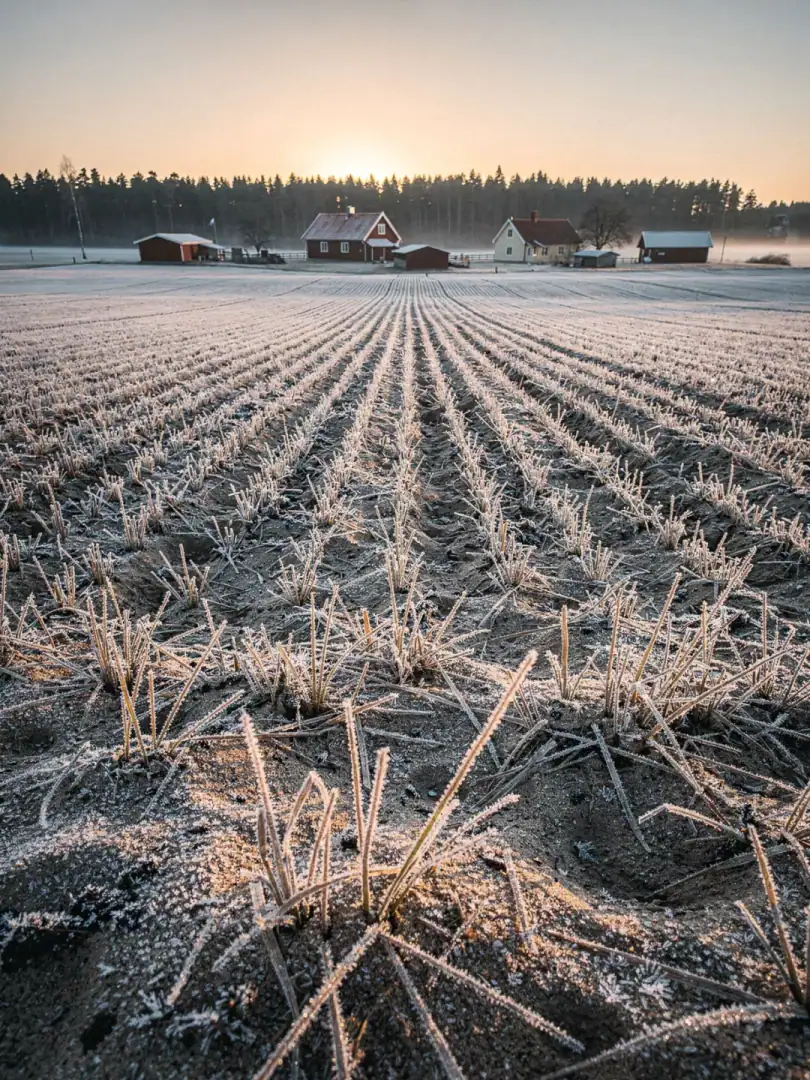
Dark, humus-rich sand, where the winter wheat puts down its first roots in autumn.
The root: Here the young plant draws its first nutrients before winter sets in.