Tools and technique
Home bar & basic technique
Anyone wanting to mix vodka cocktails more often doesn't need expensive equipment, just a handful of reliable tools. This final stop on the journey sums up what belongs in a small home bar and when to shake, stir, or build a drink directly in the glass.
The basic toolkit for a small home bar
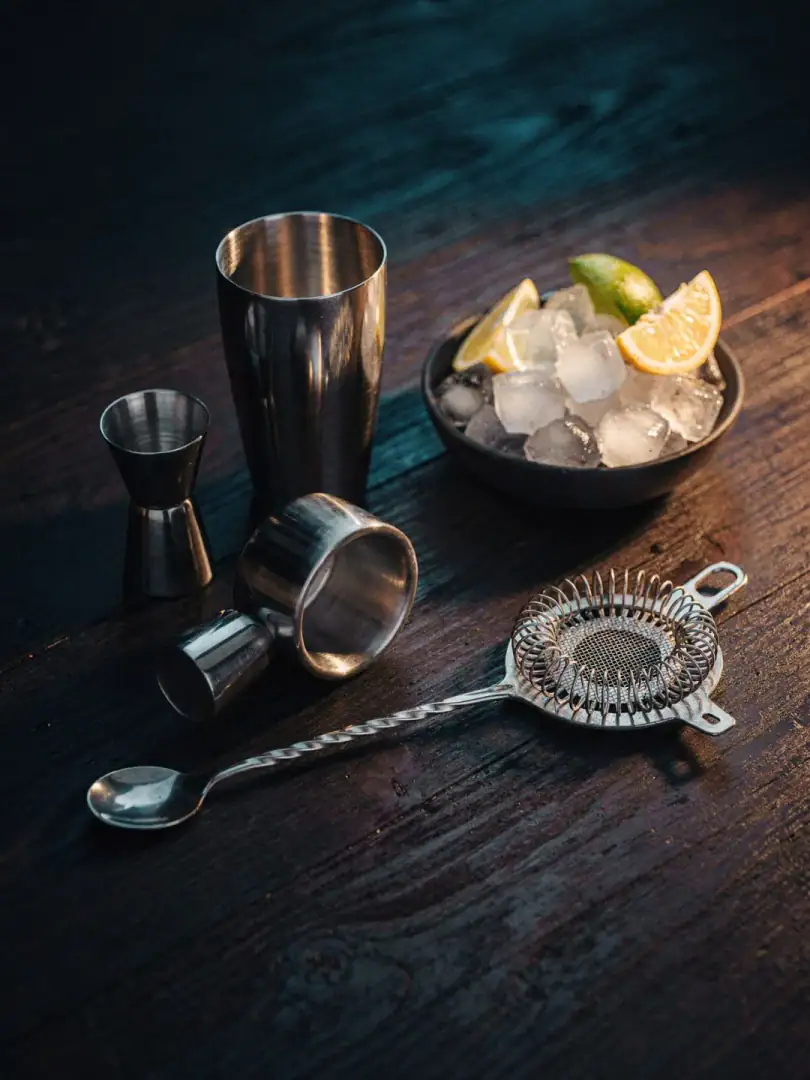
The most important tool is a jigger, the so-called bar measure, which lets you measure quantities precisely in cl. Without it, ratios quickly get thrown off, and a recipe that's meant to be balanced suddenly tastes too sweet, too sour, or too strongly of alcohol.
Next comes a shaker, either a two-piece Boston shaker made of a metal tin and glass, or a three-piece cobbler shaker with a built-in strainer. A bar spoon with a long, twisted handle is used for stirring and for carefully layering ingredients like cream. A strainer, a sharp knife, and plenty of ice round out the basic setup.
Shake or stir: the basic rule
As a rule of thumb: anything with juice, cream, egg white, or syrup gets shaken, anything made purely of spirits gets stirred. Shaking chills very quickly, dilutes more, and blends ingredients of different densities well, think tomato juice and vodka in a Bloody Mary, or espresso and coffee liqueur in an Espresso Martini.
Stirring chills more gently and preserves the drink's clarity, which is crucial for a Vodka Martini made from little more than vodka and vermouth. Longdrinks like Vodka Tonic or Screwdriver need neither technique, they're simply poured together directly in the serving glass and given a brief stir.
Using ice the right way
Ice does more than just chill, it also determines how much a drink ends up diluted. Large, solid cubes melt more slowly and are therefore especially suited to stirred drinks like the Vodka Martini, which sit in the glass for longer.
Smaller or crushed ice melts faster and is generally used for longdrinks or cocktails meant to be drunk especially quickly. It's also important to always use fresh ice and swap out old, partially melted cubes, since they melt faster and needlessly water down the drink.
A sensible basic set of ingredients
For the recipes on this journey, a modest selection of ingredients is enough: a neutral vodka as the base, tonic water and ginger beer for simple longdrinks, orange liqueur and coffee liqueur for the Cosmopolitan and the two Russians, plus fresh citrus fruits and a bit of sugar syrup.
Anyone who also keeps tomato juice, Worcestershire sauce and a few bitters on hand can recreate almost all the classics on this journey, from the Moscow Mule to the Bloody Mary. With this small basic kit and the right ratios in cl, there's little standing in the way of your own home bar.
Storing and serving vodka correctly
Vodka doesn't need a cellar. Room temperature is perfectly fine. Light and warmth barely affect it, unlike an open bottle of wine. Once opened, vodka keeps for years without losing quality. That's thanks to its high alcohol content, which reliably keeps germs and oxidation at bay.
Room temperature is usually fine for cocktails, since the ice takes care of the chilling. For a neat shot, though, the freezer is worth it. Cold vodka feels rounder and softer on the palate. Pre-chilling glasses also helps cocktails stay cold longer. Just a short spell in the freezer is enough.
Opened fruit juices and syrups, on the other hand, only keep for a few days in the fridge. Anyone who mixes drinks regularly should therefore buy them in smaller quantities as needed rather than stocking up. That way, the ingredients stay fresh, and the finished cocktails taste just as good every time as they did the first. In the end, what matters isn't the number of bottles on the shelf, but the clean interplay of measurements, technique, and fresh ingredients.