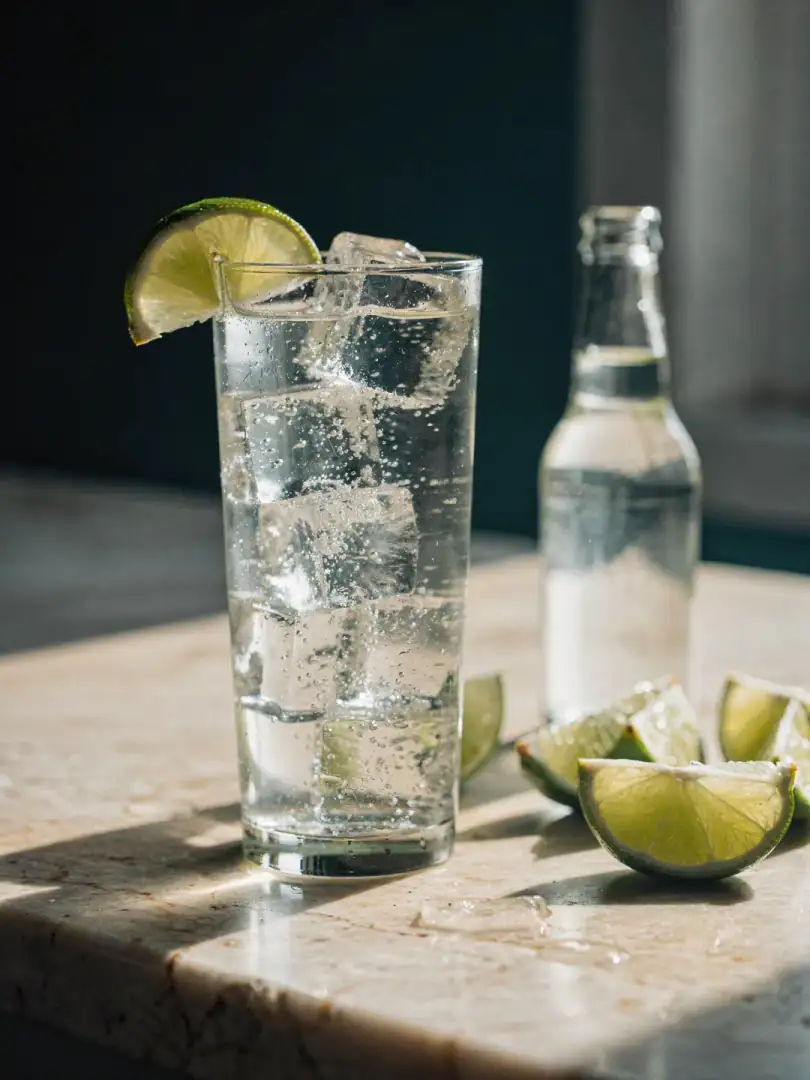
Simple long drinks
Vodka Tonic & Long Drinks
A Vodka Tonic is arguably the simplest longdrink of all: two ingredients, one glass, no shaker. Longdrinks differ from cocktails mainly in how they're built, directly in the glass rather than stirred or shaken. This station explains the principle and shows several examples in cl.
What sets a longdrink apart from a cocktail
Hardly any drink category gets by with as little technique as the longdrink. It typically consists of a spirit and a much larger amount of a non-alcoholic mixer, served over ice in a tall glass, and is usually built directly in the serving glass, without a shaker or mixing glass.
A classic cocktail, on the other hand, often blends several ingredients in precise ratios, is shaken or stirred, and served in a smaller, often stemmed glass. The line between the two categories isn't always sharp, but a Vodka Tonic clearly belongs to the longdrink family.
Vodka Tonic: origin and recipe
Tonic water traditionally contains quinine, a bitter compound that British colonial officers took against malaria in the 19th century. To make the bitter taste more bearable, they mixed the quinine water with gin, giving rise to the Gin Tonic. The Vodka Tonic is a later, milder variation with a more neutral spirit.
For a Vodka Tonic, pour 4 to 5 cl of vodka over ice cubes in a tall glass and top up with 10 to 12 cl of tonic water. A lime wedge is pressed in at the end or perched on the rim. A single, brief stir is enough, more movement would just knock out the carbonation.
Other simple vodka longdrinks
Besides tonic water, plenty of other mixers work well for a quick vodka longdrink. Vodka Soda combines 5 cl of vodka with 10 to 12 cl of soda water and a splash of lime, for an almost calorie-free, very dry drink. Vodka Cranberry, also known as a Cape Codder, swaps the soda for 10 cl of cranberry juice and tastes noticeably fruitier and sweeter.
Vodka Ginger Ale follows the same principle with mild ginger ale instead of ginger beer, making it noticeably softer than a Moscow Mule. All of these longdrinks follow the same pattern: a fixed measure of vodka, topped up with a much larger portion of mixer, built directly in the glass.
When longdrinks are the better choice
Longdrinks are especially handy when you need to mix quickly without any equipment, say at a party with no bar tools on hand. They're also easy to adjust to personal taste, simply by pouring a little more or less mixer, without having to stick to an exact ratio.
Classic cocktails, by contrast, win out with more complex flavor and a fixed, carefully balanced ratio, but demand precise measurements and often a shaker. Anyone just starting to experiment with vodka usually finds it easier to begin with a longdrink rather than diving straight into a shaken cocktail.
Why the choice of tonic water matters
Not all tonic water tastes the same. Cheaper varieties are often heavily sweetened and mask the bitter quinine flavor almost entirely. Higher-quality tonics, on the other hand, use less sugar and deliver a clearer, more bitter quinine character that stands out much more distinctly alongside the neutral vodka.
Carbonation matters too: freshly opened tonic water fizzes more vigorously and makes the drink feel lighter, while flat tonic leaves the drink tasting dull. Anyone who drinks Vodka Tonic regularly soon notices that the choice of tonic changes the drink more than the choice of vodka does.
The right glass matters as well: a tall, slender glass holds the carbonation longer than a wide coupe, where more surface area is exposed to air. If you want the fizz to last, reach for a classic highball glass rather than a large balloon glass. The garnish can also be varied: alongside lime, fresh cucumber slices or a sprig of rosemary add a subtle extra note of freshness to a Vodka Tonic.