Neutral and versatile
Vodka in Cocktails
Vodka has almost no character of its own, and that's exactly what makes it the most widely used spirit in the cocktail world. It provides alcohol and structure without masking fruit, coffee, or herbs. This section explains where that neutrality comes from, what the law says about it, and where its limits lie.
What makes vodka taste neutral?
Whisky ages for years in wooden casks, drawing vanilla and caramel notes from the oak. Rum often carries the flavor of molasses, and gin is packed with juniper and botanicals. Vodka takes a different path. It's usually distilled multiple times, often in tall column stills, until the alcohol content climbs well above drinking strength. This process leaves behind almost no fusel oils or flavor compounds from the grain or potato that would otherwise give it a distinct character.
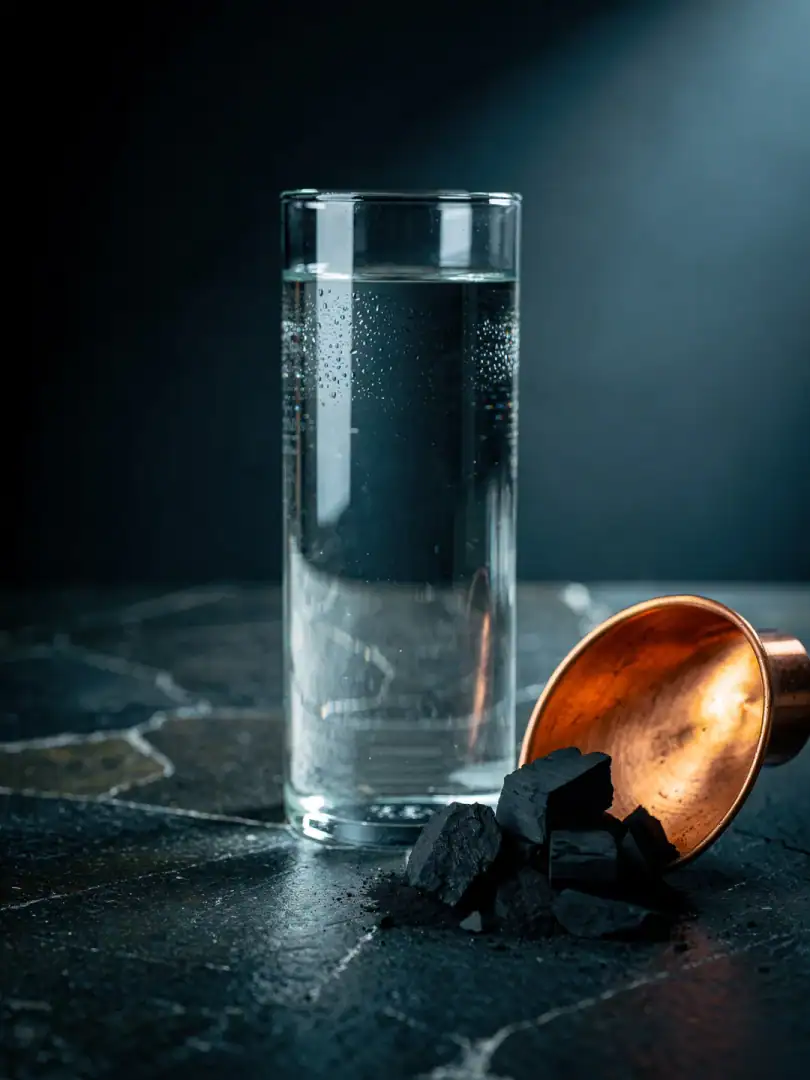
After distillation, the raw spirit usually passes through activated charcoal. The charcoal binds any remaining flavor compounds, making the vodka taste even cleaner. It's then diluted with water to drinking strength, with no barrel aging and no added spices. The result is a distillate that tastes mainly of alcohol and a hint of its raw material, without any dominant flavor of its own.
The legal definition of a neutral spirit
How neutral vodka has to be is actually written into law. EU Spirit Drinks Regulation (EU) 2019/787 requires a minimum alcohol content of 37.5% ABV and specifies which raw materials it may come from: grain, potatoes, or other agricultural produce. If a raw material other than grain or potato is used, it must appear on the label so buyers know what the spirit was distilled from.
In the US, the Code of Federal Regulations, Title 27, Section 5, defines what may be called vodka: a neutral spirit "without distinctive character, aroma, taste, or color." Russia has its own historically grown standard for purity and filtration, the GOST standard. All three systems pursue the same goal: vodka should stay pure and interchangeable, never standing out.
Why bartenders choose vodka as a base
For a bartender, neutrality is a tool. Vodka provides alcohol, volume, and a certain texture without pushing itself into the foreground. Lime juice, ginger beer, tomato juice, or coffee liqueur can fully express their own character because the vodka stays in the background. With gin or whisky, by contrast, you'd always have to balance the other ingredients around the spirit's own flavor.
There's also a technical side to it: vodka behaves predictably when shaken or stirred, since it brings almost no sugar, oils, or barrel-aging flavors that could alter the result. That also makes it forgiving for beginners at the home bar. Anyone practicing with vodka doesn't need to worry about complicated interactions and can focus entirely on ratios and technique.
The limits of neutrality: flavored and craft vodkas
It's not quite that simple, though. Many producers sell flavored vodka with lemon, vanilla, or berry notes that deliberately depart from the neutral principle. These varieties only work in cocktails that can handle that particular note, such as a lemon version in a Cosmopolitan. In a classic Bloody Mary, however, the same vodka would throw off the tomato juice.
Small craft distilleries are also increasingly leaning into raw-material character on purpose: a rye vodka can retain a slightly spicy note, while a potato vodka often feels a bit rounder and oilier. Still, for the classics on this journey, the rule holds: the more neutral the base, the more reliably you can recreate the following recipes, no matter where in the world you're mixing them.
Tasting vodka neat: the quick quality test
Professionals often assess vodka neat and lightly chilled rather than in a cocktail. This is the best way to tell whether any distracting flavors have truly been left behind. A good vodka feels smooth in the mouth, has a brief burn on the finish, but leaves no bitter or chemical aftertaste. That cleanliness is exactly what matters later in the cocktail.
Vodka doesn't freeze at typical household freezer temperatures, because its alcohol content of at least 37.5% ABV pushes the freezing point well below zero. That's why many bars and households store vodka in the freezer, which makes it thicker and colder without changing its neutrality. For a quick neat tasting, though, room temperature is still worthwhile, since cold can mask individual off-notes.