Fat Binds Alcohol
Herring and Fish
Pickled herring, smoked salmon, and salted whitefish belong to the standard picture of the vodka table from Scandinavia to Russia. This stop shows why fatty fish in particular pairs so well with vodka and how it's traditionally prepared.
Why fatty fish belongs with vodka
Herring, mackerel, and salmon contain plenty of fat, which forms a protective film in the mouth. This film softens how sharply the alcohol feels, similar to how milk works with heavily spiced food. That's why fatty fish sits alongside the pickle in almost every zakuski spread. Lean fish like cod barely serves this purpose. The fattier the fish, the more clearly the difference shows while drinking.
A second reason is historical: in the cold regions around the Baltic Sea, fish was cheaper and more readily available than meat for centuries. Vodka and fish grew up together on the same table, long before anyone thought about flavor pairings. Fishing villages along the coast shaped a drinking culture almost as a side effect.
Pickled herring: the Scandinavian version
In Sweden, Norway, and Denmark, herring is usually cured in a sweet-and-sour brine of vinegar, sugar, and spices like bay leaf, mustard seed, or dill. The best-known Swedish version is called sill, often served in several varieties at once: with mustard, with dill, with red onion. Each version tastes distinctly different, even though the base fish stays the same.
In Scandinavia, this herring is traditionally paired with a chilled schnapps, often aquavit rather than plain vodka, alongside a piece of crispbread with butter. The sequence resembles the Russian toast system: first the schnapps, then immediately the bite of fish afterward. A later stop looks more closely at how these two traditions are related.
Salted and smoked fish in Eastern Europe
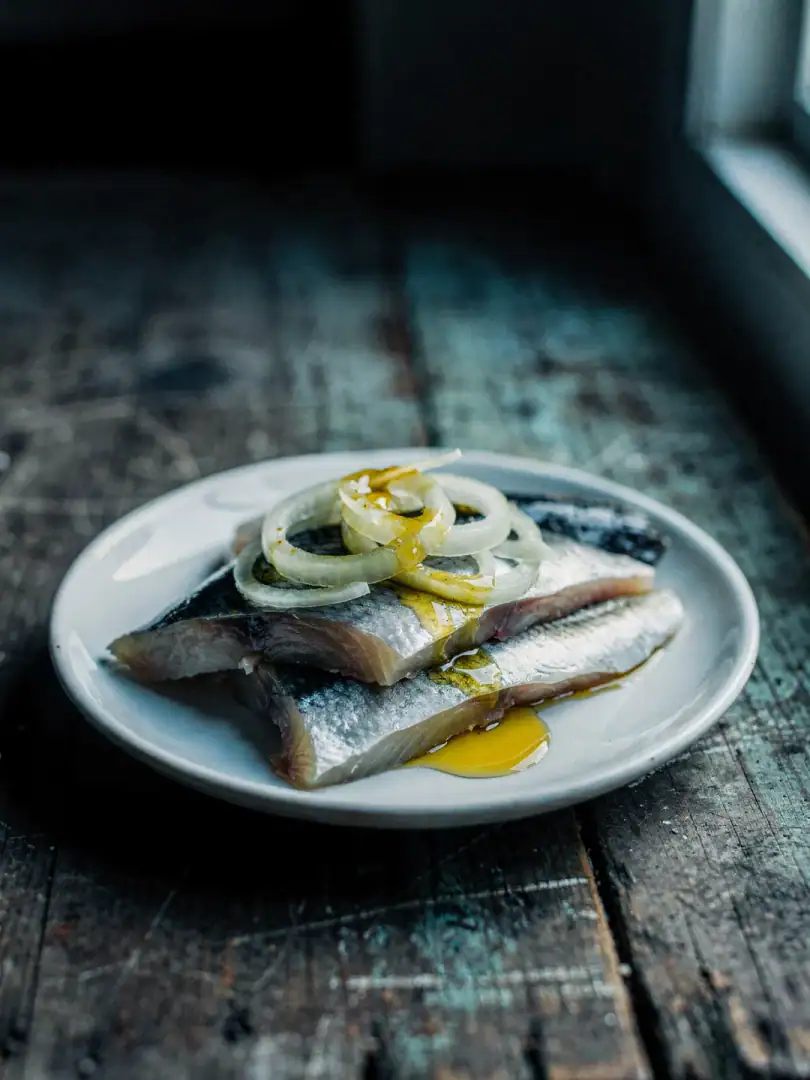
In Russia and Poland, herring less often appears sweet-and-sour, more often simply salted, and it's usually served together with raw onion rings and a dash of sunflower oil. Smoked salmon or sturgeon counts as the more festive version and tends to appear on holidays rather than in everyday life. For everyday use, simple, inexpensive salted herring usually does the job.
One well-known combination is called seledka pod shuboy, herring layered under beets, potatoes, and mayonnaise, stacked like a cake. Only a small spoonful is usually served with vodka, since the dish counts as a standalone appetizer rather than pure zakuski. This dish is almost never missing from Russian holiday tables. Many families have passed down their own recipe for it for generations.
What to watch for when shopping
For your own table, it's worth checking the fat content: matjes herring and fatty salmon work better against the alcohol than lean cod. Fresh refrigeration also matters, since pickled fish spoils faster than pickled vegetables. An unpleasant, sharp smell is always a warning sign.
Anyone who doesn't like or can't tolerate fish can turn to smoked tofu or pickled mushrooms instead, which deliver a similarly rich, umami flavor. The next stop shows, with caviar and blini, how fish arrives at the vodka table in its most expensive form. Between simple herring and fine caviar lies a wide range of prices.
Fish for guests with no experience of it
Anyone trying herring for the first time should start with the mild, sweet-and-sour version. Strongly salted matjes often feels too intense for untrained palates. A small piece is entirely enough to try it out. A piece of neutral bread pairs well, taking the edge off the first sharpness.
Good quality shows in firm, pale flesh and a clean smell of the sea rather than rancid oil. Fresh fish from a good source is what turns this stop into a genuine pleasure. It's worth asking the fishmonger briefly about the catch date. That way, poor-quality fish can usually be spotted before buying.