Acidity Against Alcohol
Pickles and Preserves
Pickles, pickled mushrooms, and lacto-fermented vegetables sit ready at every vodka table in Eastern Europe. This stop explains how lactic fermentation works, why it pairs so well with vodka, and what sets a brined pickle apart from a vinegar pickle.
Lactic fermentation instead of vinegar
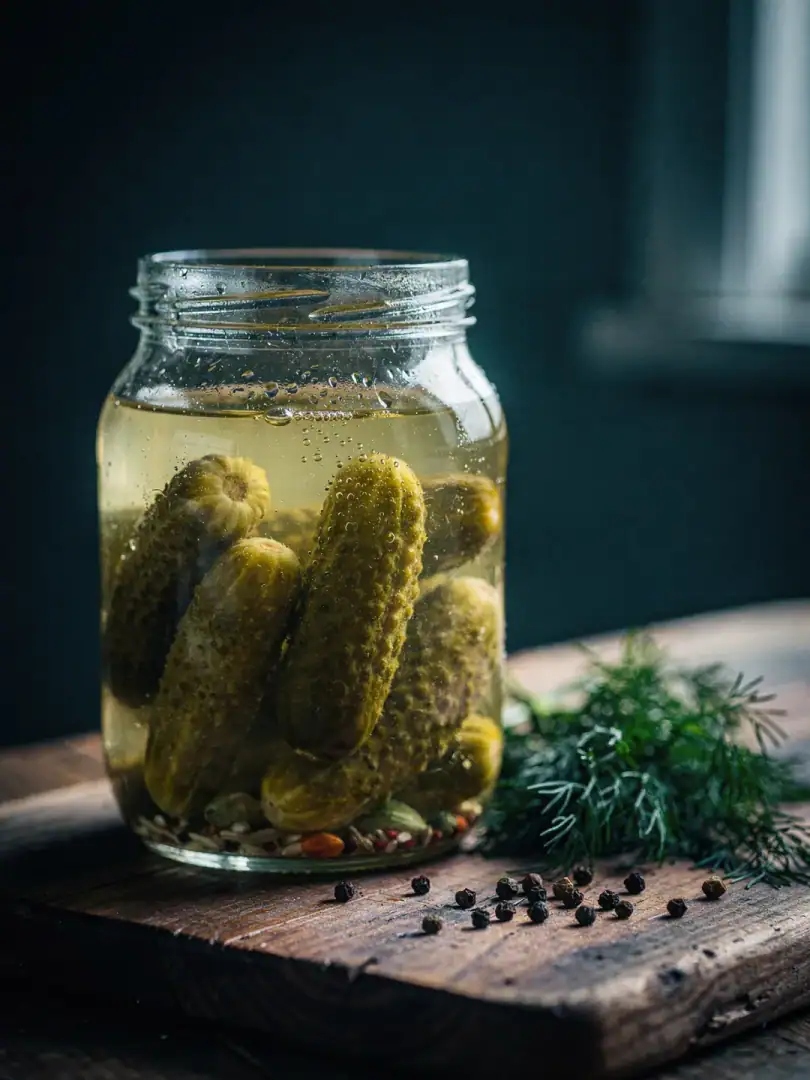
The classic pickle from Russia, Poland, or Ukraine isn't cured in vinegar but in brine. Lactic acid bacteria convert the cucumber's sugar into acid, with no bottled vinegar involved at all. The result tastes rounder and less sharp than a vinegar pickle off the supermarket shelf. The cucumber stays crisp throughout, not soft like some industrial products.
This process is called fermentation and is centuries old. Before refrigerators, it was the only way to preserve vegetables through the winter. Cabbage, beets, and mushrooms were preserved the same way, and many of these sides still end up on the same plate as the pickle today. A simple wooden barrel was all it took back then.
Why acidity balances vodka
Vodka tastes neutral to slightly sweet, depending on the raw material and distillation, but always strongly alcoholic. The acidity of the pickle sets up a counterweight: it cleanses the palate before the next sip and stops the taste of alcohol from lingering in the mouth. Without that counterweight, each further sip feels heavier than the last.
Salt adds another effect: it stimulates saliva flow and makes the next bite more appetizing. Anyone who drinks a round of vodka with no sour side at all quickly notices how monotonous the pure alcohol taste becomes by the third glass. Even a small slice of pickle is enough to make this effect noticeable.
Brined pickle, vinegar pickle, spiced pickle: the difference
A brined pickle cures in salt brine and often stays in the barrel for only a few days to weeks, which is why it tastes mild and slightly fizzy on the tongue. A vinegar pickle, by contrast, is simmered in a solution of vinegar, sugar, and spices, which is why it keeps much longer in the jar. In the supermarket, many jars still carry the same name despite the different process behind them.
Spiced pickles sit somewhere in between: they're usually made with vinegar but heavily seasoned with dill, mustard seed, and garlic. For the classic vodka table, the lacto-fermented version matters most, because its acidity stays finer and its bite stays crisper. Anyone unsure while shopping is best off reading the ingredient list on the jar.
What else lands pickled on the table
Besides the pickle, pickled mushrooms, lacto-fermented cabbage, and small whole tomatoes belong to the standard repertoire. In Poland, a plate with several kinds at once often appears, so every guest can choose what suits their own type of vodka. Pickled garlic also turns up occasionally, usually in small amounts.
All these sides share one principle: acidity and salt against the force of the alcohol. Anyone who has tried it, chilled vodka followed right away by a fresh pickle, quickly understands why this combination has held on for generations. Fish brings yet another ingredient against the alcohol into play later in this journey.
Shelf life and everyday storage
Finished pickles keep for months in the jar as long as it stays sealed. Once opened, they belong in the fridge. The brine should always fully cover the pickles, otherwise they spoil faster. A cloudy film on the surface is usually a sign to throw them out.
Anyone wanting to ferment their own needs only water, salt, cucumbers, and a bit of patience. A clean jar and fresh vegetables are entirely sufficient; no expensive equipment is needed. After three to seven days at room temperature, the first acidity develops. After that, the jar moves to the fridge to stop further fermentation. That way the flavor stays mild and the cucumber stays crisp.