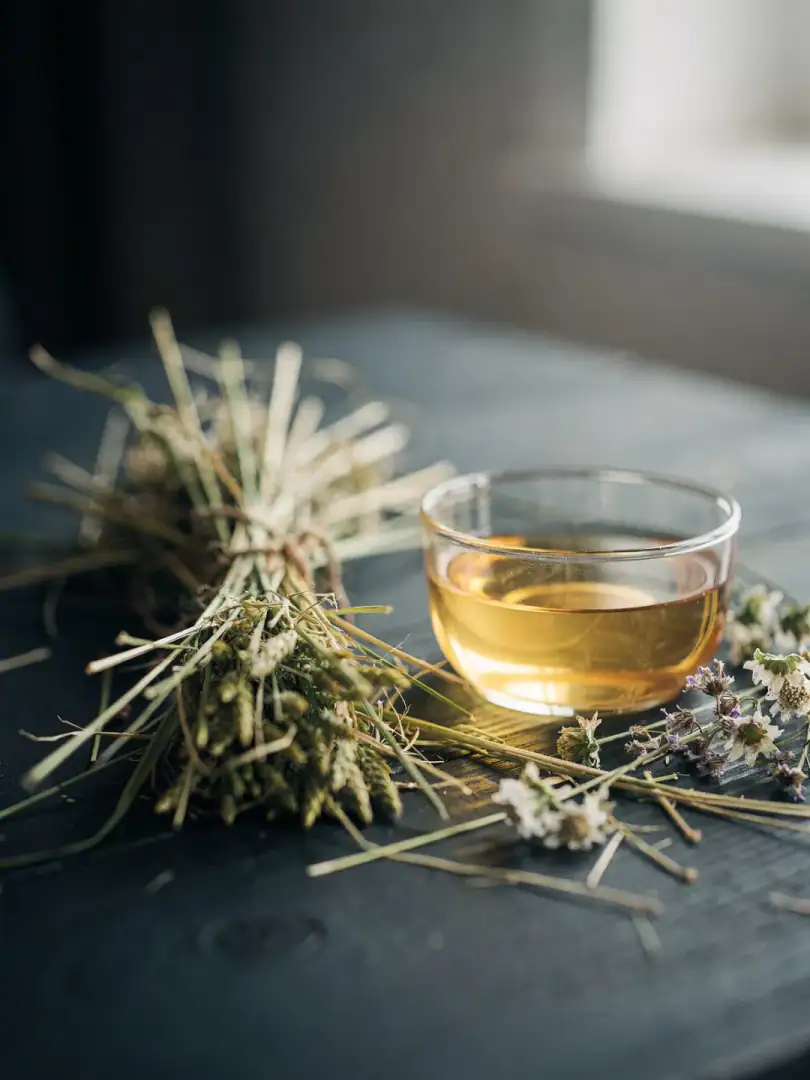
Grass Extract with Legal Protection
Bison Grass Vodka from Podlasie
The faint greenish shimmer and the scent of fresh hay give away bison grass vodka before the first sip. The protected designation ties it to a narrow region in northeastern Poland and to fixed standards. It, too, is a geographical indication with clear rules.
Where does the namesake grass come from?
The full protected designation is Wódka ziołowa z Niziny Północnopodlaskiej, translated as herbal vodka from the North Podlasie Lowland, flavored with bison grass extract. Bison grass, botanically Hierochloe odorata and Hierochloe australis, grows wild on damp meadows around the Białowieża Forest in northeastern Poland. The English name sweet grass reflects its long use in folk medicine and regional cooking, long before it became the namesake of a vodka.
For the protected designation, the grass must come from exactly this area, the so-called North Podlasie Lowland. An extract made from grass gathered elsewhere, even of the same species, would invalidate the designation.
What values must the bottle meet?
The product specification requires a minimum of 37.5% ABV, along with a minimum content of the aroma compound coumarin of 7 milligrams per liter, which gives the grass its characteristic scent of hay, vanilla, and almond. The color ranges from pale green to golden yellow, depending on how long the extract has steeped.
These figures aren't marketing numbers — they're part of the official specification filed with the EU. If a product deviates from them, it may carry neither the protected name nor the accompanying EU symbol.
A laboratory determines the coumarin level before the product is cleared for sale, since only above the minimum value may the bottle carry the full protected name. Below that threshold, it would have to be sold as a plain flavored vodka without PGI status.
Why bison grass isn't allowed everywhere
At high doses, coumarin is suspected of putting strain on the liver, which is why some countries outside the EU set stricter limits for food products. Classic bison grass vodka with real grass extract was therefore long unavailable for sale in some places; some export bottlings therefore skip the grass and use flavorings without coumarin instead.
Anyone buying a bottle labeled bison grass abroad should look closely: whether it contains real grass extract or just a bison-grass-style flavoring makes a noticeable difference in both legal status and taste.
How it differs from ordinary vodka
Unlike neutral vodka, this style is deliberately flavored, and precisely for that reason it must no longer taste neutral. This runs counter to the basic rule from the first stop on this journey, because here the protected designation itself mandates the addition. Origin and flavor are legally linked in this vodka, not merely a matter of the producer's taste.
How compliance is monitored
As with Polska Wódka, Polish authorities check whether the grass harvest, extraction, and bottling actually take place in the prescribed area. Without this oversight, no producer would be allowed to print the protected designation on their label.
The two Polish geographical indications covered on this journey complement rather than replace each other. A producer can make a classic Polska Wódka base spirit and then flavor it according to the separate rules of the bison grass designation, registering it independently.
How is the grass extract made?
Bison grass is usually hand-harvested in early summer, when the blades carry their fullest aroma. After harvesting, producers dry the blades for several days before steeping them in neutral alcohol. Depending on the producer, this maceration lasts between two and six weeks, until enough coumarin and accompanying aromatic compounds have been drawn out of the plant material. Only then is the extract filtered and added to the finished vodka in the prescribed amount, to reliably reach the minimum value of 7 milligrams of coumarin per liter noted at the previous stop. Some producers repeat the process with fresh grass to intensify color and aroma.
Many bottles also contain a single blade of grass that remains visible right down to the last sip. It barely affects the flavor anymore, since the aroma has long since dissolved into the alcohol, but it serves as a recognizable signature on the shelf. The most internationally famous brand, Żubrówka, even carries the Polish word for the wisent in its name—the wild bovine that lives in the nearby Białowieża Forest and gives the region its reputation as the origin of the grass. Because of strict coumarin limits outside the EU, some producers sell a version for certain markets without the classic blade and with a coumarin-free flavoring in place of the real extract.