Protected Polish Origin
Polska Wódka PGI
Two words on a label, Polska Wódka or Polish Vodka, represent a protected geographical indication. Registered in the EU since 2003, only bottles that meet an entire chain of requirements regarding raw material, place, and production may carry this name. It's a legal title, not a marketing idea.
What turns vodka into Polska Wódka?
Two letters after the name, PGI, stand for an entire set of rules. For Polska Wódka, this means the whole production process — from fermentation through distillation to bottling — must take place in Poland. Alcohol that's merely bottled in Poland but distilled elsewhere may not carry the name. Even partial production abroad, such as just the final dilution before bottling, wouldn't be enough.
The designation traces back to an EU regulation from 2003 and was later incorporated into today's Spirit Drinks Regulation. Only the two names Polska Wódka and Polish Vodka are permitted; any other language variant is not allowed.
Compliance is monitored by Polish authorities, who regularly inspect production facilities and supply chains. Only producers who pass these inspections may continue to use the protected designation.
The name also protects against confusion with similarly sounding fantasy names that have no real connection to Poland. A label with a Polish-sounding name but without the protected designation may still be sold — it just has to do without the legal title.
Which raw materials are permitted?
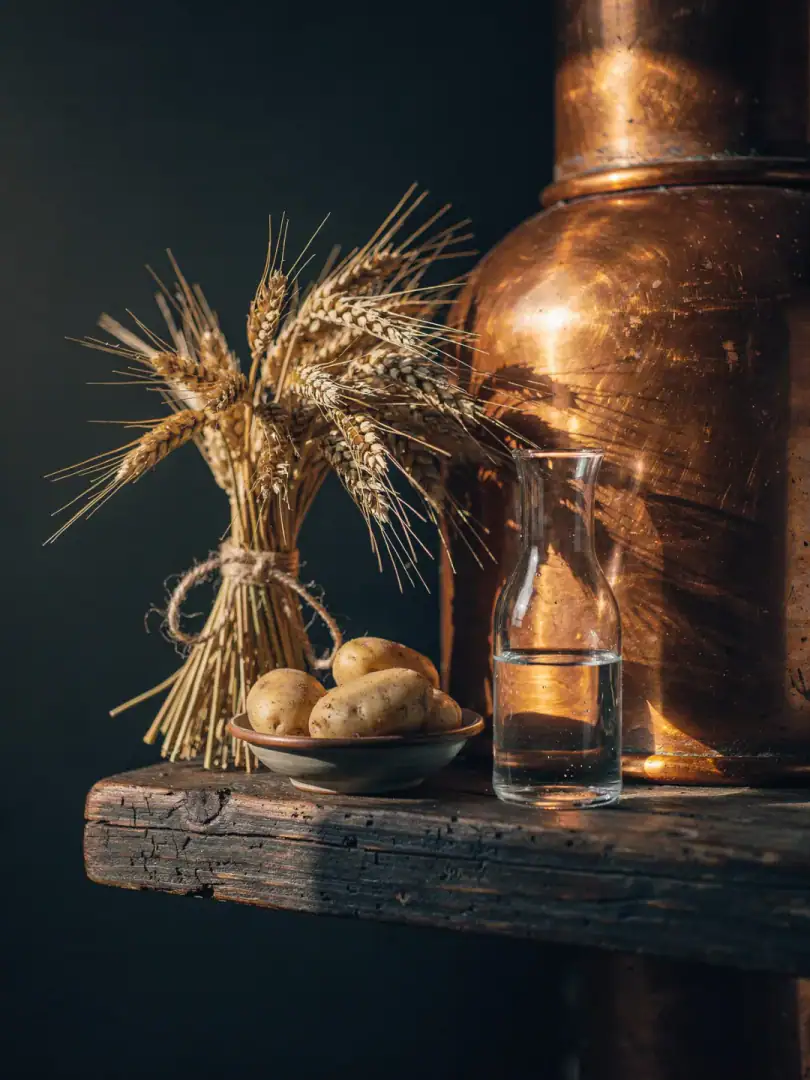
Only agricultural ethyl alcohol from rye, wheat, barley, oats, triticale, or potatoes, all grown in Poland, is permitted. This list is closed — any raw material outside these six options invalidates the designation, even if the rest of production takes place in Poland. Even a small admixture of a seventh, unlisted raw material would be enough to lose the legal title.
The bottle must also either contain no additions besides water, or, if flavored, carry a dominant aroma that doesn't come from the base raw material itself. This distinction separates classic Polska Wódka from flavored variants such as the bison grass vodka covered at the next stop.
This narrow list of raw materials clearly sets Polska Wódka apart from the general EU rule for vodka, which in principle allows any agricultural alcohol. The protected designation is thus stricter than the general law, far more than just an extra brand name on the label.
Water quality also technically affects the dilution to drinking strength, but it isn't part of the protected specification itself. What matters is the raw material, the origin, and the mandated production process.
What does the protected designation protect?
The protection prevents producers outside Poland from benefiting from the name's good reputation without meeting its requirements. Similar to Champagne or Parma ham, the rule assures buyers that the place and process are genuine, regardless of the individual brand.
If a producer outside Poland violates this protection, the European Commission or a national authority can step in, much as with other protected food names. The economic value of the name depends directly on this enforcement.
How do you recognize it on the label?
The bottle usually clearly states Polska Wódka or Polish Vodka, often accompanied by the EU symbol for protected geographical indications, a round yellow-and-red circle. If this addition is missing, a bottle may still come from Poland without meeting the strict criteria of the PGI. The difference then lies in the details of the origin chain, not in where it's sold.
Some export bottlings show the full name only on the back label, while an international brand name dominates the front. It's therefore worth checking the back label a second time, even with well-known brands.
What sets Polska Wódka apart from other vodka
An ordinary vodka from the first stop on this journey may be made from any permitted raw material anywhere in the world and produced anywhere. Polska Wódka ties the same basic legal idea additionally to one country, six raw materials, and an unbroken production chain.
For buyers, this difference means one thing above all: the name alone already carries a verified origin story, while a plain vodka without PGI leaves that story untold.
Comparing the two categories shows: the general EU rule opens the market to diversity, while protected designations like Polska Wódka mark a narrow, verified special case within that diversity.