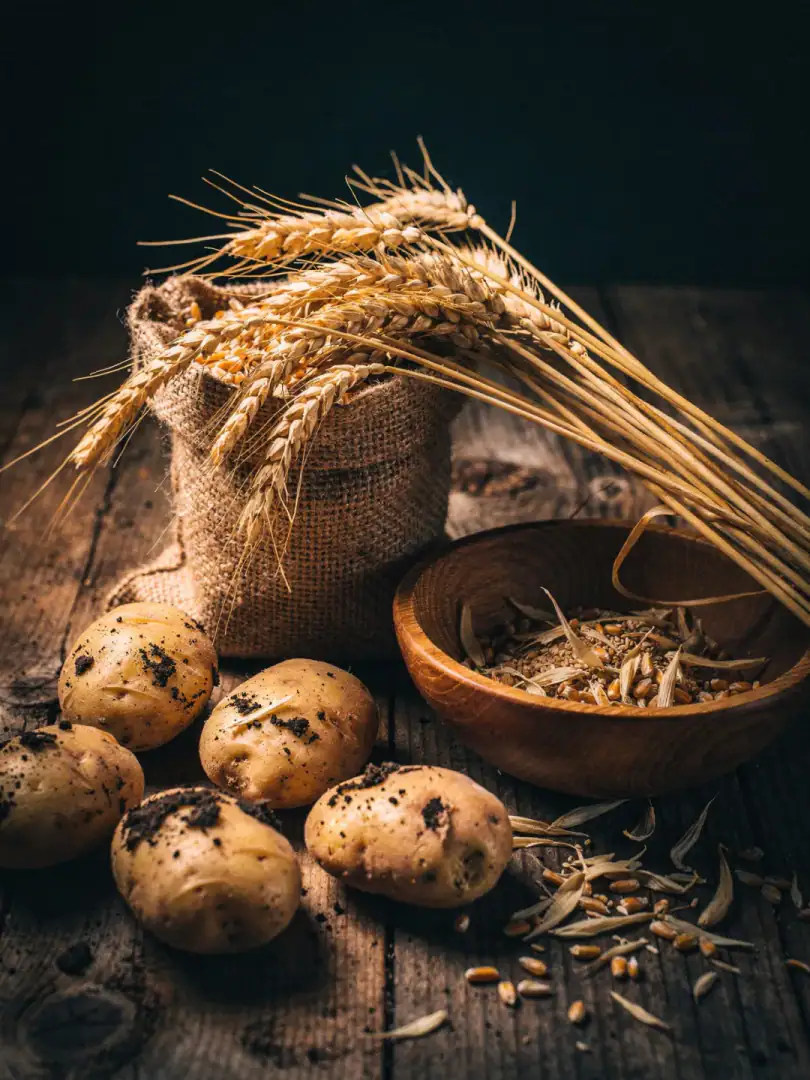
Grain, Potato, Exception
Raw Material Declaration on the Label
Does a vodka bottle state what it's made from? Only sometimes — the EU requires a raw material declaration only when the alcohol doesn't come from grain or potatoes. Knowing this helps you spot hidden clues on the label and understand when a producer is allowed to stay silent.
When must the raw material appear on the label?
The EU Spirit Drinks Regulation assumes that vodka is classically made from grain or potatoes. For these two raw material groups, the sales designation vodka is sufficient on its own — no additional declaration is required. It's different for every other starting material: if the alcohol comes from, say, grapes, sugar beet, or whey, the label must carry the phrase Vodka produced from … together with the specific raw material.
This mandatory declaration usually appears in small print on the back label, often right under the sales designation. If you're looking for it, don't scan for big marketing words — look instead for the inconspicuous fine print next to the alcohol content and volume.
The order in which raw materials are listed is also fixed: if several appear on the label, the list generally follows the proportion by amount, starting with the largest share of the alcohol used.
This declaration can matter for consumers with intolerances, for example sensitivity to dairy components in a vodka made from whey. Without the mandatory declaration, this information wouldn't be visible at all.
Which raw materials are permitted?
The regulation allows vodka to be made from agricultural ethyl alcohol derived from practically any fermentable raw material, as long as the origin is stated whenever it differs from grain or potato. Common choices include molasses from sugar beet, whey from cheesemaking, grapes, or even corn. Each of these paths affects cost and, to a lesser extent, mouthfeel, but legally, only the mandatory minimum strength from the first stop on this journey ultimately matters.
It's important to distinguish between the starting material and the finished drink: even a vodka made from grapes must not taste of grapes, since distillation is required to produce the neutral character. So the raw material determines the origin declaration, not the flavor in the bottle.
Unusual raw materials such as sugar cane or rice are also legally possible, as long as the resulting alcohol is of agricultural origin and the labeling requirement is met. In practice, though, grain, potato, grapes, and molasses remain the most common options on the European market.
The choice of raw material often depends on regional availability and cost. In regions with extensive sugar beet farming, molasses makes more economic sense as a starting material than importing grain that grows more cheaply elsewhere.
How do you read the note on the bottle?
The most reliable place to find this information is directly under or next to the word vodka in the ingredient line. If no raw material note appears at all, you can assume grain or potato was used, since otherwise the producer would have to declare the exception. Still, it's worth checking the back label, since some brands voluntarily name the raw material as a selling point, even when they're not required to.
Digital labels or QR codes on the bottle sometimes provide extra detail about the raw material now, but they don't replace the mandatory declaration on the paper label.
Why grain and potato are the exception
Historically, vodka in Northern and Eastern Europe was mostly distilled from these two raw materials because they were abundantly available there. Lawmakers adopted this tradition and made it the silent default. Anything that deviates from it counts legally as a special case and must therefore be made visible, so buyers can make their choice without having to scrutinize every ingredient list in detail. This default spares the vast majority of producers from needing an extra line on labels that are already crowded.
What applies when multiple raw materials are used
Some producers blend several permitted raw materials for a vodka, for instance wheat and rye, or add a small proportion of potato to grain. Such combinations remain free of any labeling requirement, as long as only grain or potato is included.
But as soon as a single raw material from the exception list is added — say, a portion of grape alcohol for smoothing — the labeling requirement applies to the entire blend. The declaration must then name every raw material that isn't grain or potato.
In practice, control authorities check such blending ratios using the producer's documentation, not the finished drink itself, since neutral alcohol can hardly be traced back in a lab to a single specific raw material.