The Middle Ages and Medicine
Vodka as Medicine
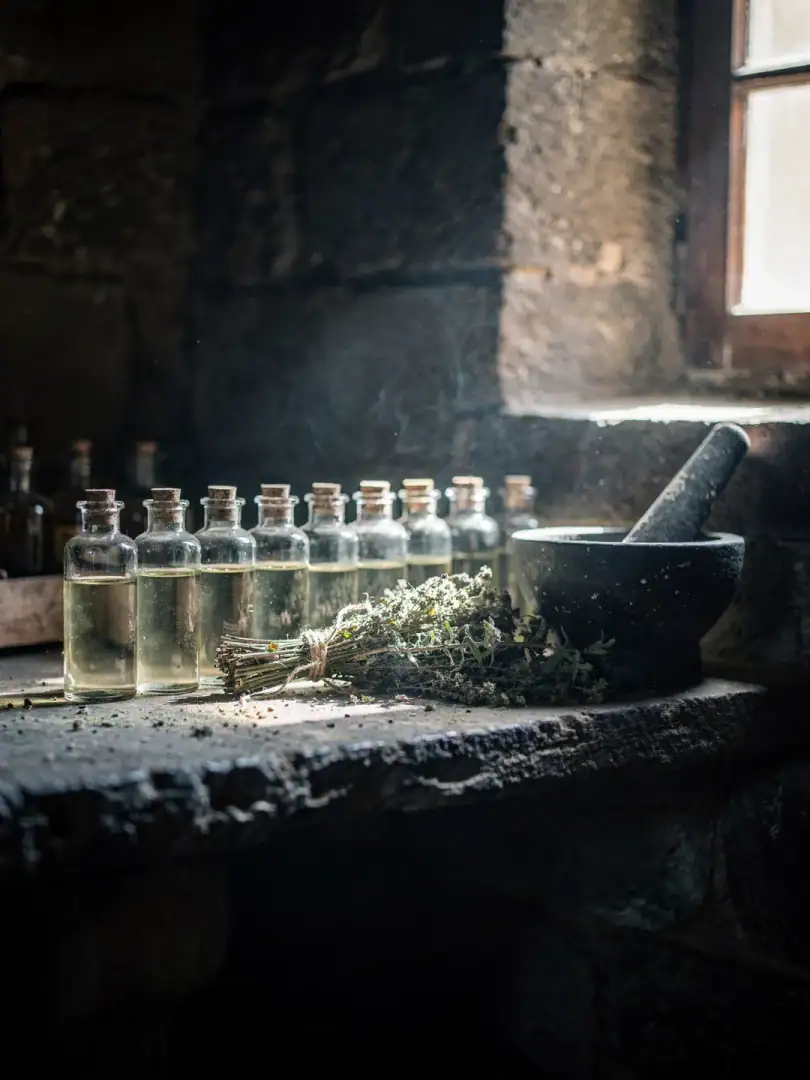
Before vodka was served in glasses, it sat on apothecary shelves. For centuries, distilled grain spirit was regarded as medicine against pain, plague, and bad moods, dispensed drop by drop and infused with herbs. The story of how a remedy became a drink says a great deal about the Middle Ages itself.
Aqua Vitae: Water of Life
Medieval alchemists and monks called distilled alcohol aqua vitae, Latin for water of life. The term wasn't marketing spin but meant quite literally: people believed the clear, burning distillate was an extract of life force itself. In Poland and Russia, a dedicated word soon took hold, gorzałka and later wodka, derived from the Slavic word for water, voda. The diminutive form was meant to convey that this was a small, precious water, not a drink for simply quenching thirst.
Monasteries and Apothecaries as the First Producers
The earliest stills stood in monasteries and apothecaries, not taverns. Monks had the necessary knowledge from herbal medicine and access to the copper stills that had reached Central Europe from the Arab world via Spain and Italy. Apothecaries sold the distillate by the liter against toothache, gout, and the recurring waves of plague that struck Europe from the 14th century onward. A spoonful of brandy, often infused with wormwood, sage, or juniper, was considered a reasonable remedy for almost any ailment, since it at least brought temporary relief.
From Medicine to a Pleasure Drink
The shift from remedy to everyday drink happened gradually. The cheaper grain became and the easier stills were to build, the more households distilled their own spirit, still officially for medicinal purposes. In practice, it increasingly turned into a social drink for feast days and market days. Church and secular authorities viewed this development with mixed feelings, since drunkenness was considered a sin, while the tax revenue from spirit sales was quite welcome to princes and monasteries alike.
Why Purity Was Still Missing
It's important to understand that these early distillates had little in common with the clear, nearly flavorless vodka of today. Without repeated rectification, fusel oils and grain-derived aromas remained in the spirit, which is why most batches were flavored with honey, herbs, or fruit to mask the harsh taste. Only improvements in distilling technique over the following centuries paved the way for a cleaner distillate. The first to benefit from this weren't monasteries or towns, but the landed nobility, who soon claimed the right to distill for themselves. And that's where the next stop on this journey begins.
Vodka as Trade Good and Currency
In the Middle Ages, distilled spirit was more than a remedy. It kept well and traveled easily, unlike fresh beer or wine. Merchants therefore happily accepted it as a form of payment, especially in the countryside, where cash was scarce. Peasants sometimes paid rent and dues in kind, and home-distilled alcohol counted among those goods. Monasteries, in turn, sold their surplus on to traveling merchants.
Trade routes for spirits emerged early along Eastern Europe's great rivers, such as the Vistula and the Volga. Barrels of spirit traveled alongside grain, furs, and salt. This early trading structure laid the groundwork for the larger distilleries that followed. Anyone who held a large grain surplus could turn it into capital without the trouble of hauling it to market. The landed nobility would later put exactly this logic to use, turning their grain surplus into a business model of their own.
At princely courts, too, distilled spirit served as a valued diplomatic gift. A carefully chosen barrel could buy political goodwill that words alone struggled to secure. Some rulers deliberately gifted it to foreign envoys to cement alliances. In this way, alcohol became intertwined early on with diplomacy and social status, a role the drink retained for centuries to come.