The final step
Bottling and resting time
Before vodka reaches the shelf, it goes through a resting period, final checks, and the actual bottling process. Unlike whisky or rum, vodka doesn't mature in a barrel, yet this final stretch still determines the clarity, stability, and consistent quality of what ends up in the bottle.
Why vodka still needs a resting period
After dilution to drinking strength, the mixture of alcohol and water isn't yet fully homogeneous. In resting tanks, it's given time to settle and blend evenly, a process that, depending on the producer, takes anywhere from a few hours to a couple of days. Skip this pause, and the mixture could remain uneven. Larger bottlers build this waiting period firmly into their production schedule.
During this resting period, last traces of haze can settle out, or fine precipitates can form, for instance when minerals in the water react with components of the alcohol. A final filtration pass removes any such residue before the liquid is considered clear and stable. Only then is it ready for bottling. Skip this step, and visible haze can show up later in the bottle.
Quality control before bottling
Before bottling, labs test the alcohol content, the level of by-products such as methanol and fusel oils, and the sensory quality through trained tasters. These checks are legally required in many countries to ensure minimum standards of purity and safety. A batch that fails these checks isn't allowed to go on sale. The exact testing procedures vary from country to country, but the underlying principle stays the same.
If a batch fails, say because it exceeds legal limits or its flavor deviates from the norm, it's either reprocessed or discarded. Large producers test samples at intervals and also monitor the entire production process continuously using in-line measurement technology. This often catches deviations well before the final quality check. It saves time and prevents flawed batches from only being caught at the very end.
Why vodka doesn't mature in a barrel
Whisky, rum, and Cognac deliberately mature for years in wooden casks, which change their color, aroma, and texture. Vodka, by contrast, is meant to stay as neutral and clear as possible. Barrel aging would introduce exactly the characteristics that are desirable in other spirits but unwanted in vodka. A barrel-aged vodka would lose its character as a neutral spirit.
That's why finished vodka is typically stored in stainless steel tanks, which impart no flavor whatsoever. The short resting period before bottling exists solely to stabilize the mixture, not to add or alter flavor. Extended aging would do little to improve the finished vodka. From an economic standpoint, there's therefore not much of a case for longer storage before bottling.
From the plant to the bottle
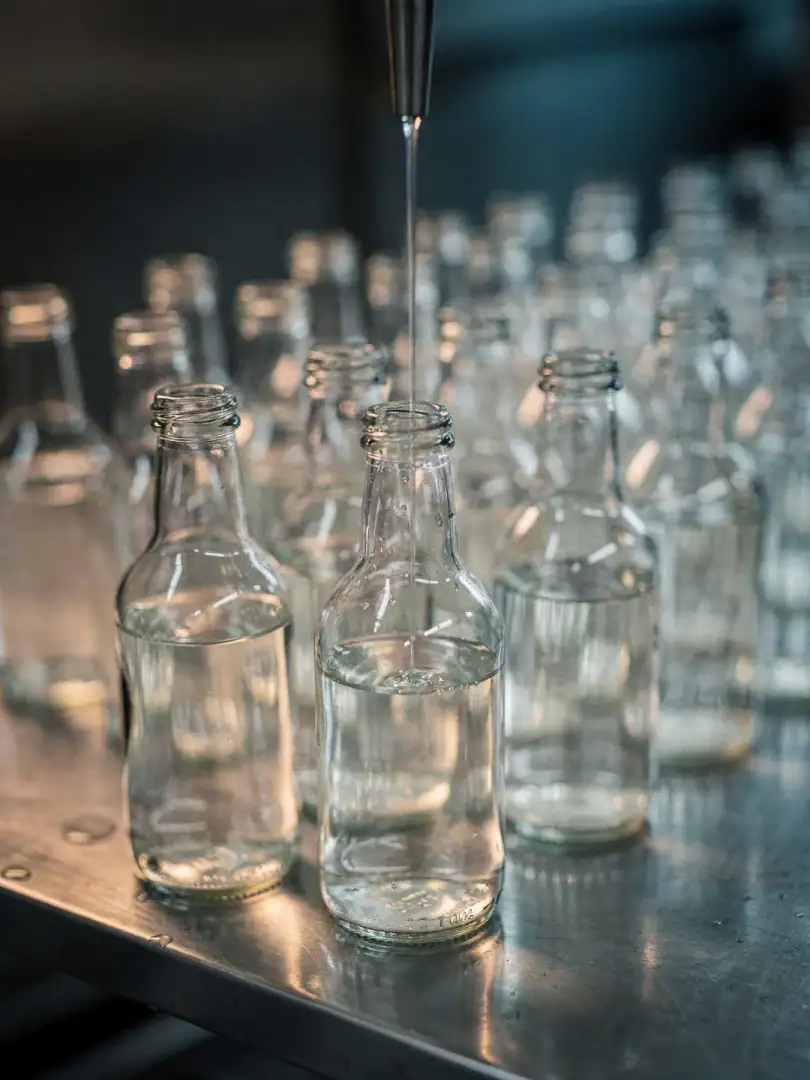
At the bottling line, vodka is filled into bottles, sealed, and labeled, usually fully automated and at high speed. Before filling, bottles are cleaned and checked for damage, ruling out contamination or leaky closures. Damaged bottles are automatically sorted out before filling. Optical sensors can detect even fine cracks that would be nearly invisible to the human eye.
Some producers also pasteurize the vodka or use nitrogen to minimize oxygen contact during filling. Because vodka barely continues to develop after bottling, the bottling date matters less for quality than it does for wine stored in an open bottle. What matters more is a tightly sealed bottle, properly stored.
How storage after bottling affects the vodka
Once bottled, vodka changes very little if stored correctly. It tolerates room temperature just as well as the freezer, without losing quality, as long as the bottle stays sealed and is kept out of direct sunlight.
Unlike open wine, vodka oxidizes only very slowly upon contact with air, because it contains hardly any delicate aroma compounds. An opened bottle therefore keeps its quality for months, a clear contrast with most other alcoholic drinks.