Raw Material and Regulation
What Is Vodka Made From?
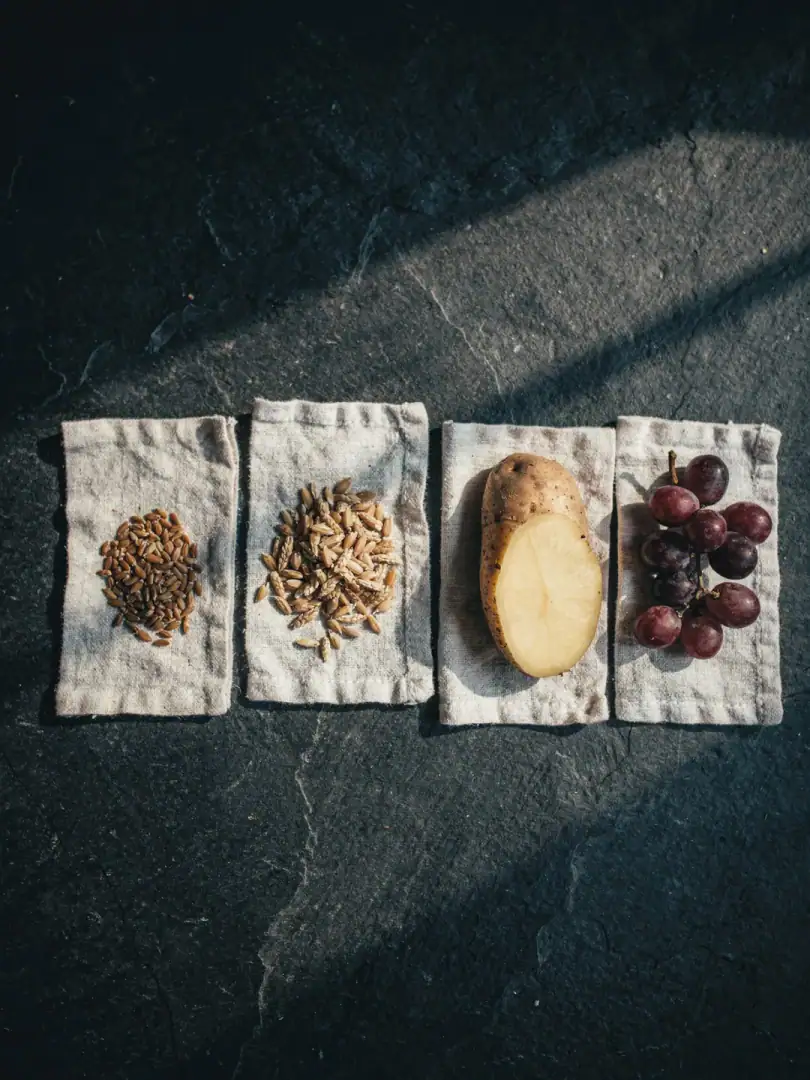
Vodka often comes across as a single, always-identical spirit. In reality, every bottle is built on a different raw material: rye, wheat, potatoes, corn, grapes, or leftovers from sugar production. This stop explains what EU law permits, what must appear on the label, and why that matters for flavor.
Ethyl Alcohol of Agricultural Origin
Vodka doesn't start with a grain of wheat, but with a legal definition. In the EU, Spirit Drinks Regulation (EU) 2019/787 sets out what a drink is allowed to call vodka. The foundation is ethyl alcohol of agricultural origin: alcohol obtained from plant-based raw materials. It is then distilled until it reaches an alcoholic strength of at least 96 percent. At that level of purity, little of the original rye, potato, or grape can still be tasted. That's exactly what the regulation requires: the alcohol should carry no flavor other than that of its own raw materials, and even that only in a heavily reduced form.
Practically any agricultural raw material that can be fermented into alcohol is allowed, from grain and potatoes to grapes or sugar beets. That wasn't always the case. In the early 2000s, the classic grain- and potato-producing countries such as Poland, Lithuania, and Sweden spent years arguing with producers from Western Europe over the right definition. The Western Europeans wanted to use grapes, whey, or molasses as a base too, a dispute the industry came to know as the Vodka Wars. The current regulation from 2019 resolved the conflict with a compromise: both paths are allowed, but each comes with different labeling transparency requirements.
When the Raw Material Must Appear on the Label
If vodka is made from grain or potatoes, the two historic standard raw materials, the label needs no further indication of where the alcohol came from. But if grapes, apples, or molasses are used instead, the regulation requires a statement of the raw material used, for example "made from grapes." This statement must appear clearly visible alongside the term "vodka." This rule protects buyers who automatically associate vodka with grain and wouldn't expect an ingredient like grapes or sugar beet. So anyone who reads the small print carefully can tell from that alone whether a bottle follows the traditional line or takes one of the newer, more openly defined paths.
Why Rectification Blurs the Difference
Behind that neutral flavor lies a technical step called rectification: repeated distillation in tall columns that progressively filter out fusel oils, esters, and other flavor compounds. The more often the alcohol passes through the column, the purer and more flavorless it becomes, until in the end almost nothing remains but ethanol and water. This purity is precisely what fundamentally separates vodka from whisky, rum, or Cognac, which are deliberately rectified less intensively so that the character of the raw material and the influence of barrel aging survive and can still be tasted later.
For the individual raw materials, this means: rye, wheat, potato, or grape are most likely to shape texture and a faint undertone. A pronounced aroma that an untrained palate could immediately identify, on the other hand, is rare. The following stops on this journey trace exactly this subtle difference, grain by grain, fruit by fruit, before the final stop clarifies just how much of it actually ends up in the glass.
Water, the Quiet Second Raw Material
Before vodka is bottled, the high-proof alcohol is diluted with water to drinking strength, usually 37.5 to 40 percent, and in some countries slightly higher. Water thus makes up a large share of every bottle by volume, yet it's barely mentioned on any label, while the grain or potato content often takes center stage in the marketing. A dedicated stop on this journey is therefore devoted to water and its influence on smoothness and mouthfeel, right after the individual raw materials have been introduced in detail.