Spicy and Robust
Rye Vodka
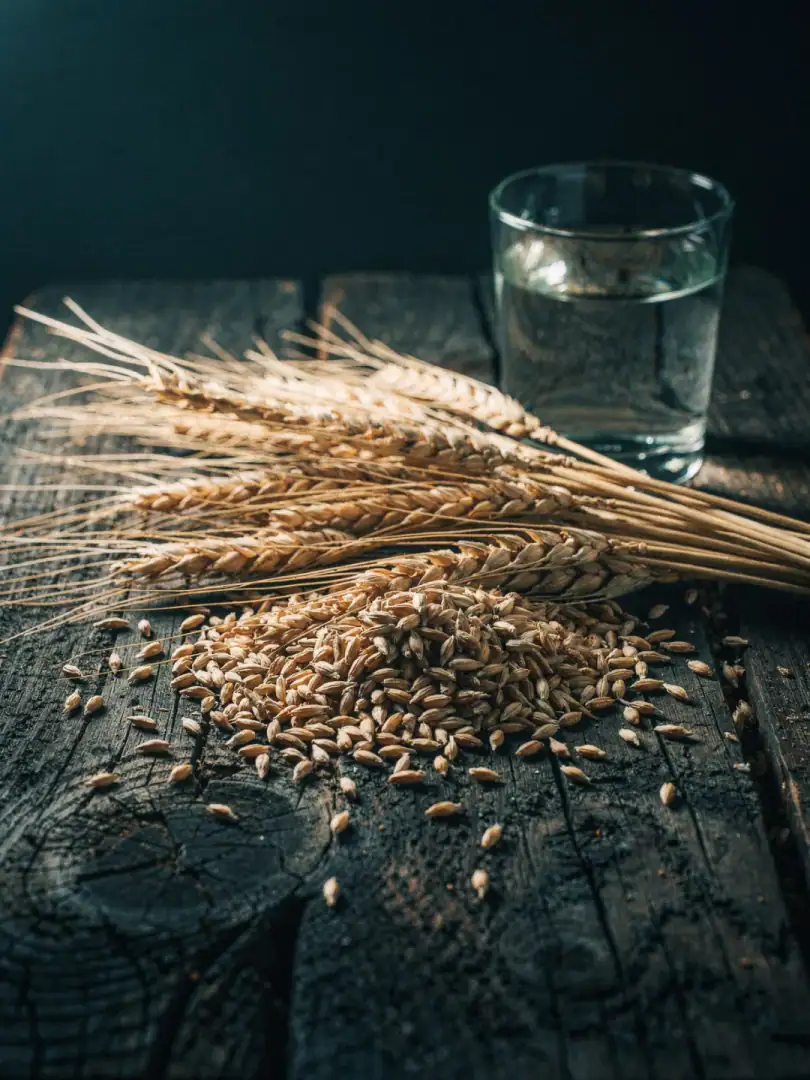
Rye is the classic among vodka grains, especially in Poland and much of Russia. This hardy grain tolerates poor soil and cool climates and lends the finished vodka a spicy, sometimes peppery undertone. This stop explains why rye became the original grain of vodka.
Why Rye Came First
Before modern agriculture brought fertilizers and selective breeding, rye grew where wheat stood little chance: on sandy, acidic soils across Poland, the Baltic states, and much of Russia. These very regions are considered the true cradle of vodka today, the so-called Vodka Belt stretching from Scandinavia to Siberia. Rye needed little care and withstood frost better than wheat. Even in poor years it delivered a reliable yield, ideal for a drink that originally arose from surplus grain that could barely be stored otherwise.
So the early distilleries in what is now Poland and Russia used rye not out of any taste preference at first, but simply because it was available. Only later, once vodka evolved from a farmer's product into an export commodity, did producers discover the grain's own character and begin promoting it deliberately, as a counterpoint to the increasingly neutral wheat- and corn-based vodkas coming out of the West. This rediscovery coincided with a period of growing international demand for vodka with a recognizable origin, rather than a purely interchangeable mass-market product.
The Spicy Undertone in the Glass
Rye naturally contains more oils and proteins than wheat. Even after multiple distillations, a faint trace of this remains: a slightly peppery undertone, sometimes reminiscent of fresh rye bread. In very pure, heavily rectified vodka this undertone nearly disappears, while in traditionally distilled versions it stands out more clearly. Connoisseurs often describe rye vodka as bolder and drier on the palate than wheat or potato vodka, with a short, clean finish rather than a lingering sweetness. This spiciness shows up most clearly when the vodka is drunk neat at room temperature, less so when it's ice-cold or mixed into a cocktail.
How pronounced this undertone turns out depends heavily on the producer. A vodka rectified to 96 percent or higher loses almost every trace of its raw material. Brands that deliberately purify less, in order to preserve character, therefore put rye front and center in their descriptions and on their labels, often with references to traditional copper distillation or multiple but incomplete distillation.
Poland's Place in the Rye Tradition
Poland remains closely tied to rye vodka to this day. The protected geographical indication Polska Wódka requires that the grain or potatoes come from Polish farms and that the entire process, from fermentation through distillation to bottling, takes place within the country. Many of the best-known Polish labels rely on rye, since it was historically the most widely grown crop and remains abundantly available today.
Russia, too, traditionally uses rye, though it's more often blended with wheat than in Polish production. The state Russian standard GOST doesn't prescribe a fixed grain variety, but it does draw on traditional recipes in which rye has held a firm place for centuries, alongside precise requirements for water quality and permitted additives. Lithuania and Latvia maintain similar rye traditions as well, though without a comparable protected designation.
Rye Vodka Compared with Wheat
Tasting rye and wheat vodka side by side, you'll rarely notice a dramatic difference, more a nuance in the finish. Rye tends to feel drier and sharper-edged, wheat rounder and slightly sweet. As the next stop shows, this also has to do with the starch and protein structure of the two grains, which behave differently even during fermentation and therefore yield different amounts of by-products for the later distillation.