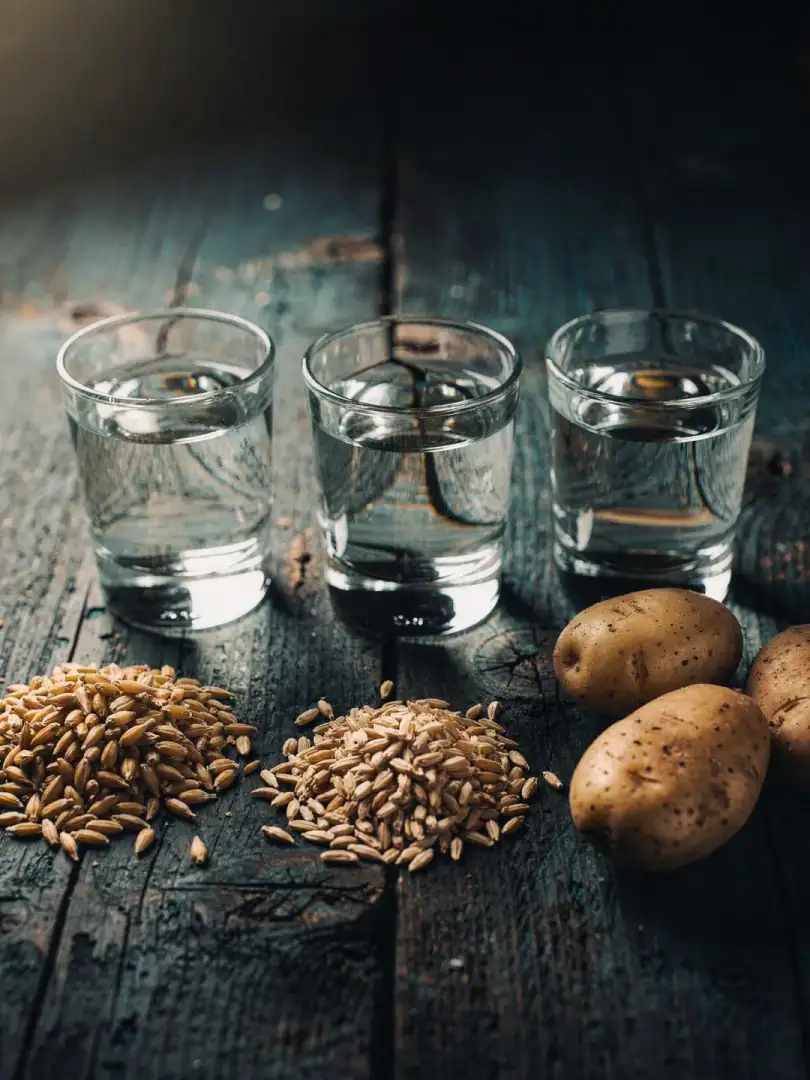
Rye, wheat, potato
Aromas and mouthfeel in vodka
Many consider vodka flavor-neutral, yet the raw material clearly shapes both the aromas and the texture in the mouth once you pay closer attention. Rye, wheat and potato each leave their own distinct fingerprint in the glass.
Rye: spicy and peppery
With rye vodka, one of the classic raw materials from Eastern Europe, a spicy, slightly peppery note usually stands out first. Often it's accompanied by a hint of fresh bread or grain. This spiciness is especially noticeable on the attack, meaning right at the start when the vodka first hits the tongue. It then fades into a rather dry finish.
Anyone who tries several rye vodkas side by side quickly notices how much this spiciness can vary in intensity. That depends on how much of the original grain character survives distillation. A very smoothly distilled rye vodka can sometimes taste almost like wheat. A more rustic one stays noticeably rougher and earthier on the tongue.
Wheat: soft and understated
Wheat, on the other hand, usually delivers a softer, rounder impression. The aromas seem more restrained, often with a light, almost bready sweetness instead of pronounced spice. The alcohol also comes across more gently overall. This very mildness is what makes wheat-based vodka a popular base for cocktails. It asserts itself less strongly against other ingredients in the glass, giving them more room.
Compared directly with rye, wheat often seems less conspicuous, which shouldn't be seen as a drawback. For anyone who prefers to drink vodka neat with fine, subtle nuances rather than bold spice, a soft wheat vodka is often the more approachable choice.
Potato: creamy and full-bodied
Potato produces a very different mouthfeel: fuller, denser, and often with a slightly creamy, almost oily texture. It lingers on the tongue longer than grain-based vodka. Flavor-wise, it sometimes shows earthy, slightly sweet notes that vaguely recall cooked potatoes or butter, without ever becoming overpowering.
This denser texture makes potato vodka a favorite for many when tasting it neat. It feels rounder and more substantial than a very lean, thin grain vodka. The downside shows up in mixed drinks: the robust texture can easily overshadow other ingredients in a cocktail if it isn't used deliberately.
Other raw materials and a legal special case
Besides these three classic raw materials, there are other bases such as grapes, sugar beet or molasses, each delivering its own, usually somewhat more neutral, aroma profile. They show just how broad the spectrum behind the seemingly simple category of vodka really is.
A special case is the legal situation in the US. The definition there, under 27 CFR 5, requires vodka to be "without distinctive character, aroma, taste, or color" in order to carry that name. This creates a certain tension with raw material statements on the label, which specifically advertise exactly these kinds of differences.
In the EU, by contrast, there is no such neutrality requirement. The Spirit Drinks Regulation mainly governs the minimum alcohol content and the labeling of the raw material, not the taste itself. Differences caused by the raw material, such as between rye, wheat and potato, are allowed and even meant to remain perceptible here.
For your own tasting, it's therefore worth doing a targeted comparison: one bottle each of rye, wheat and potato vodka, poured in the same amount and at the same temperature. After just a few sips, it's usually easy to say clearly which raw material best suits your own taste. Which texture in the mouth is most convincing also becomes apparent quickly.
Why processing also shapes the mouthfeel
Besides the raw material, processing also noticeably changes the mouthfeel. Multiple distillation and fine filtration, often through activated charcoal, remove rough edges and heavy fusel compounds from the vodka. As a result, it feels smoother and lighter overall, regardless of whether it's made from rye, wheat or potatoes.
If filtration is too coarse or distillation too limited, on the other hand, more of the original sharpness remains, even with an inherently mild raw material like wheat. So the raw material sets the direction of the aromas. Processing helps determine how fine or coarse those aromas ultimately come across in the glass.