Clarity and purity
How can you tell a good vodka?
Good vodka doesn't reveal itself through price alone, but through what the eye, nose and tongue actually perceive. A few simple checks are enough to form your own picture.
The first look: clarity in the glass
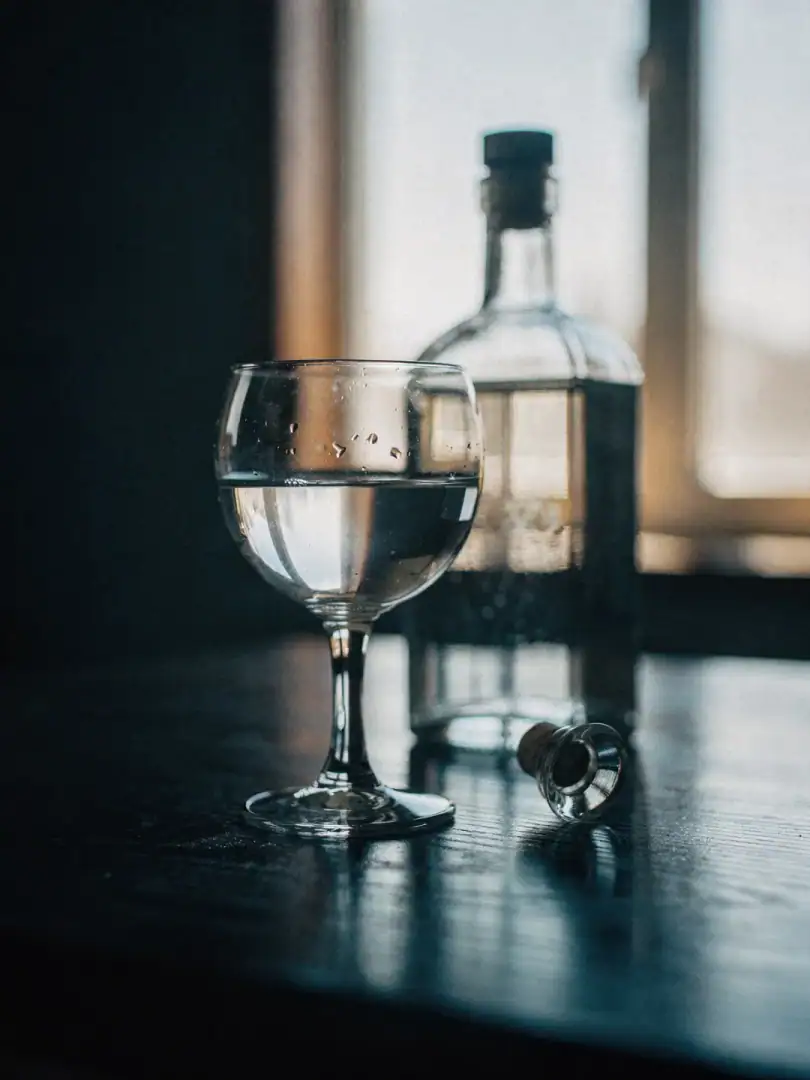
The first check costs nothing and takes only seconds: hold the bottle up against a bright light source. Vodka should be completely clear, with no cloudiness, no streaks and no small particles. Such particles flash instantly in the light. Cloudiness usually points to problems with filtration, and sometimes to later contamination, for instance if the bottle has been open and poorly sealed for a long time.
When swirled in the glass, thin streaks often form on the glass wall and run slowly downward, similar to a glass of wine. With vodka, these so-called legs usually fall faster and thinner than with a brandy, due to the high alcohol content. Very thick, slow streaks are rarer. They can point to a higher sugar content or to additives meant to give the vodka more body.
The smell test before the first sip
Before the first sip, it's always worth taking a short, careful sniff over the glass. The nose doesn't go directly into the glass, but stays a bit above it. A cleanly made vodka smells neutral to slightly sweet, with a hint of grain, anise or vanilla, depending on the raw material and production method.
A sharp, pungent smell of nail polish remover or glue, on the other hand, is a clear warning sign. It shows that the distillation or filtration wasn't carried out cleanly enough. Unwanted alcohol byproducts are then still present in the bottle. Such a smell doesn't really disappear with cold temperatures either; at most it's slightly muted.
What the taste really reveals
On the tongue, good vodka shows a certain balance: a noticeable warmth, but not pure burning that overwhelms everything else. Depending on the raw material, it tastes spicier and more robust with rye, softer and rounder with wheat, or creamier with potatoes. The legal definition in the US, by contrast, requires vodka to be without distinctive character.
An unpleasantly burning, almost caustic impression in the throat points more toward simple, careless production. This is especially true if it lingers for a long time. A clean finish, by contrast, feels warm and fades within a few seconds. A bitter or chemical aftertaste should be absent.
What must be on the label
In the EU, vodka must contain at least 37.5 percent alcohol to carry that name. This is set out in EU Spirit Drinks Regulation 2019/787. If the vodka isn't made from grain or potatoes but, say, from grapes or sugar beet, the raw material must additionally be stated on the label.
Anyone wanting to know what a vodka is made from will therefore usually find the answer right on the bottle, even if the raw material doesn't appear in the name itself. This mandatory information is a simple, reliable starting point before a single drop even reaches the glass.
Origin markers as an additional clue
Some designations are additionally legally protected and may only be used under fixed conditions. "Polska Wódka," for example, may only be used for vodka made from Polish grain or Polish potatoes that was also produced there. Bison grass vodka from the Podlasie region must additionally be flavored with the namesake grass from exactly that area.
Such protected designations don't guarantee a particular taste, but they do guarantee verifiable origin and production. That sets them apart from voluntary marketing claims made by individual producers. These often point to purity or special processes, but they aren't legally verified in the same way.
Other countries regulate vodka in their own way. Russia, for instance, has its own quality tiers such as Lux or Premium for the domestic market under the state GOST standard. These tiers impose additional requirements on purity and production. For your own impression, though, that never replaces actually looking into the glass.
None of these markers alone replaces your own judgment. Together, however, they give a much clearer picture than the price on the label. A clear look into the glass, a quick smell test, a deliberate sip and a glance at the mandatory label information are usually enough for a rough assessment. A trained palate isn't necessary for that.