Shape and effect
The right glass for vodka
A tiny shot glass is widely considered the one true vessel for vodka. For tasting, though, it only offers a fraction of what a glass can actually do.
The classic shot glass and its limits
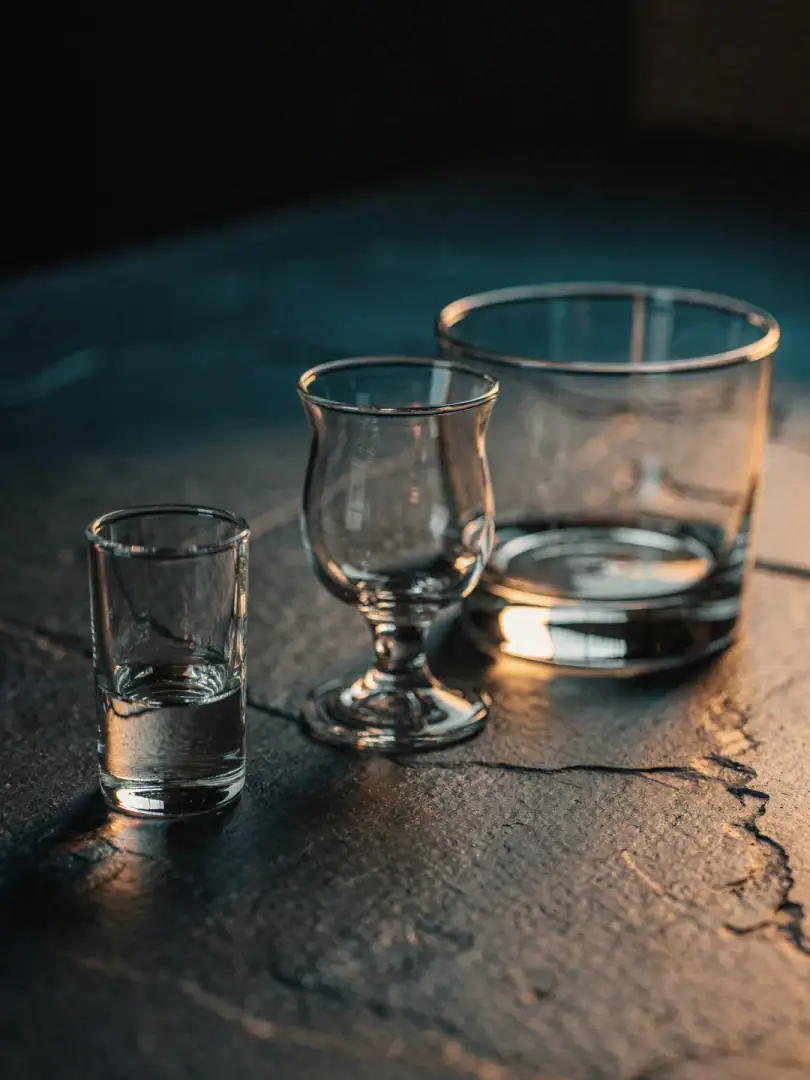
The narrow, tall shot glass holding two to four centilitres is the standard vessel for vodka in many countries. It's practical for a quick, cold sip in company, since the small amount is easy to down in one go. For a careful tasting, though, it's poorly suited, since the narrow opening leaves little room for aromas to rise out of the glass.
On top of that, such a small glass almost automatically encourages quick drinking, simply because so little fits inside. Anyone wanting to take their time and really assess the vodka needs a different vessel, even if the shot glass still has its place for the sociable moment.
Why a tulip glass reveals more
A small tulip glass, the kind also used for aromatic fine brandies, funnels the scent compounds upward toward its narrowing opening. This lets you catch the vodka's aroma even before the first sip, and subtle notes like grain, anise, or a light sweetness come through more clearly than in a straight, wide glass. Even with a fairly plain vodka, this difference is often more noticeable than you'd expect before trying it.
The slightly wider bowl at the bottom also allows for a gentle swirl without spilling. This swirling brings more surface area into contact with air and releases additional aromas, much like with a glass of wine, just on a smaller scale. Anyone without a tulip glass can get surprisingly far with a small white wine glass.
Wide glass versus narrow glass: the difference
A wide, open glass lets alcohol vapours rise quickly and unfiltered, often making the first impression sharper and more pungent than the vodka actually tastes. A narrower glass, by contrast, directs the vapours more precisely toward the nose while giving them a little more time to get there. This effect is especially noticeable with very simple vodkas that don't bring much aroma to begin with.
For tasting several vodkas side by side, it's therefore best to use the same glass model for every sample. Different shapes would otherwise create different impressions even with identical contents, and the comparison between bottles would no longer be fair. The pour size should also stay as consistent as possible for each sample.
A clean glass free of foreign odours
Even the best glass is of little use if it smells of dish soap or the kitchen cupboard. Vodka's flavour is subtle enough that such foreign odours stand out immediately and skew the result. Before a tasting, it's worth rinsing glasses briefly with clear water and letting them air-dry rather than wiping them with a cloth. For this reason, some experienced tasters routinely smell the empty glass before pouring anything at all.
A tea towel often leaves a faint fabric smell behind that lingers in the glass and only fades after a few minutes. To be absolutely sure, give the empty glass a quick sniff before pouring the vodka, and when in doubt, wait an extra minute.
How much vodka belongs in the glass
How much vodka belongs in the glass is easy to underestimate when tasting. Two to three centilitres is plenty, since the goal isn't a generous pour but a careful look and a few mindful sips. A glass filled too full is also hard to swirl without spilling, and that swirling is an essential part of a thorough assessment.
For a tasting with several bottles, a small measuring glass helps ensure every sample is poured to exactly the same size. Only this way can you honestly compare which vodka impresses and which doesn't, without a randomly larger pour skewing the verdict. Anyone planning many samples in a row should also allow enough time and water between glasses, so the impression at the end of the line-up is just as reliable as it was at the start.