Cold and flavour
Does vodka need to go in the freezer?
A freezer sounds like the one true way to store vodka, but it's really just one option among several. The right temperature depends on whether you're drinking or tasting.
Why the freezer is so popular
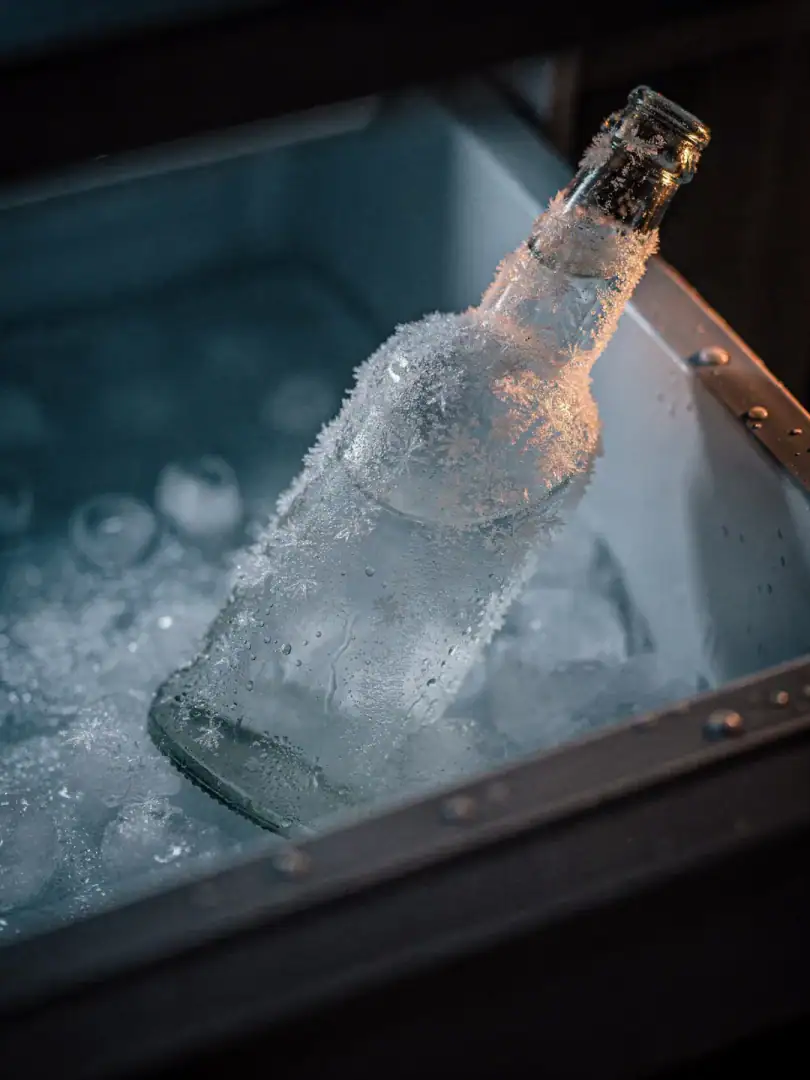
Because of its high alcohol content, vodka only freezes at temperatures far lower than water, usually somewhere between minus 20 and minus 27 degrees Celsius, depending on the bottle's ABV. In a standard household freezer at around minus 18 degrees, it stays liquid but becomes noticeably thicker and very cold. Many countries consider this exact consistency the ideal state for a classic vodka shot. Some brands even explicitly recommend freezer storage on the label, which is mainly a marketing point and says nothing about the actual quality of the contents.
Cold numbs the taste buds on the tongue and dulls the typical burn of high-proof alcohol. A simple, not especially refined vodka automatically tastes smoother when ice-cold, because any rough edges barely register. For casual enjoyment, that's a handy trick, not a mark of quality. With a particularly clean, high-quality vodka, though, the cold sacrifices exactly the finesse you paid extra for.
What cold really changes in the glass
Besides sharpness, cold also affects how volatile aroma compounds behave. The colder a liquid is, the fewer scent molecules rise up to the nose. An ice-cold vodka therefore barely smells of anything, even if it would show clear notes of grain or anise when warmer. The impression in the mouth changes too: cold liquid often feels thicker on the tongue, even when the actual texture hasn't changed at all.
For a relaxed sip now and then, that's no drawback. For a tasting, though, it is, because these exact aromas are what separate a simple vodka from an elaborately crafted one. Strictly speaking, anyone who only knows the ice-cold version has never tasted the bottle's full flavour. A second round at a warmer temperature is therefore no mistake, but part of a complete tasting.
The better temperature for tasting
For a serious tasting, experienced tasters recommend a temperature of around eight to twelve degrees Celsius, in other words fridge-cold rather than freezer-cold. At this level, the alcohol bite stays noticeably muted without completely suppressing the aromas. The vodka comes across as neither harsh nor flat, showing both its structure and its aroma. This range has become the practical middle ground among tasters over the years, regardless of what raw material the vodka is made from.
A simple test shows the difference: try the same bottle once from the freezer and once from the fridge, taking small sips each time. It's usually immediately obvious how much more you can smell and taste in the warmer version, even if the first impression is slightly sharper. If you like, you can repeat the sample at room temperature too and compare all three impressions.
Room temperature only for very refined vodkas
Some high-quality, very smoothly distilled vodkas are deliberately drunk at room temperature, similar to a mild brandy. This only works if the spirit is already clean and free of unpleasant harshness; otherwise, at this temperature, the alcohol quickly feels aggressive and unpleasant on the tongue. Such vodkas often come from smaller distilleries that put considerable effort into a particularly pure, smooth distillation.
For beginners, it's therefore worth starting with the fridge-cold version. Once you can spot subtle differences between bottles at that stage, you can work your way up to warmer temperatures step by step and observe how the aroma and texture change along the way. Taking notes on each sample helps you recall and distinguish your own impressions later.
Regional habits as an example
In warmer countries with less pronounced vodka traditions, the spirit is more often served in cocktails or over ice cubes rather than neat from the freezer. The ice also cools the drink, but it gradually melts and dilutes the vodka at the same time, which changes the flavour yet again.
Such differences mainly show one thing: there's no single correct temperature for every occasion. Ice-cold and neat suits a celebration, fridge-cold and neat suits careful tasting, and milder cooling from ice suits a longer, more leisurely cocktail.