Organising your own tasting
Hosting a vodka tasting at home
A vodka tasting of your own doesn't need any special equipment, just a few bottles, matching glasses, and a clear structure. Even with simple means, you can learn a surprising amount about vodka at home.
How many bottles are enough to start with
Three to five different bottles are plenty to start with. More samples sound exciting at first, but they quickly overwhelm the tongue, since alcohol builds up in the mouth. By the sixth or seventh sample, subtle differences become nearly impossible to tell apart. A small, manageable selection ultimately yields more insight than a long line-up of half-remembered impressions.
It's also worth including some variety: a grain-based vodka, a potato-based one, and perhaps one from a different price range. This allows for comparisons not just between brands but also between raw materials and price categories. In the end, that reveals far more about your own taste than five very similar bottles side by side.
Tasting blind reveals more than the label
Leaving the labels visible means you automatically taste with whatever you already know about the brand or price in the back of your mind. That often colours the verdict more than you realise. If the bottles are instead marked with simple numbers or letters and kept out of sight, all that counts is what's actually in the glass.
Such a blind comparison is especially revealing when it comes to the question of expensive versus cheap. It removes expectation from the judgement. For the sociable part of the evening, you can still reveal at the end which number belonged to which bottle. For many, that's simply part of the fun of an evening like this.
A fixed sequence for a fair comparison
To keep the comparison fair, all samples should be poured into the same glass shape, in the same amount, and at the same temperature. It's best to start the line-up with the mildest, most neutral vodka and end with the boldest or most unusual one. This way, the tongue doesn't get used to an intense flavour right from the start.
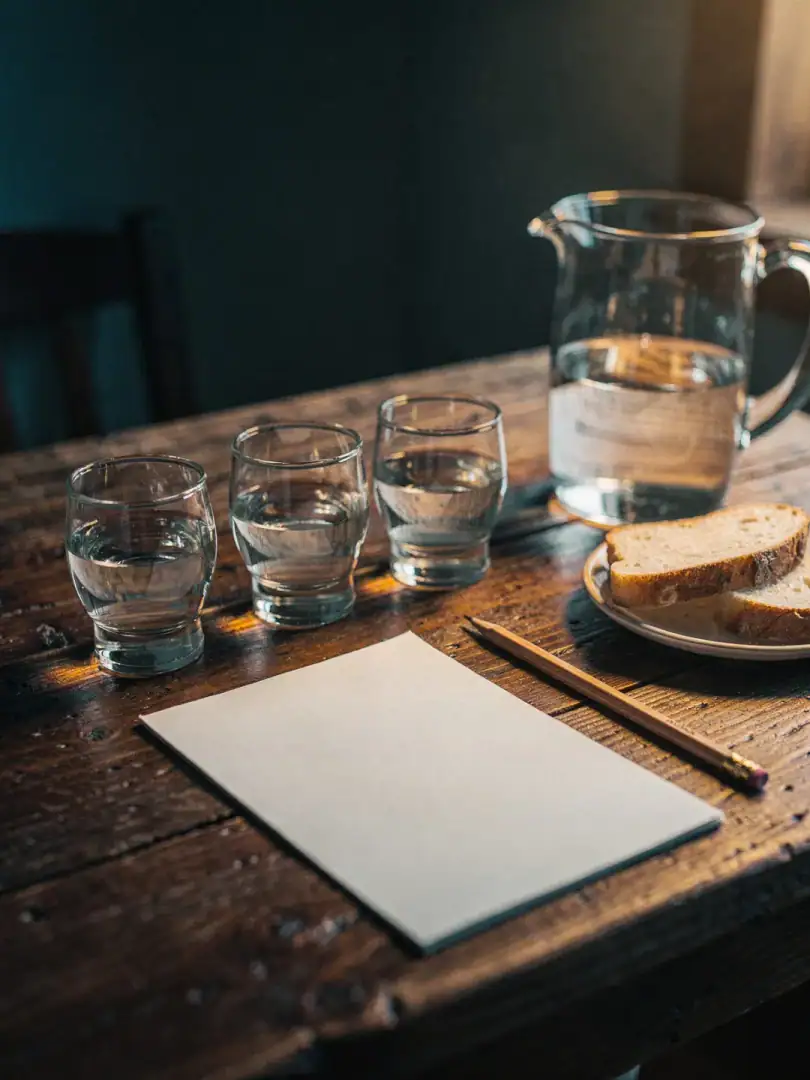
Between samples, a sip of still water and a neutral bite like white bread help reset the palate. Short breaks of one to two minutes between bottles also give the tongue time to recover before the next sample comes around.
Notes instead of just impressions in your head
A simple sheet per bottle with space for aroma, taste, texture, and finish helps more than it might seem at first. Impressions from the first sample fade quickly once three or four more follow. A few keywords are enough, such as spicy, smooth, burning, or creamy. They're much easier to place later during comparison than a vague memory.
At the end of the evening, it's worth taking a quick look at all the notes side by side. Often this reveals that your own ranking differs from the order in which the drinks were poured. That's a good sign. It means the contents of the glass, not prior expectations, actually shaped the judgment.
Group size, preparation and total quantity in mind
A tasting like this works well with two people or in a small group of four to six. Larger groups quickly become unwieldy when it comes to note-taking and comparing. It's also important to keep the total quantity consumed over the evening in mind. With five samples of two centiliters each, a fair amount of pure alcohol adds up, even if each individual sip seems small.
Water, a bit of food, and enough breaks between samples keep the evening enjoyable rather than exhausting. In the end, a tasting is successful if all participants can say afterward which vodka they liked best and why. How much was drunk in total doesn't matter.
An afternoon is enough for preparation: chilling bottles, washing glasses and letting them air-dry, setting out water and a few neutral snacks. If you like, you can print out note sheets in advance or simply have index cards and pens ready. That way, nothing needs to be organized during the evening itself. Attention stays entirely on the glasses.
A fixed order in which each bottle is poured also prevents confusion in a larger group. It's best if one person takes charge of pouring and assigning the numbers. That way everyone else can focus entirely on smelling and tasting, without having to worry about the logistics.