Neat and mindful
How do you drink vodka properly?
Some people knock back ice-cold vodka in one go, while others sip it slowly at room temperature like a brandy. A proper tasting calls for a third, more measured approach.
Drinking and tasting are two different things
A glass to toast the evening and a glass for careful assessment demand different kinds of attention. When drinking socially, the mood around the table matters far more than every single note in the glass. Tasting, on the other hand, is precisely about those details: sharpness, sweetness, texture, and the finish that lingers in the mouth after swallowing. Mixing the two situations does justice to neither the evening nor the vodka, since attention ends up split between them. This distinction may sound trivial, but it often determines whether a tasting actually yields any insight.
A small sip of two to three millilitres is plenty for a serious tasting. Drinking too fast and too much at once overwhelms the tongue with raw alcohol, so all you end up tasting is the burn rather than the subtler notes underneath. Calm, a neutral palate, and a little time between samples help far more than a full glass. With a particularly clean, high-quality vodka, though, serving it ice-cold sacrifices exactly the finesse you paid extra for.
The short, cold style from Eastern Europe
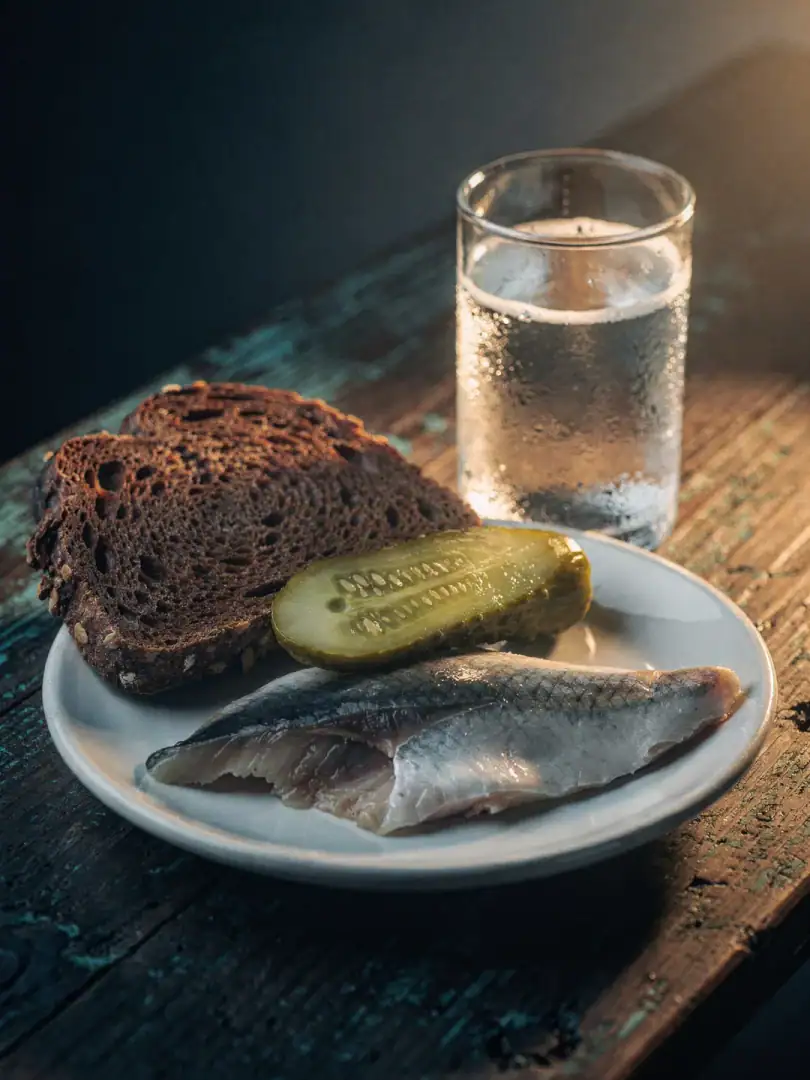
In many Eastern European countries, vodka is traditionally served ice-cold and downed in one short, decisive gulp, usually followed by a bite of bread, pickled cucumber, or pickled herring. These small bites, known as zakuski, absorb the sharpness of the alcohol and noticeably round off the finish. This ritual is mainly a sociable custom at the table rather than a method for judging vodka's quality. Historically, the tradition also stems from cold winters, when an ice-cold shot was simply more pleasant than a warm one.
The very low temperature noticeably thickens the vodka and mutes the alcohol bite, which is why it goes down so easily in one gulp. For anyone wanting to judge the flavour more precisely, though, this has a catch: cold numbs the tongue and masks the subtle aromas that only emerge at slightly warmer temperatures.
The slow, sensory approach
Sommeliers and other tasters therefore do the opposite. They chill the vodka only lightly and take small sips rather than a full glass at once. This leaves enough warmth in the mouth for aromas like grain, anise, or a faint sweetness to actually develop before the raw alcohol drowns them out completely. Anyone who only drinks it ice-cold misses out on exactly this part of the tasting. This is precisely why professional tastings almost never chill vodka down to freezer temperature.
Letting the vodka rest briefly in the mouth before swallowing also reveals how the texture feels: thin and watery, slightly oily, or almost creamy. Only after swallowing does the finish appear, showing whether a burn, a gentle warmth, or almost nothing lingers. This moment right after the sip often reveals more about quality than the very first impression in the mouth.
Which method suits which occasion
For a sociable evening, there's little wrong with the cold, quick style, as long as it stays moderate and no one is pressured to keep drinking along. But anyone wanting to judge a vodka, compare it with others, or simply understand it better has little choice but to use the slow method.
A few simple rules make any tasting easier: don't taste on an empty stomach, drink water between each sample, and deliberately keep the quantity per session small. This keeps the palate receptive and the evening manageable rather than exhausting.
Neutral bites instead of strong side dishes
Anyone drinking purely to enjoy the evening tends to pair vodka with rich, spicy food. For a tasting, though, neutral accompaniments work far better: a piece of white bread, a slice of apple, or unsalted crackers. They bind residual alcohol in the mouth without bringing much flavour of their own. A sip of still water in between serves the same purpose and is something every kitchen has on hand.
Strongly seasoned or very salty snacks, by contrast, alter the tongue's perception and can easily skew the next sip. Between two samples, a sip of still water and a neutral bite usually help before moving on. This keeps every sample fair in comparison.