Charcoal Without the Myth
Filtration
On many labels, filtration sounds like magic. Birch charcoal, quartz sand, sometimes silver—each method comes with its own marketing story. What's technically behind it all is considerably more down-to-earth.
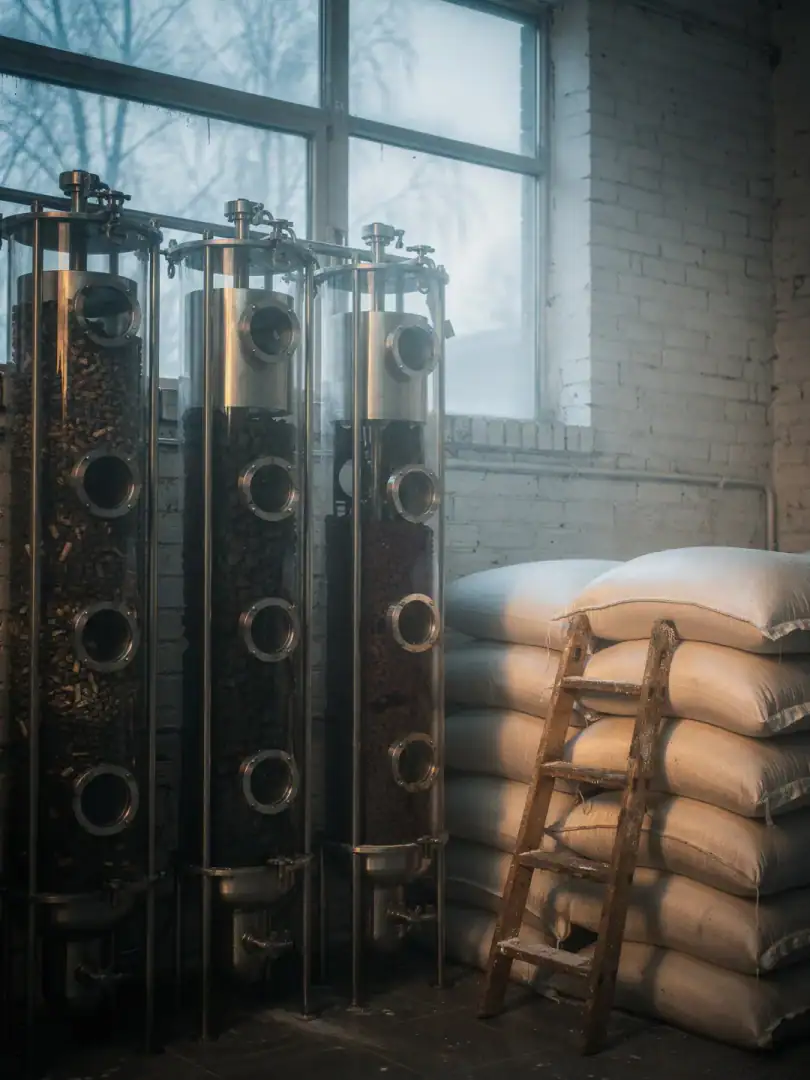
The best known is filtration through birch charcoal, made from charred birch wood. The diluted vodka passes through it in several rounds. Sometimes an additional stage of activated carbon follows before bottling, including at the distillery in Nemyriv.
The charcoal does indeed bind some of the last remaining fusel oils. Slightly oily by-products also get caught in it, ones that even a good column still doesn't remove completely. This makes the vodka feel rounder in the mouth. But its effect remains limited: a spirit that's already been technically well distilled changes only in nuance through charcoal filtration.
Quartz sand is used in a similar way, mainly as a mechanical filter against the last traces of cloudiness. It has little effect on flavor compounds. Silver filtration, which some brands advertise, is mostly storytelling. Silver does kill bacteria, but in a spirit above forty percent alcohol, there are no bacteria left to kill anyway.
According to the distillery, Nemiroff also relies on multi-stage filtration. It doesn't disclose the exact materials or the number of stages involved. This pattern is standard across the entire industry.
What remains in the end is a well-crafted, but fundamentally neutral, vodka. Filtration polishes away the last trace of rawness, nothing more. Anyone hoping to taste a clear difference between charcoal-filtered and unfiltered neutral spirit needs to taste very carefully indeed. That's possible with training and a direct side-by-side comparison, not casually from a glass pulled out of the freezer.