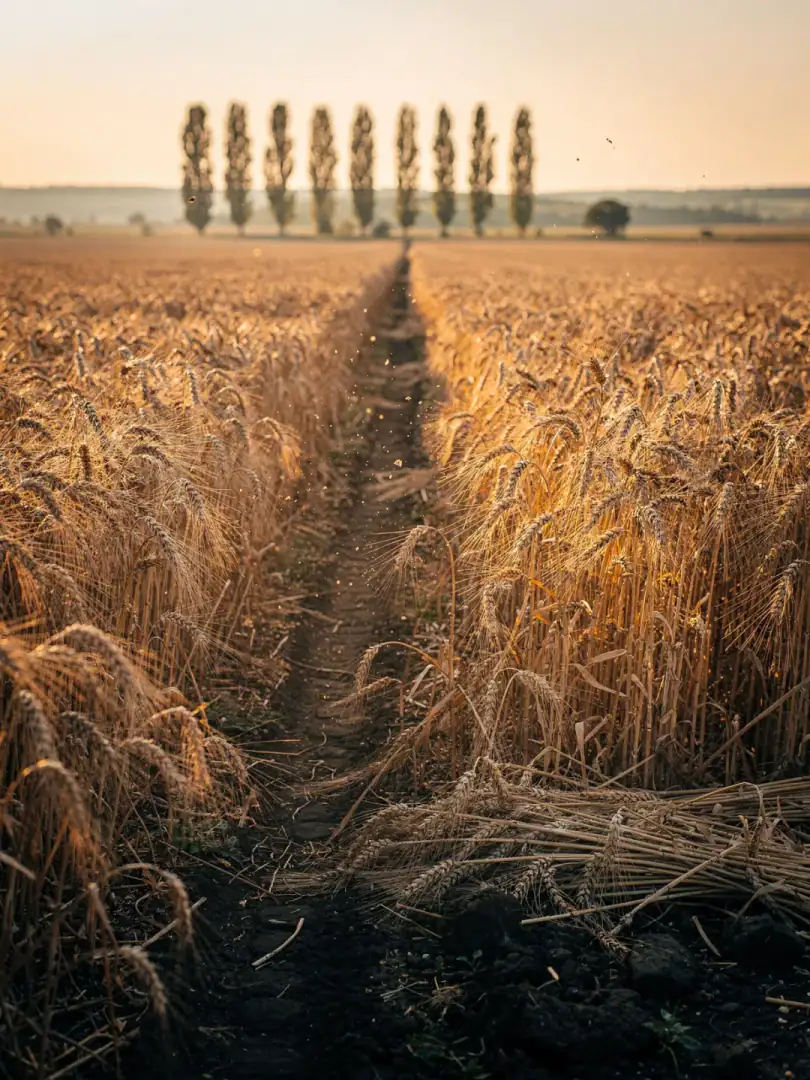
Wheat on Black Earth
Raw Material
Anyone driving through the fields around Nemyriv in late summer sees little but wheat all the way to the horizon. The ears stand golden yellow and heavy with grain, broken only by narrow field paths and the occasional row of poplars. The soil beneath is black, deep black. Across Europe it's known by a single name: black earth, or chornozem in Ukrainian.
More than sixty-five percent of Ukraine's arable land consists of this soil. That makes Ukraine one of the world's three largest wheat producers. Podolia, Podillia in Ukrainian, lies right in the middle of this belt, which stretches from here for thousands of kilometers all the way to Russia.
When Princess Shcherbatova changed the recipe in 1872, she turned away from the potato. She chose the grain right outside her door: wheat. It brings a milder, slightly sweet base note to vodka than potatoes or rye do. That very note still defines the spirits from Nemyriv today.
Beneath the roots lies the reason the soil is so productive. The humus layer often reaches seventy centimeters deep, storing nutrients from thousands of years of decomposed steppe grasses. Below that begins a loamy transitional soil. At the very bottom lies calcareous loess, which holds water like a sponge through dry summer weeks.
For the wheat, this means a steady supply of nutrients and moisture throughout the year. Sandier soils elsewhere bring far greater swings in harvest yields. This reliability has underpinned Podolian vodka from the very start, long before it ever reaches the column still.
Rye and maize also grow in Podolia. But for vodka, wheat remains the standard by which Nemyriv still measures itself today.
Deep black and loose, rich in humus from thousands of years of decomposed steppe grasses.
The root: Wheat roots find nutrients and water at full depth here, allowing the ears to grow evenly large.