Bug River & Granite
Water & Climate
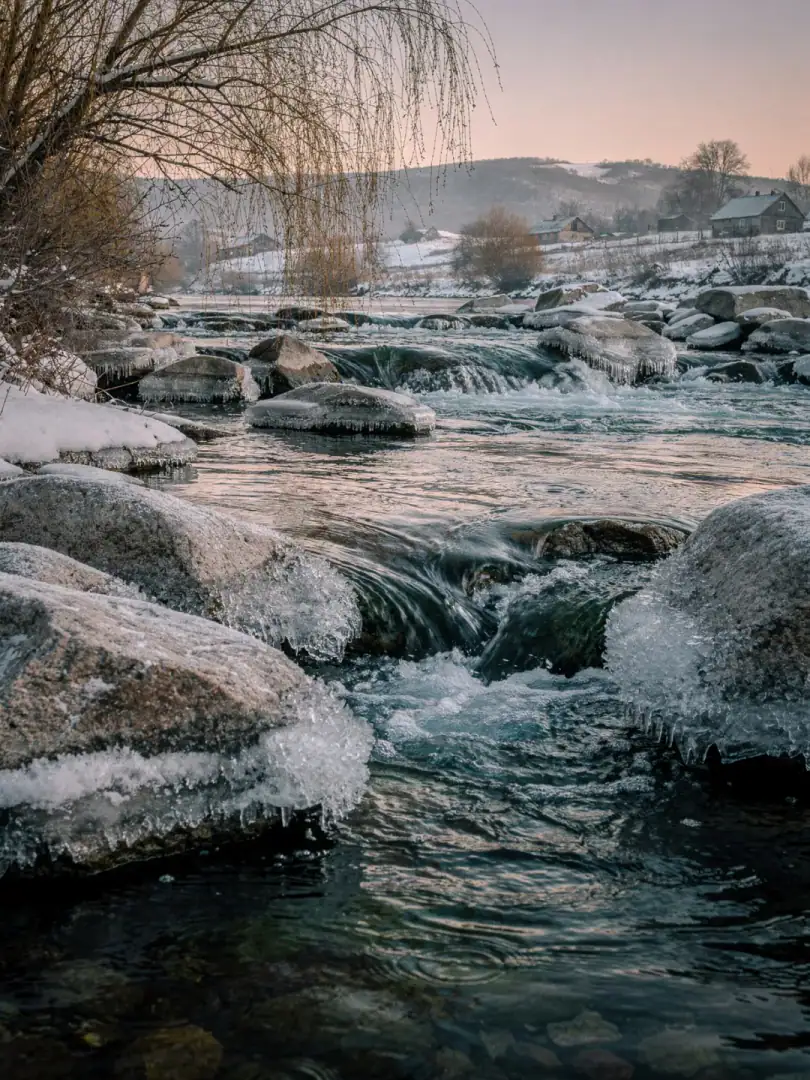
In winter, the banks of the Bug freeze over for days at a time, right through Vinnytsia. The city lies barely an hour's drive from Nemyriv. There, the river cuts through bare granite and forms small rapids. This is where Ukraine's bedrock, the so-called Ukrainian Shield, breaks through to the surface. The rock beneath is hundreds of millions of years old, far older than the young black earth lying on top of it.
The river itself rises farther north, still within Podolia. By the time it reaches the Black Sea at Mykolaiv, it has traveled around eight hundred kilometers. Along the way, it passes right through the farmland that also produces Nemyriv's wheat.
The water takes years to seep through granite and black earth. Only then does it resurface in wells and small tributaries. There it runs clear and noticeably cooler than the summer air.
Podolia lies within the temperate continental climate of Central and Eastern Europe. Summers are hot and often dry, with temperatures well above thirty degrees Celsius. Winters, by contrast, regularly bring double-digit sub-zero temperatures to Vinnytsia, especially toward the end of January. Then the Bug disappears for days beneath a solid sheet of ice.
For the wheat fields, this climate means a short, intense growing season. It begins with the last frost of spring and ends with the harvest in August. During this time, the plant depends heavily on the water reserves that the winter snow has left behind in the loess.
These cold winters still shape how vodka is drunk today. It's served ice-cold, often straight from the freezer. In Podolia, cold was never a luxury—from November to March, it was simply the everyday norm.