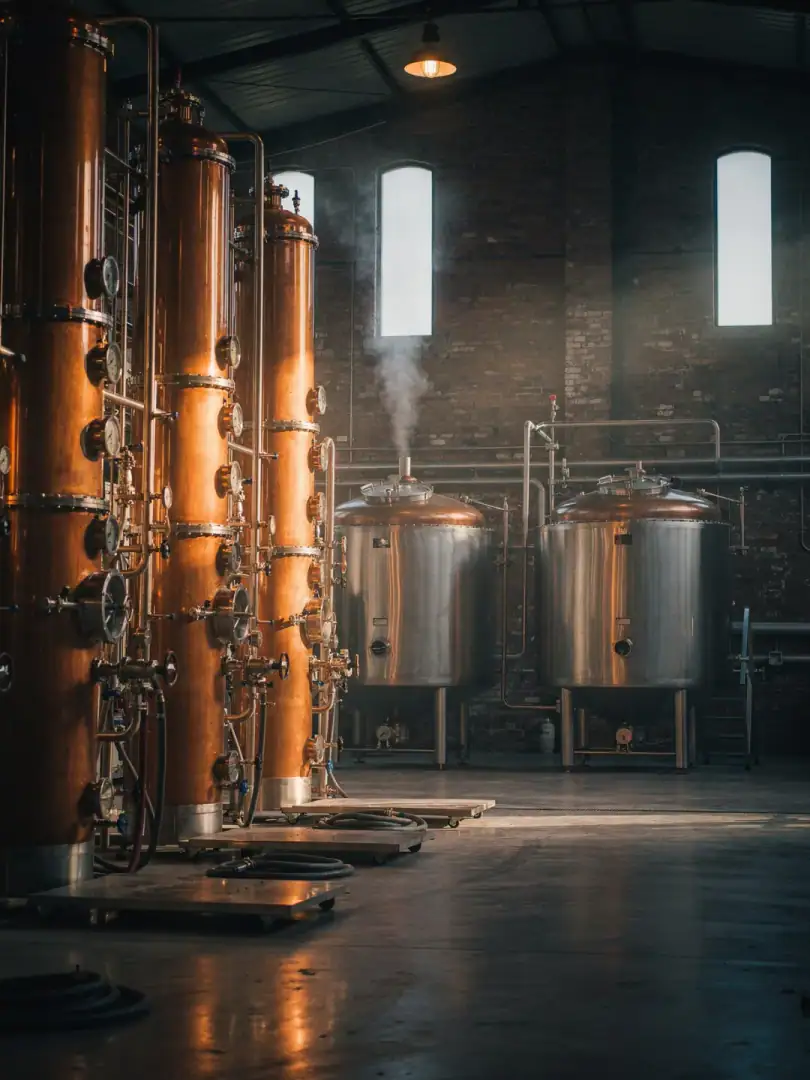
Mash & Column
Distillation & Rectification
Wheat or rye from the black earth fields is first turned into a mash by mixing it with water and yeast. The mash ferments for several days. By the end, the sugar from the grain has been fully converted into alcohol. What remains is a thin, slightly sour beer, the foundation for everything that follows.
Small, traditional distilleries such as the one behind the Pervak brand still rely on two distillation runs in classic pot stills. In the second run, roasted bread is added for extra aroma. The name Pervak literally means "the firstborn." It refers precisely to this first, especially fragrant run, which forebears once prized above all others.
The region's larger facilities, on the other hand, work with tall rectification columns of copper and steel, as at the plant near Khortytsia in Zaporizhzhia. Inside, alcohol vapor rises through many plates, being stripped step by step of fusel oils and aromatic compounds. What remains at the end is nearly pure, flavor-neutral alcohol.
This raw alcohol often exceeds 96 percent after leaving the column, far too strong to drink. It is therefore diluted to drinking strength with the region's soft well or river water. In Ukraine, as in most countries, that strength sits at around 40 percent ABV.
EU Spirit Drinks Regulation 2019/787 sets only a minimum of 37.5 percent ABV for vodka anyway. The region's distilleries traditionally go a bit higher. Here, 40 percent has been considered the true drinking strength for generations.
How often distillation runs each day depends on the facility. Column distilleries operate almost around the clock, while small craft producers like the one behind Pervak manage only a few batches a week.