Dnipro & Continental Climate
Water & Climate
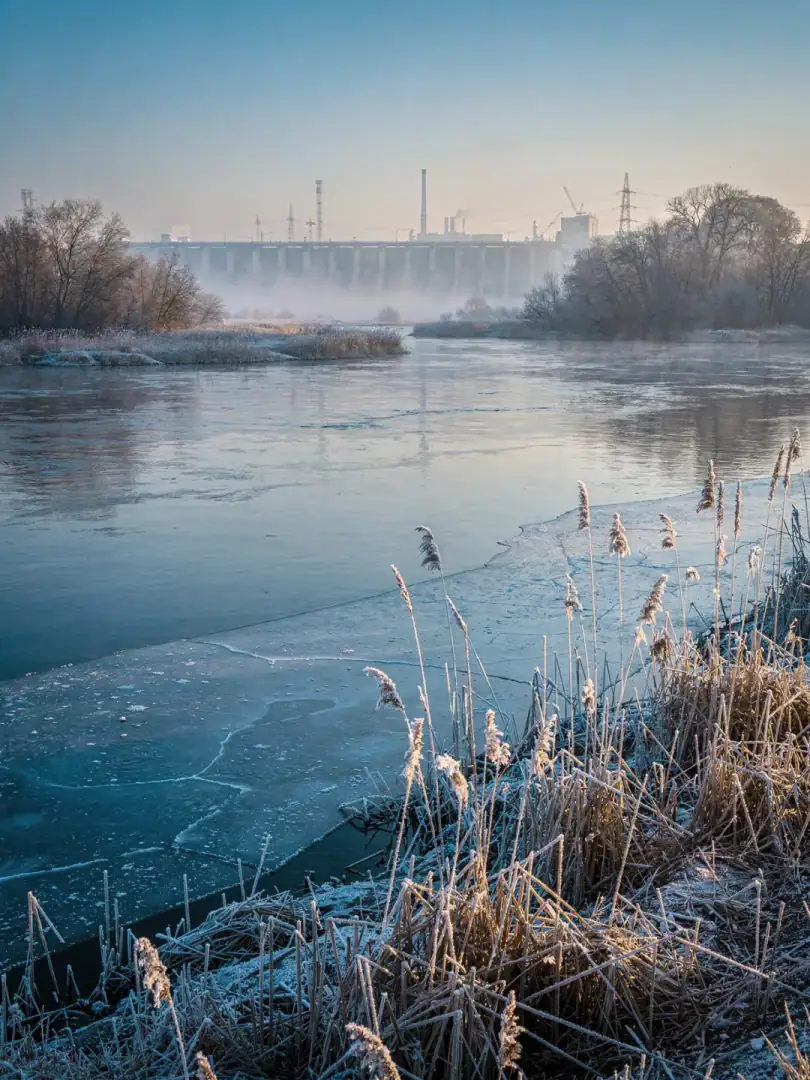
The Dnipro flows broad and unhurried from the north. It skirts Kyiv and widens near the city of Dnipro into a long reservoir. This stretches for 129 kilometers down to Zaporizhzhia. The DniproHES hydroelectric power station was completed in 1932. It dammed an almost 100-kilometer stretch of the once-famous Dnipro rapids. The structure sits just north of Khortytsia island.
Cold, often snowy winters with deep frost alternate with hot, dry summers. Between them lies only a brief spring. During this time, snowmelt from the Dnipro's catchment area thoroughly soaks the fields once more. Then comes the heat.
This swing between frost and heat forces a great deal of growth out of the grain in a short time. It makes wheat and rye firmer and richer in starch than in milder climates. For distilleries, this means a short, intense harvest in late summer. Months then follow in which the year's first mash is prepared.
Water for the mash and for diluting the raw alcohol in this region usually comes from deep wells, filtered through several meters of loess and the rock beneath it. Some distilleries also draw water directly from the Dnipro reservoir. Both sources yield soft, low-mineral water that doesn't mask the flavor of the grain.
In winter, the edges of the river can freeze over, briefly complicating water extraction. Distilleries traditionally schedule their major maintenance work for this cold, lower-production season, when there's less fresh grain to process anyway.
So the river and climate remain part of production all year round, far beyond the late-summer harvest.