Borscht & Pampushky
Vodka & Food
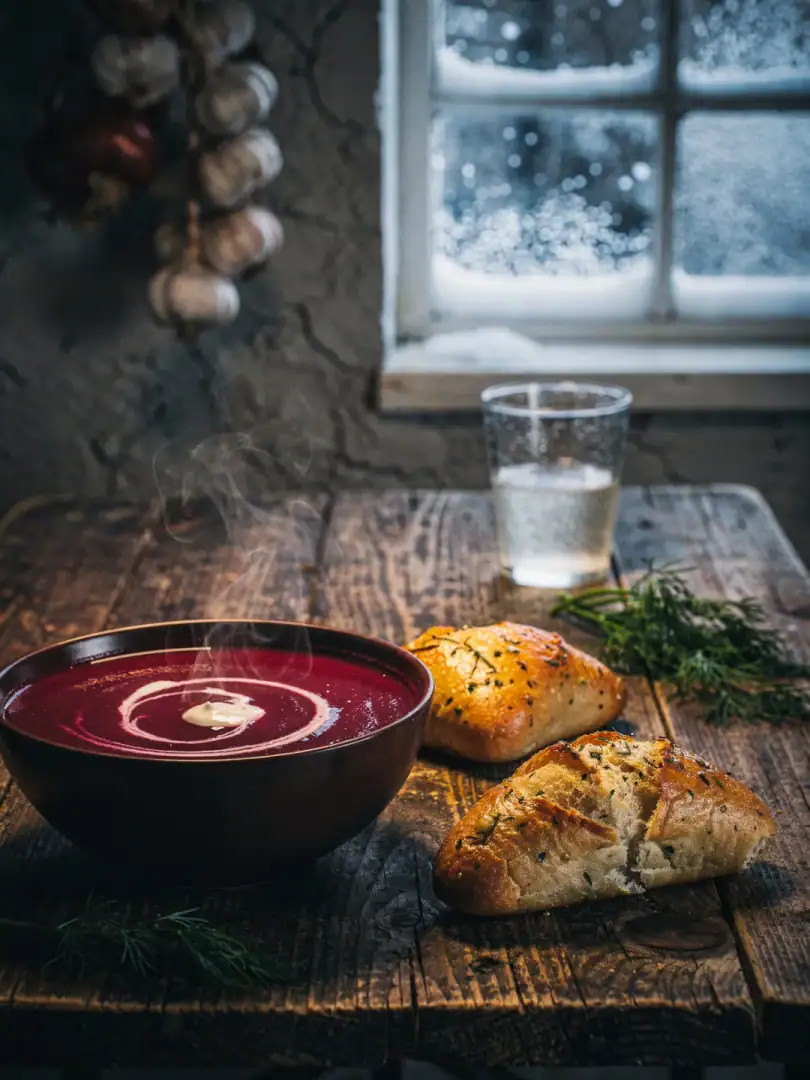
Nothing represents this region's cuisine quite like a deep red bowl of borscht, served with warm pampushky, small garlic rolls that are dipped into the soup or eaten on their own. Beets, cabbage, beans, and plenty of dill meet a rich meat broth here. Few dishes are cooked as often, or as naturally, in this part of the world.
Borscht is traditionally paired with something clear to drink, not a sweet wine, but a cold vodka in a small glass. The acidity of the beets and the richness of the broth pair well with a neutral, high-proof drink, which resets the palate between spoonfuls.
Salo, thinly sliced cured pork fat, is one of the region's most essential zakuska. It's often rubbed with garlic and laid on dark rye bread. Its high fat content binds some of the alcohol in the stomach, noticeably softening the next sip of vodka.
Pickled cucumbers and tomatoes, often home-preserved, provide the acidity that pairs equally well with salo and vodka. A piece of pickled fish, usually herring, rounds out the array of salty, sour bites set alongside the soup.
Vodka is never served warm here, not even with piping hot borscht. The glass comes ice cold from the freezer while the soup is still steaming. For many, this contrast between hot and ice cold is an essential part of the meal.
At the end of a meal, often only one last small glass remains, more a closing gesture than a drink. The plate with the last scraps of salo and cucumbers usually still sits on the table.