Cossacks & the Tsarist Monopoly
Region & History
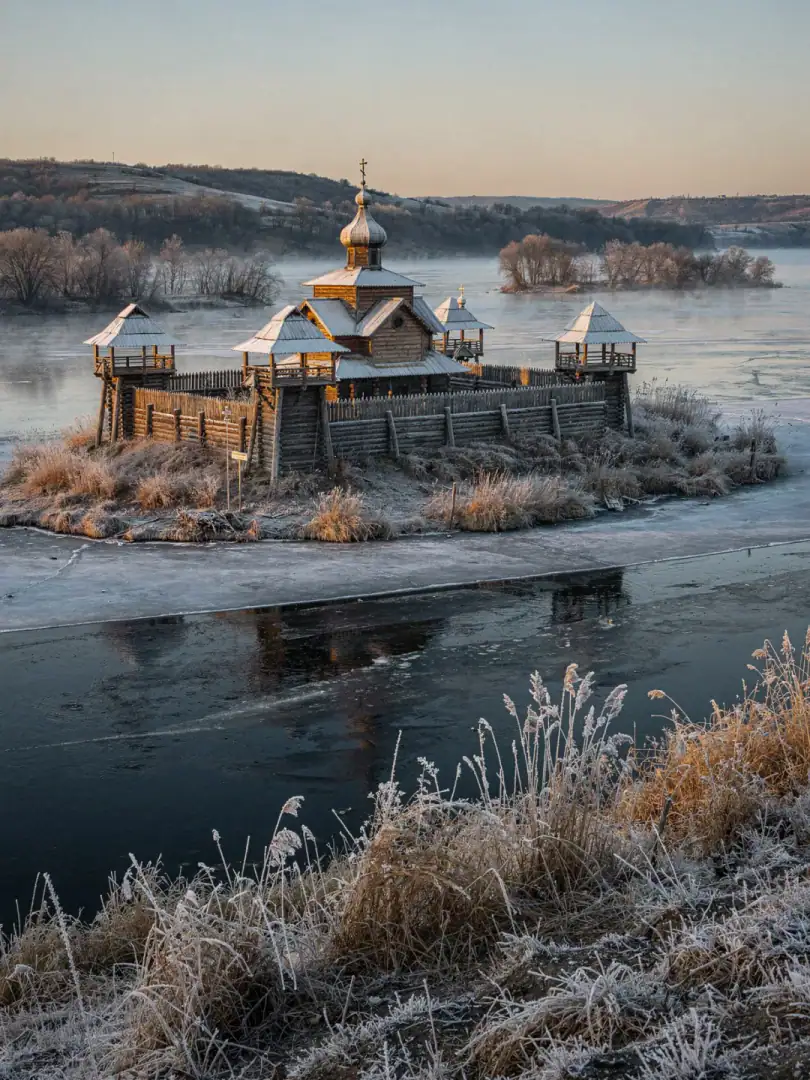
On Khortytsia, the largest island in the Dnipro, the princes of Kyivan Rus met in 1103 and 1224. From here they set out into the steppe against the Cumans and Tatars. The island lies in the middle of the river, surrounded by rapids. Even then it was a meeting point between forest, steppe, and water, long before vodka ever flowed here.
In the 1550s, Prince Dmytro Vyshnevetsky, known popularly as Baida, built a first fortress on Mala Khortytsia, a few kilometers upstream from what would later become the Sich. From this grew the Zaporozhian Sich, the Cossack republic that governed itself and gave equal weight to war and celebration. Empress Catherine the Great forcibly dissolved the Sich in 1775, yet the name Cossack remained an honorific throughout the surrounding lands.
In 1894, the Tsarist Empire established a state spirits monopoly, stripping private distilleries of control over their own business. From then on, the tax on every liter went directly to the state rather than to local leaseholders. A year later, Tsar Nicholas II had the Slatohor distillery built in Zolotonisha, south of Kyiv, right in the heart of the black earth belt, where wheat and rye grew thickest.
The Soviet era turned the country distilleries into large combines. They produced to plan, not to harvest. Only after independence in 1991 did distinctly Ukrainian brands re-emerge. In 2003, a new facility began operating in Zaporizhzhia near Khortytsia. Today it belongs to the Kyiv-based holding company Global Spirits, which named its vodka after the island.
Since the Russian invasion in February 2022, Zaporizhzhia has been close to the front line. The city has been shelled repeatedly, yet the distillery has remained in operation. Grain exports through the Black Sea ports temporarily collapsed. They only resumed in 2022 under a new agreement. The black earth belt, from which the region's vodka draws its wheat, has since also become a war zone.