Column, Pot, Blend
Distilling & Rectification
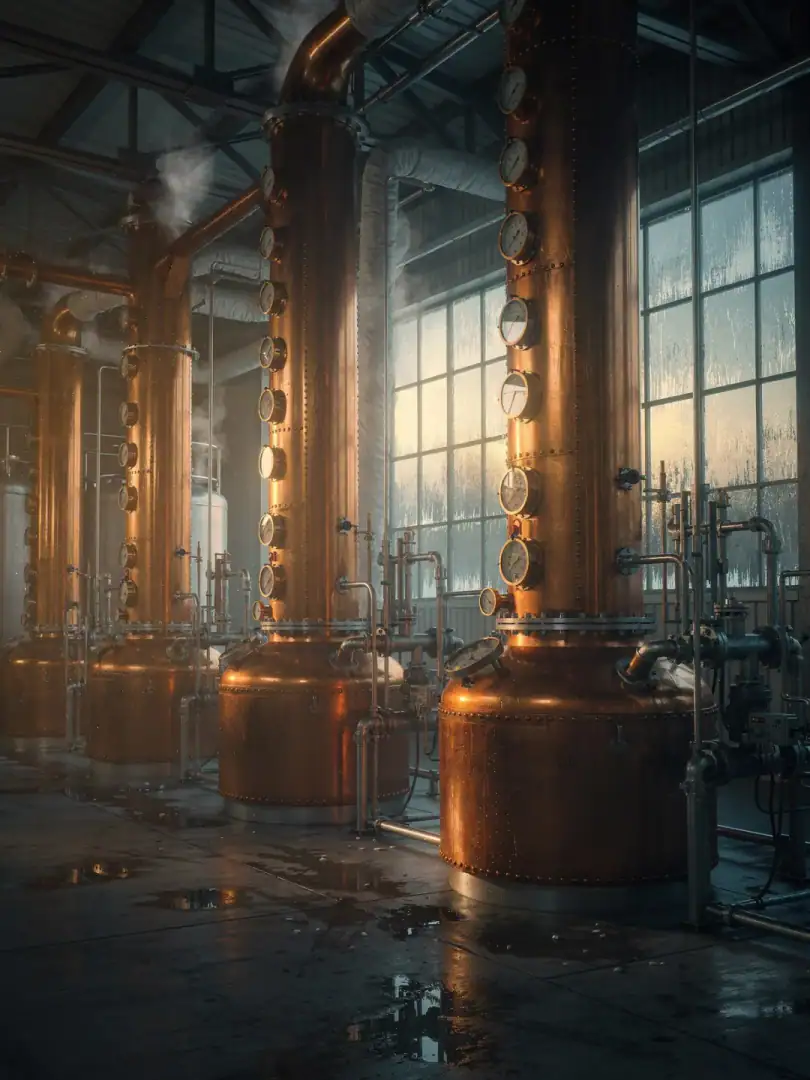
How American craft vodka is distilled depends on the raw material each distillery has on its doorstep. 44° North runs its fermented potato mash through a five-column still. Grand Teton Distillery says it distills its small batches the equivalent of twenty times, until no potato flavor remains. Both methods aim for the same result: the purest, most neutral base spirit possible.
Hangar 1 in Alameda deliberately splits the process into two streams. Viognier grapes pass through a copper alembic still and become a grape distillate. Wheat is processed separately in a column still into neutral spirit. Only at the end does the distillery recombine both streams, determining the balance between fruit and neutrality.
In Vermont, the fermented maple sap runs through a custom-built glass column, an unusual material for vodka. The distillery attributes this choice to the purity of its distillate. In the end, every method must meet the same legal threshold: under US regulation 27 CFR 5, vodka must be bottled at a minimum of 40% ABV.
Until 2020, that same regulation also required vodka to be without distinctive character, taste, or color, meaning it essentially had to taste like nothing. The responsible agency, the TTB, struck that clause. It no longer matched what consumers actually expected and were buying. Since then, distilleries can openly promote the natural flavor of their raw material, flavor they previously had to distill away. For consumers, that means more choice on the shelf, but also more labels worth reading closely.