Aquifer, Snow, Maple Sap
Water & Climate
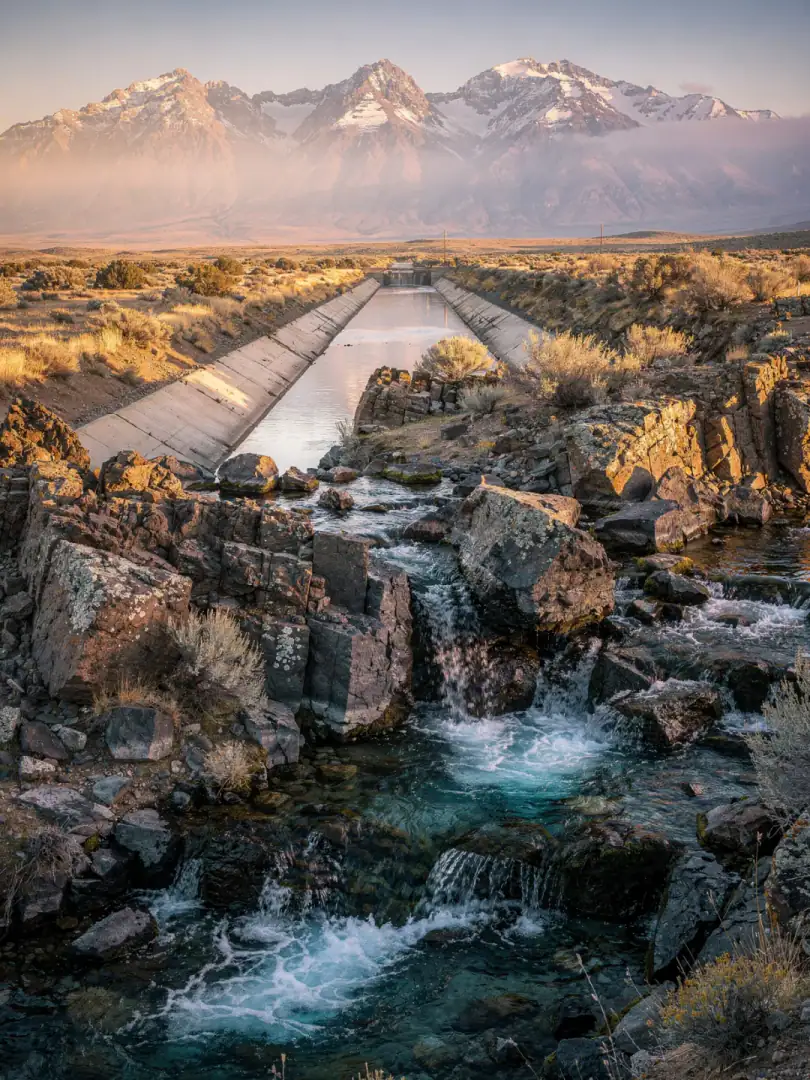
Water doesn't mean the same thing everywhere in this region. Beneath the Snake River Plain in Idaho lies one of the largest volcanic aquifers in North America. Meltwater from the Rocky Mountains constantly replenishes it. 44° North and Grand Teton Distillery draw their distilling water from this very aquifer and from streams flowing straight down from the Teton Mountains. Over thousands of years, the water has filtered through the porous basalt before reaching the surface.
The climate on the high plateau is dry, with cold winters and hot, arid summers. Without artificial irrigation from the aquifer, the potato fields would wither in the summer heat. Without the cool groundwater, keeping the vodka at distilling temperature in summer would be a challenge. For both distilleries, the aquifer is more than an ingredient, it's the basic condition for operating at all.
In Vermont, a different liquid takes the place of water: maple sap. It only flows when nights bring frost and days bring sun to thaw the trees. This interplay of cold and warmth sets the trees in motion in March and April. Without that temperature swing, the sap stays locked in the trunk, and the harvest season often lasts only a few weeks a year.
The distillery dilutes the fermented sap with pure Vermont spring water at the end, before it leaves the column still. So within a single country, dry, high-plateau water from volcanic rock meets the sap of hardwood trees in humid New England. Two climate zones, two completely different water sources, one shared word on the label: vodka.