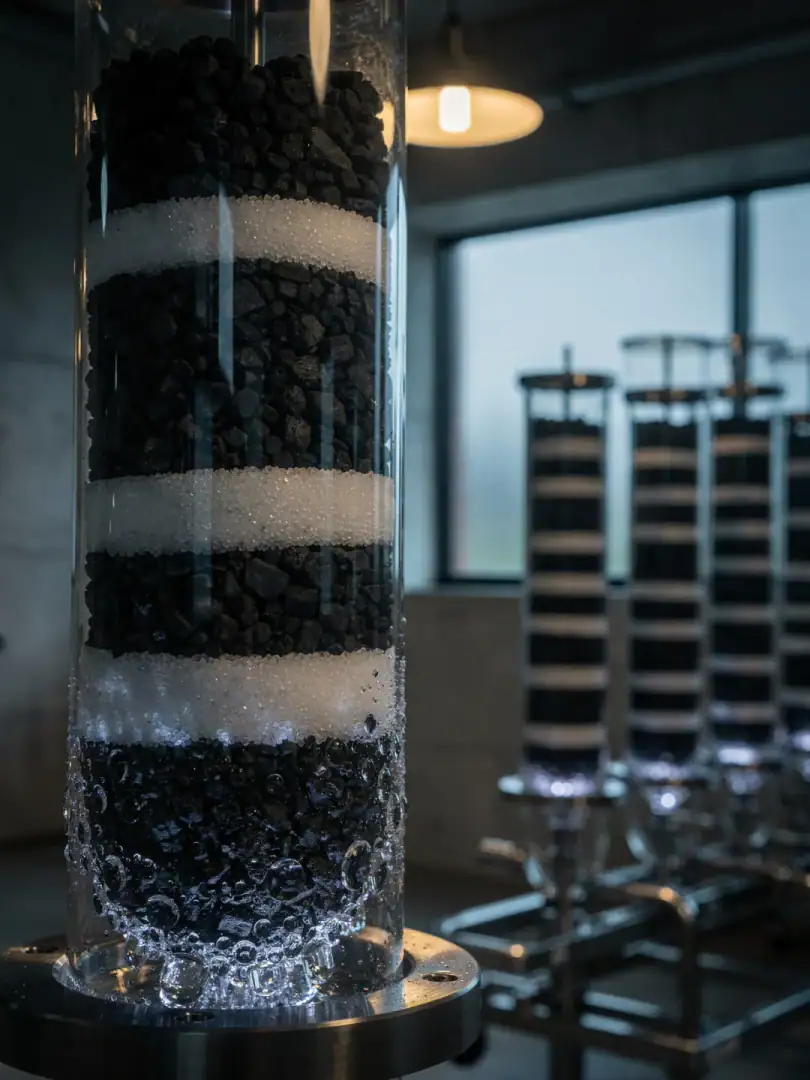
Charcoal, Sand, Frost
Filtration
Grand Teton Distillery says it filters its potato vodka six times, alternating between charcoal and garnet crystal sand, chilling it heavily in the process. The distillery calls this cold filtration and touts it for exceptional purity. 44° North, by contrast, relies mainly on fivefold column distillation with less emphasis on additional filtering afterward. Still, both approaches share the same goal: a clear, stable vodka with no visible haze in the glass.
What cold filtration actually does is less dramatic than marketing copy suggests. Charcoal binds some of the larger aroma molecules still present after column distillation, making the spirit taste a touch smoother. But the vodka's core character is set earlier, during fermentation and distilling, not in the filter. The quality of the source water also shapes the final result more than most buyers realize.
The cold mainly serves a practical purpose. At low temperatures, fine fatty acids and oils become visible, ones that could otherwise cloud the vodka if stored in the freezer. Cold filtration removes exactly these traces before customers notice them at home. Without this step, a chilled bottle might look hazy, even though the vodka's flavor hasn't changed at all.
How much charcoal or sand actually changes the flavor depends heavily on quantity, contact time, and the starting spirit, figures distilleries rarely disclose. One thing is certain: filtration makes a vodka cleaner, not better by magic. The real differences between brands are set earlier, in the raw material and the distillation.