Pale Malt, Candi Sugar
Malt & Grain
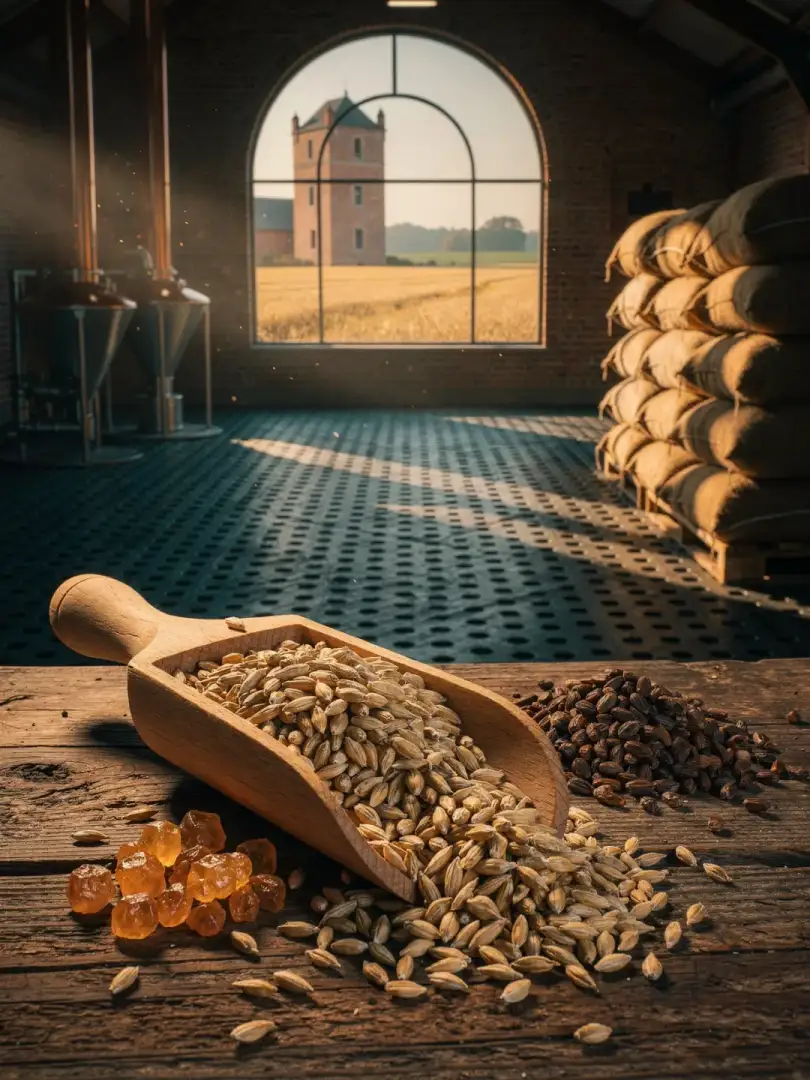
What goes into a Tripel that makes it so pale yet so strong? The base is almost always pale barley malt, the same kind used for Pils. It provides sugar for the yeast but contributes little color and no roasted character.
Sugar is added on top. Belgian brewers often add candi sugar or other sugar to the wort, the sweet liquid before fermentation. The yeast converts it almost entirely into alcohol, leaving the beer drier and lighter than its strength would suggest. Under German law for bottom-fermented beer, this wouldn't be allowed, but Belgian brewers aren't bound by those rules — which is how these dry, lean strong beers come about.
With a Dubbel, dark malt is added, often alongside dark candi sugar. It gives the beer a chestnut-brown color and brings notes of bread, caramel and dried fruit. The difference between Dubbel and Tripel therefore starts with the malt, and only then with the strength.
Spéciale Belge, the style Bolleke belongs to, relies on malt that gives the beer an amber tint and a hint of roastiness without making it dark.
Malting in the region is handled by maltsters with their own traditions. Dingemans in Stabroek, near Antwerp, is one of them. When you drink a Duvel or a Westmalle, you mostly taste the malt in the background — the yeast speaks louder. That's precisely why the ingredients here are kept simple: a few varieties, well made, with the rest happening in the fermentation cellar.