Gete, Dijle, Clay
Water & Soil
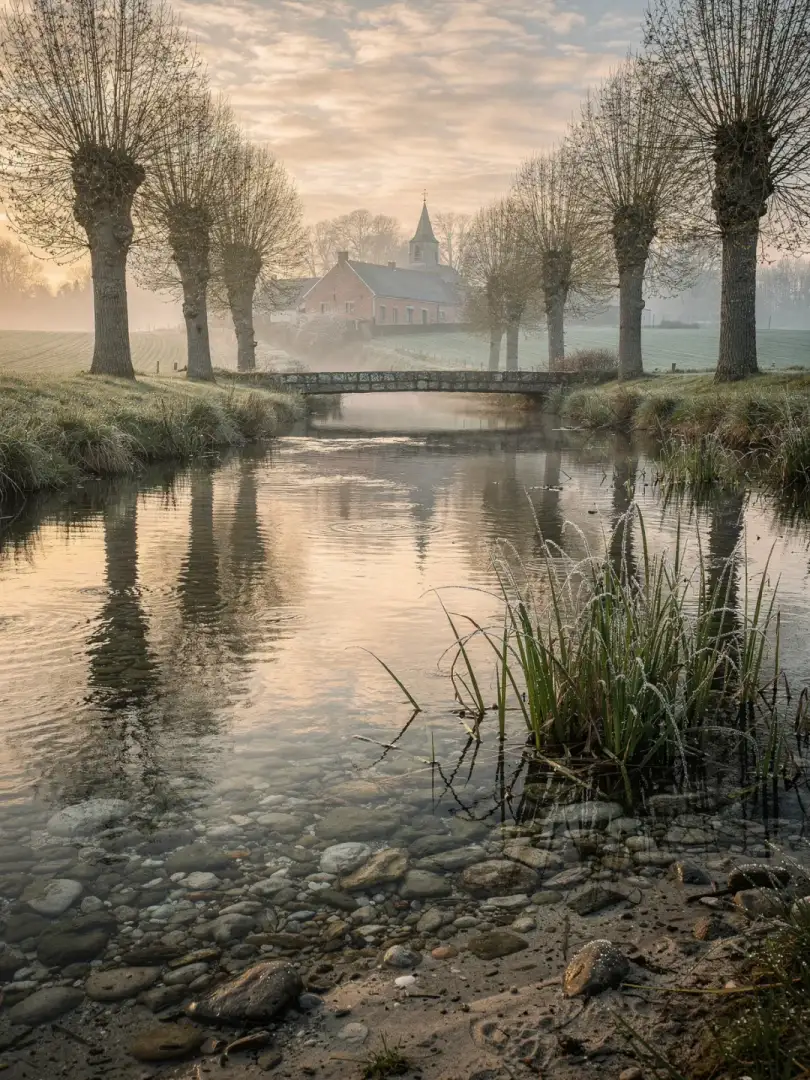
Flemish Brabant isn't mountainous terrain. The landscape rolls in gentle hills, with rivers like the Dijle, which flows through Leuven, and the Kleine Gete, on which Hoegaarden sits, carving shallow valleys. The subsoil is largely sand and clay, supporting fields and pastures. The Hageland, north and east of Leuven between Aarschot, Tienen, and Diest, is the best-known example.
Where water comes from the ground doesn't automatically shape the beer. There's no reliable data on the brewing water used by these breweries, so the basic rule applies: nearly all breweries today adjust their water. They raise or lower mineral content until it suits the style. For witbier, this matters, since the style calls for a soft, round mouthfeel.
There's no rock cellar like in Franconia or chalk cellar like in Pilsen here. The beers of this region mature in tanks, not in caves. The climate is oceanic, with mild winters and fresh summers. Witbier doesn't need long aging—it's meant to be drunk young and fresh.
Still, the soil plays its part in the beer, just in a different way: the fertile land grows the grain the brewers need. Wheat and barley come from the area around the breweries and travel only a short distance to the malthouse. Standing in Leuven or Hoegaarden means standing right in the middle of witbier's raw material supply.