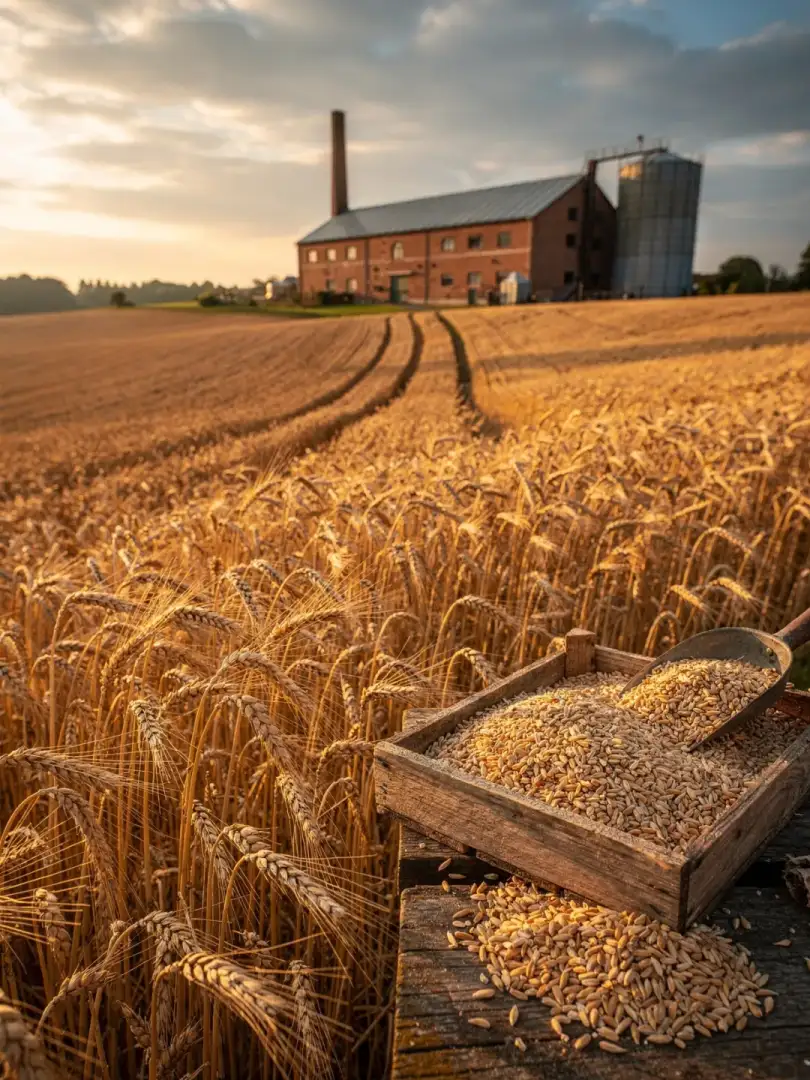
Raw Wheat
Malt & Grain
What makes witbier special lies in the wheat—specifically, the unmalted kind. Most brewers use malted barley for ordinary beers, meaning grain that's allowed to germinate and is then dried. For witbier, raw, unmalted wheat is added to the mix. It brings protein and starch that later create the beer's signature milky haze and soft mouthfeel.
The base remains pale barley malt, usually Pilsner malt. It supplies the sugars that yeast later converts into alcohol. According to the BJCP style guidelines, the color sits at just 4 to 8 EBC, making this a very pale beer. Dark roasted malts have no place here, as they would ruin the light, fresh character.
Raw wheat does have drawbacks in the mash tun, though. It contains a lot of protein and can make the wort thick, slowing it down during lautering—the process of separating the solid parts. Brewers compensate with oats or husks and stir the mash carefully. For beginners, this is one reason witbier isn't as simple as it looks.
The recipe also includes spices that aren't grain at all: coriander and orange peel, added to the kettle during brewing. More on that in the hops section. But what truly defines the character is the ratio of barley malt to raw wheat, and each brewery sets that for itself. Brewers in Hoegaarden and Leuven follow the tradition of the Hageland, where wheat has grown for centuries, blending their recipes by experience rather than rigid rules.