Gueuze Museum & Café
Region & History
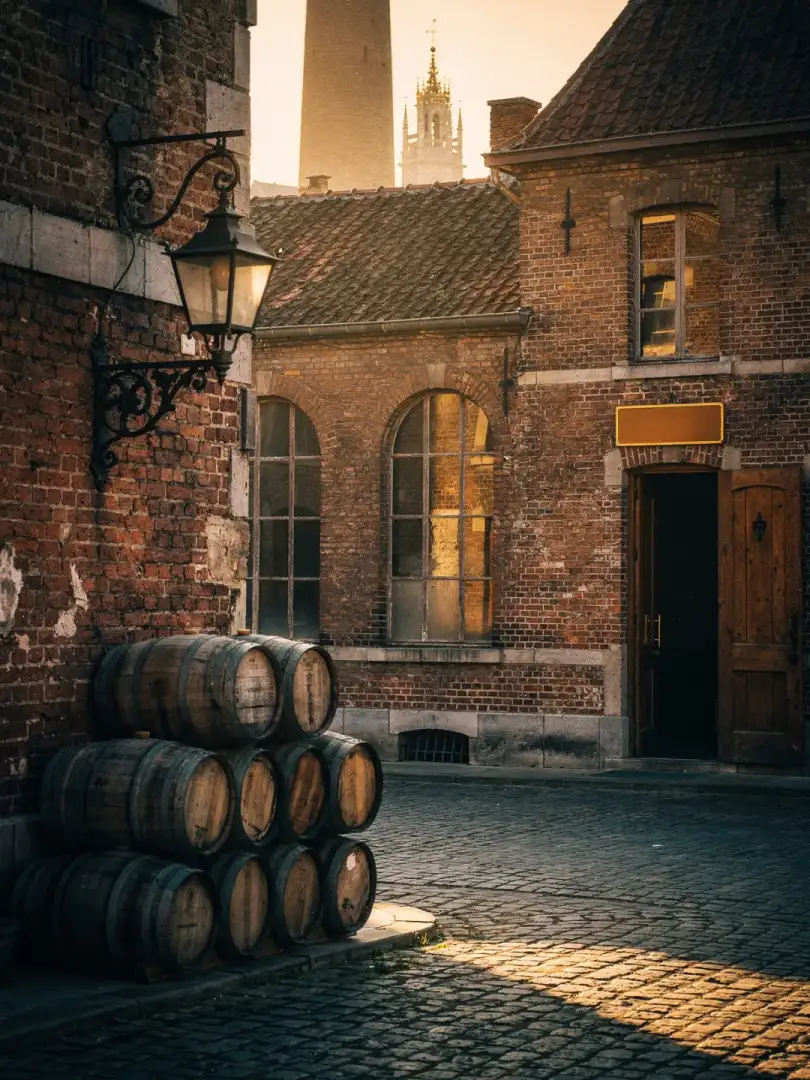
Are there actually breweries in Brussels that make Lambic and Gueuze? Yes, at least one, right in the heart of Anderlecht. The Brasserie Cantillon has existed since 1900 and also serves as the Brussels Gueuze Museum. According to the brewery, Paul Cantillon and his wife Marie Troch founded it as a business that bought Lambic from other producers, blended it, and resold it.
Brewing in-house came only later. In 1937 the family acquired used equipment, and in 1938 the first batch brewed on-site was completed. Today Jean-Pierre Van Roy, a great-grandson of the founder, runs the house together with his children. He founded the museum in 1978, and it remains housed within the brewery itself.
How is Lambic legally protected? Differently than many assume. The names Lambic, Gueuze, Kriek, and Faro, registered in 1997 without any name reservation, lapsed as of January 4, 2023. Only “Oude Geuze” and “Oude Kriek,” along with spellings like “Vieille Gueuze,” are protected as a Traditional Speciality Guaranteed. This protection applies to the method, not the place. The fact that Gueuze comes from the Senne Valley is tradition and convention upheld by the HORAL association, not an EU rule of origin.
Cantillon is not a member of HORAL, the Hoge Raad voor Ambachtelijke Lambikbieren, the association uniting Lambic brewers and blenders.
The second Brussels address is younger. Bernard Leboucq and Yvan De Baets met in 2002 at the Zinneke Parade, a street parade of Brussels art and craft, where Zinnebir was served as the festival beer. Their Brasserie de la Senne moved to Molenbeek-Saint-Jean in 2010, bringing a brewery of its own back into the city.
On November 30, 2016, UNESCO added Belgian beer culture to the Representative List of the Intangible Cultural Heritage of Humanity. The honor recognizes the culture of pouring and drinking, not any single beer.