A River Beneath the Pavement
Water & Soil
Where does the water for Brussels beer come from? From the tap, and today brewers treat it almost everywhere, through softening, reverse osmosis, or the addition of salts. A spring-water myth, as found in other beer cities, doesn't hold up here.
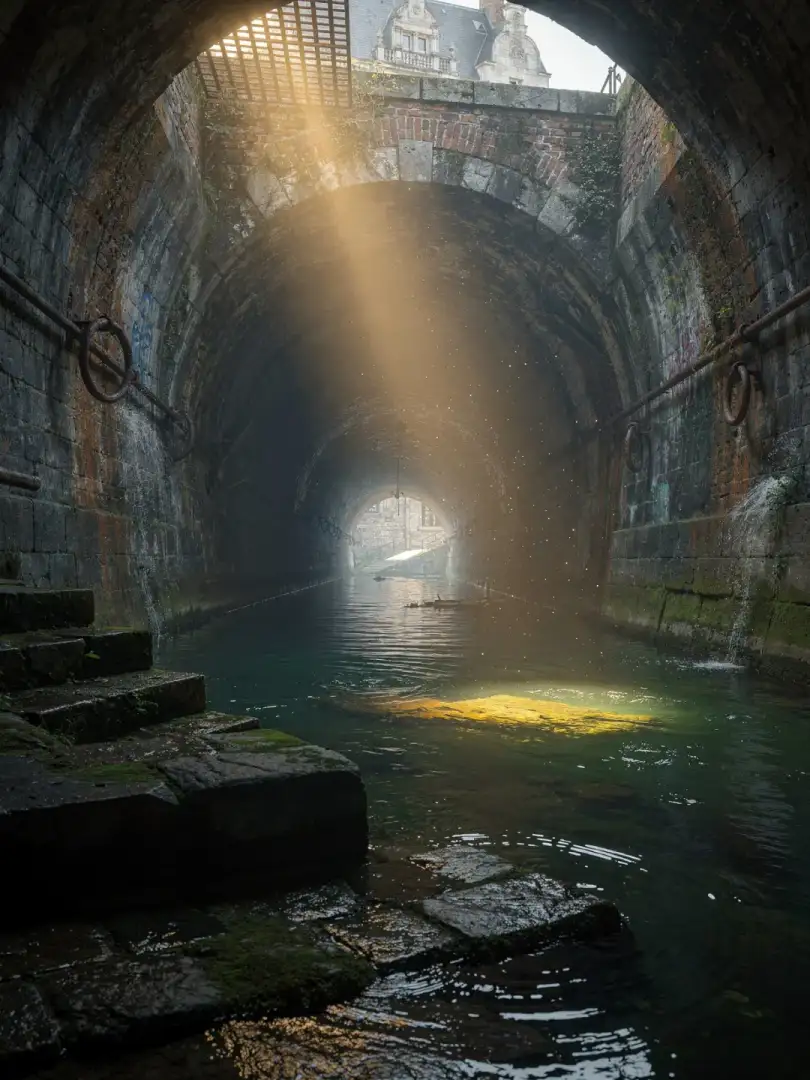
Yet Brussels is a river city. The Senne once flowed through the center until it was covered over around 1870. Today it runs beneath the boulevards of the inner city. Brasserie de la Senne carries its name only in memory, as no brewery today uses the river's water for brewing.
More important than the water, for Lambic, is the air. At Cantillon, the hot wort cools overnight in a shallow pan beneath the roof, with Brussels' night air flowing in through open louvered windows. In this process, wild yeasts and bacteria from the surroundings enter the brew.
For this to succeed, brewing traditionally happens only in the cold season, from autumn to spring. In summer, the wort would cool too slowly. The Lambic season is dictated by the thermometer, not the innkeeper's calendar.
After cooling, the wort goes into wooden casks that rest in cool cellars and halls. The wood lets tiny amounts of air through, a little beer evaporates in the process, and the beer matures over months to years. Because a cask is never perfectly sealed, its contents breathe.
The hardness of Brussels tap water no longer sets a fixed template for the recipes today. Here, it isn't spring and bedrock that shape the style, but attic, night air, and cask.