Brett, Bottle Conditioning
Yeast & Fermentation
Why does Orval taste different from other Trappist beers? Because of Brettanomyces, a wild yeast. The name roughly means 'British fungus,' since it was discovered over a hundred years ago in English lager beer. In the wine world it's often considered a flaw, but in Orval it's part of the recipe and helps define its character.
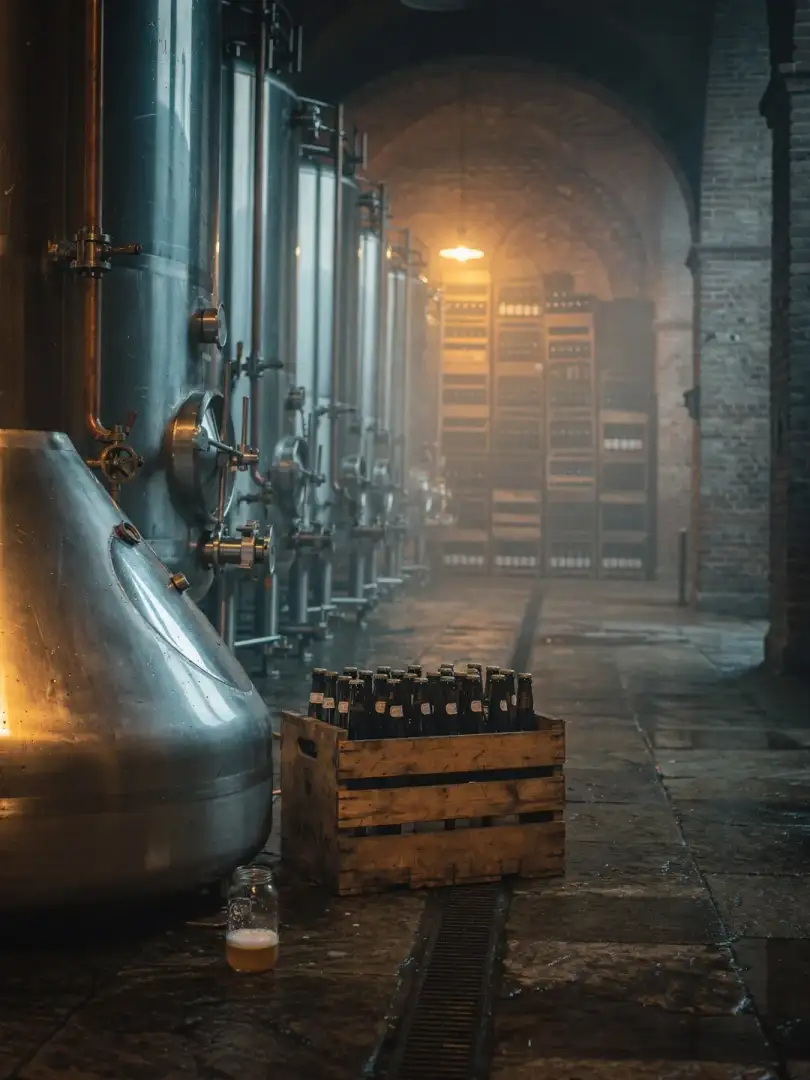
First, a completely ordinary fermentation takes place. In cylindroconical tanks — tall stainless-steel vessels with a cone-shaped bottom — the yeast ferments the wort for four to five days at 15 to 23°C (59 to 73°F), and it's top-fermenting, meaning it works at the surface. Then the beer rests for two to three weeks at about 15°C (59°F) to mature, and this is when the brewery adds wild yeasts from the Brettanomyces family.
Brettanomyces breaks down residual sugars that other yeasts leave behind. That's what makes the beer so dry. Along with that come aromas that drinkers often describe as barnyard, leather, wet wool, or hay. That can taste unfamiliar on the first sip, and anyone who doesn't know the style might mistake it for spoilage. But it's simply part of the Orval character.
Then comes bottling. Before sealing, the brewery adds liquid candi sugar and fresh yeast once again. This is bottle conditioning: inside the sealed bottle, the yeast ferments the sugar once more, producing carbonation and building the head. The bottles stay at about 15°C (59°F) in a warm storage room for three to five weeks for this process.
The sediment in the bottle is living yeast. That's why Orval keeps evolving even after it's long since sat on a shelf or in a cellar. According to many connoisseurs, the beer grows drier over the months and the Brettanomyces character grows stronger. Whether you prefer it young or aged ultimately comes down to personal taste.