Coolship & Barrel
Yeast & Fermentation
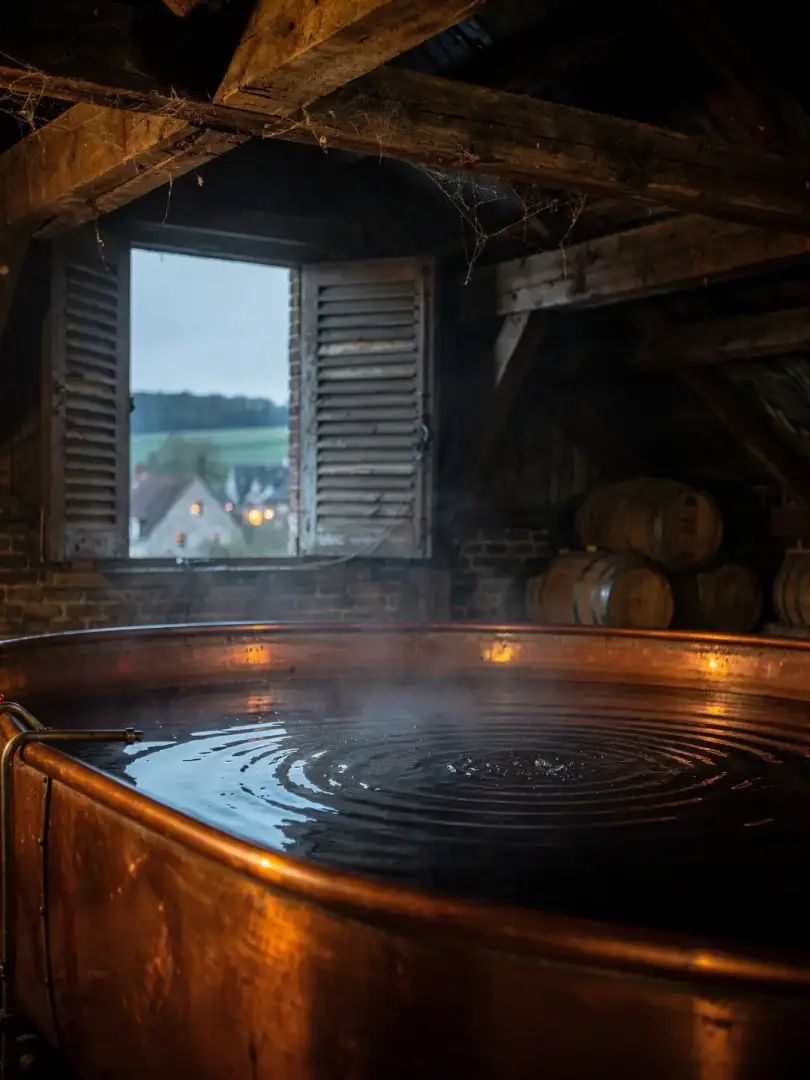
How does Lambic ferment without added yeast? The hot wort flows into a shallow, wide vessel called the coolship, where it cools overnight. With the windows open, wild yeasts and lactic acid bacteria from the surrounding air settle onto it, and fermentation begins on its own. This is called spontaneous fermentation.
Brewing traditionally happens in the cool months—autumn, winter, and spring—because in summer the wort would stay too warm and spoil. Afterward the young beer goes into oak barrels, and the real work begins, at Boon just as much as at Lindemans or Girardin.
Fermentation unfolds in stages. First yeasts and bacteria work on the sugar, then after about eight months Brettanomyces yeasts take over and keep the beer active for up to another year and a half. This is the source of notes of hay, leather, and barnyard that connoisseurs call "horse blanket."
How does this become Gueuze? The blender combines younger and older Lambic from different barrels, bottles it, and lets it referment there. The young Lambic supplies the fermentable sugars, the old beer the depth. The result is a sparkling beer that outwardly resembles champagne. "Oude Geuze" carries EU process protection, but no geographic tie. How long the bottle then rests is up to the blender, and good bottles continue to develop in the cellar for years.
This isn't top fermentation, nor bottom fermentation, but its own world between the two. That's why the BJCP standard also lists Lambic as spontaneously fermented rather than fitting it into the top/bottom scheme.