Foeders and Blending
Yeast & Fermentation
Mixed fermentation means several microorganisms work on the same beer in succession. First, a brewer's yeast ferments the malt sugar into alcohol, just as with any other beer. The beer then ages in wood, where lactic acid bacteria also live, giving the beer its acidity.
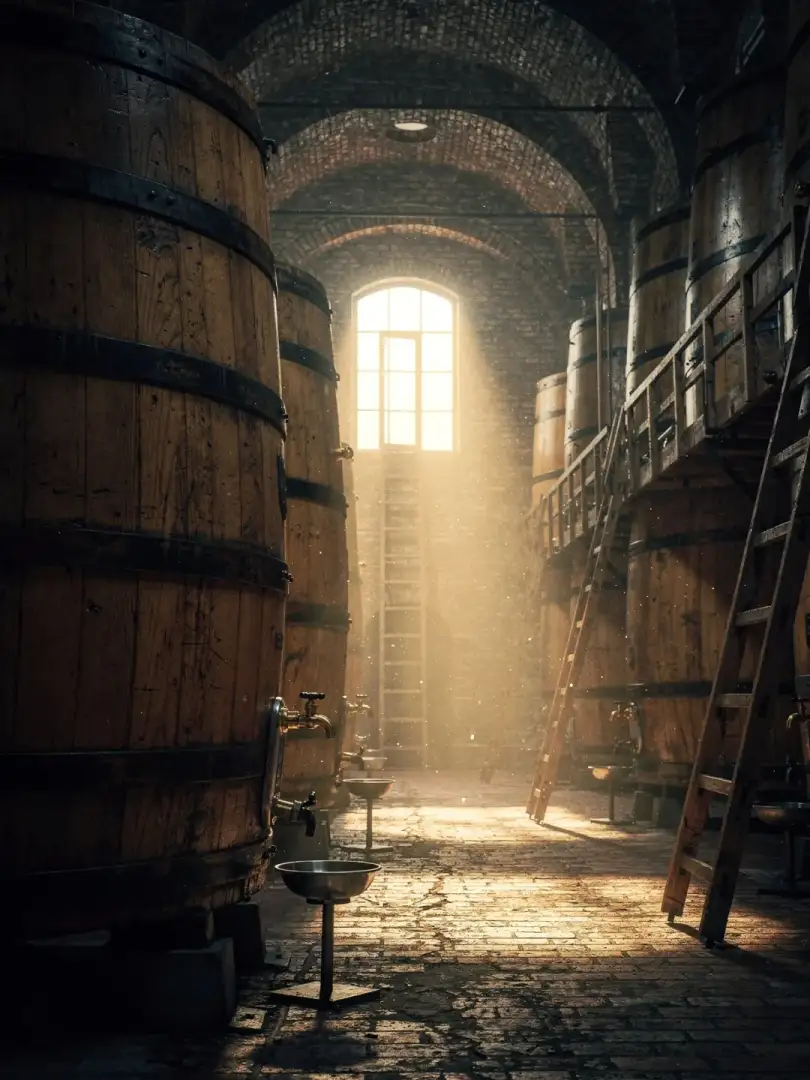
According to the brewery, Rodenbach's beer rests in the foeder for at least two years. That's a long time, and the beer keeps changing throughout: it grows drier, the acidity rises, and aromas of cherry, raisin, and sherry emerge.
Then blending begins. By common account, Rodenbach Classic consists of roughly two-thirds young beer and one-third aged beer, while for Rodenbach Grand Cru it's the reverse. The brewer tastes each foeder individually and builds a beer meant to taste the same every year, even though every barrel is different.
This blending is the heart of the style and the reason Flanders Red Ale isn't simply 'old beer.' Bottle only young beer, and you get something mild, almost sweet; bottle only old beer, and you get something very sour. Only the blend achieves balance.
The difference from lambic lies in the fermentation: a lambic ferments spontaneously with wild yeast from the air of the Senne Valley, while a Flanders Red starts with cultured yeast. The microbes in the wood join in later and stay in the barrel.
Toward the end, the beer is bottled, blended, and leaves the wood. The acidity stays stable because yeast and bacteria have largely finished their work. So the beer that ends up in the glass has already lived half its life.