Low Bitterness
Hops
How bitter is a Flanders Red Ale? Hardly at all. The BJCP style guidelines list 10 to 25 IBU, the scale for bitterness. A German pilsner often comes in at double that. Here, acidity takes on the role that hops play in a pilsner: it keeps the beer fresh and dry on the finish.
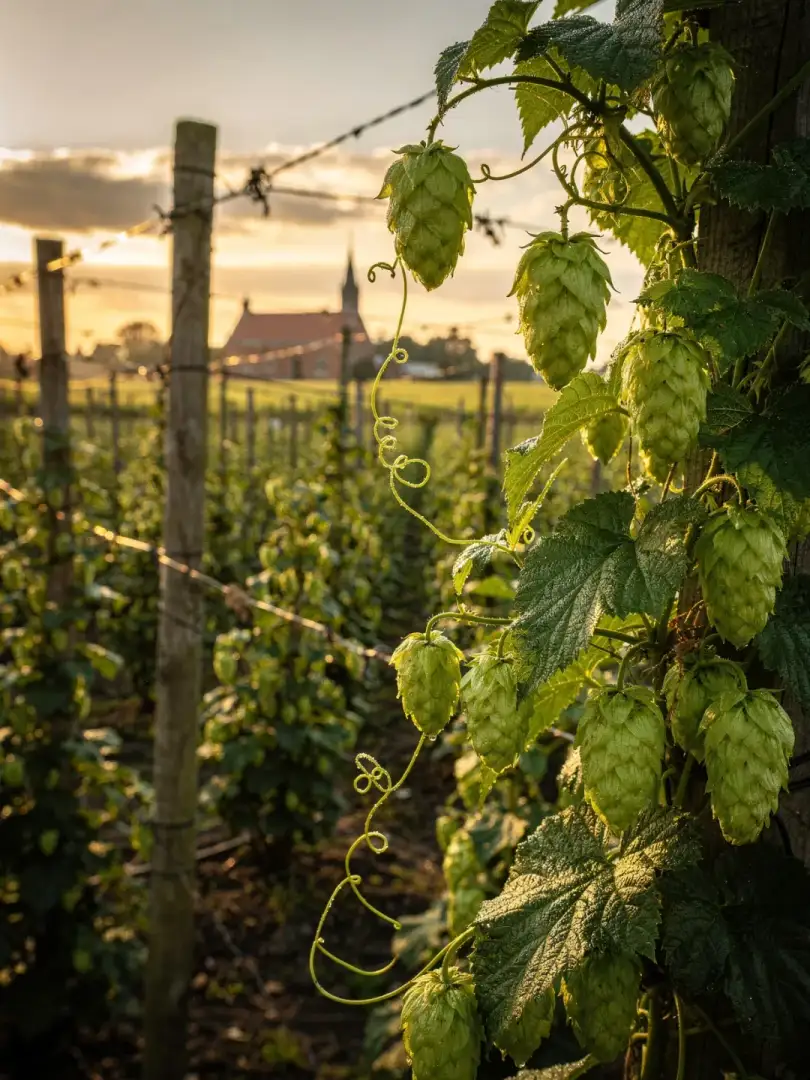
There are no hop gardens around Roeselare and Kortrijk—the land is pasture, field, and vegetable plot. Breweries source their hops from elsewhere. What matters here isn't so much the origin as how the hops are used in this region: sparingly and in moderation.
Brewers traditionally stored hops for extended periods, letting them age. This causes them to lose aroma and bittering power while retaining their preservative effect. A beer that rests in wood for two years needs that protection, without hop aroma overpowering the delicate fruit.
This also explains why a Flanders Red doesn't smell of citrus, grass, or resin. Fruity aromas come from the yeast and the wood, while tannins from the oak add a slight puckering sensation on the palate.
Anyone expecting a sweet treat from a dark, low-hop beer will be surprised. The blend of residual sweetness, acetic acid, and lactic acid feels more like a dry, cool red wine.
With the Belgian Blond Ale from Bruges, bitterness runs higher—the BJCP lists 15 to 30 IBU. Yet it stays soft, cushioned by sweetness and yeast spice, so the beer comes across as rounded rather than sharp.