Sour Wort & Lager
Yeast & Fermentation
Two worlds of fermentation meet in Santa Catarina. The pale lager of Chopp ferments bottom-fermented and cool, very much in the spirit of the German immigrants. The Catharina Sour, by contrast, is made with a mix of yeast and lactic acid bacteria.
Usually the acidity is produced before the main fermentation. Brewers sour the wort, meaning the unfermented malt solution, with lactic acid bacteria and then briefly boil it. After that, a regular brewing yeast takes over fermentation. This is faster and easier to control than spontaneous fermentation.
The fruit is usually added later. Popular choices include passion fruit, guava, or pitanga, a small red cherry-like fruit from South America. The style guidelines call for fresh fruit that shapes the character without becoming too sweet.
Maturation is short, unlike the long-aged Belgian barrel beers. The beer is ready to drink after a few weeks and should taste young, fresh, and lively. Storage in trade is cold, since fruit aromas fade over time.
For the Eisenbahn lager and other bottom-fermented beers, the classic sequence applies: ferment cold, then store cold for several weeks until the beer is clear and rounded. The cold lets the yeast work slowly and keeps unwanted off-flavors to a minimum.
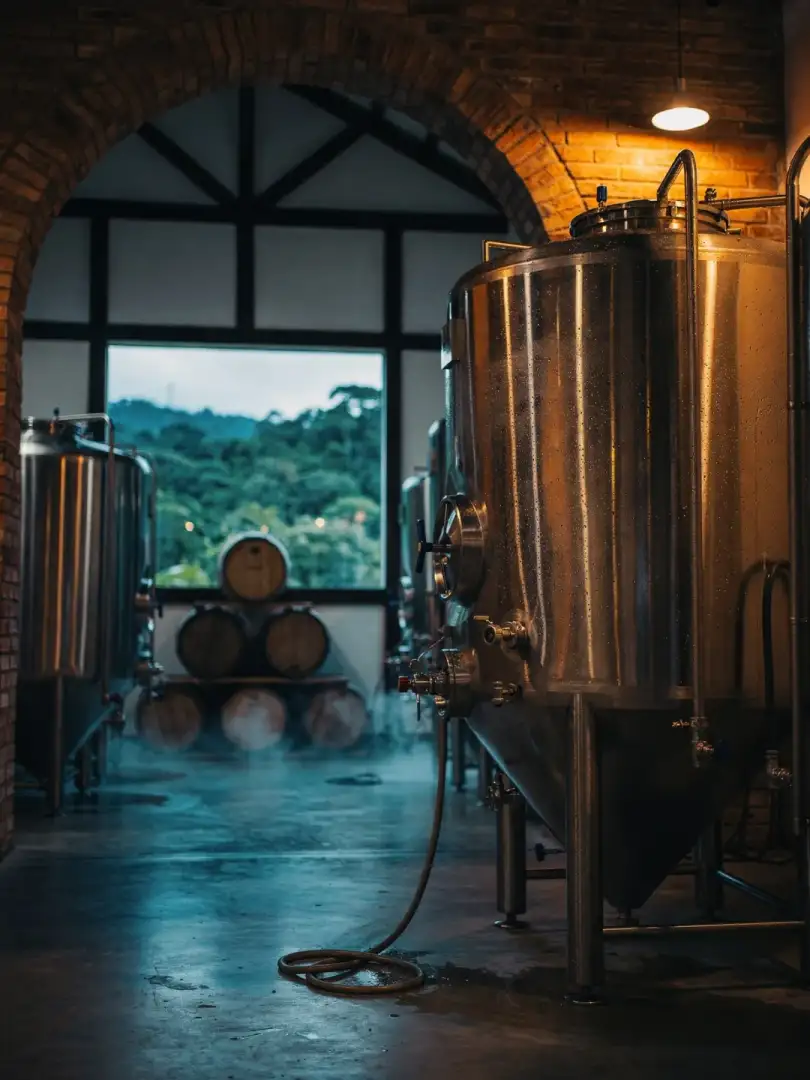
With sour beer, the brewer watches hygiene more closely. Lactic acid bacteria are useful when doing their job in the brewhouse, but unwelcome if they end up in the packaging line. That's why many operations strictly separate sour beers from their other lines, with dedicated hoses and tanks.