Imported & Subtle
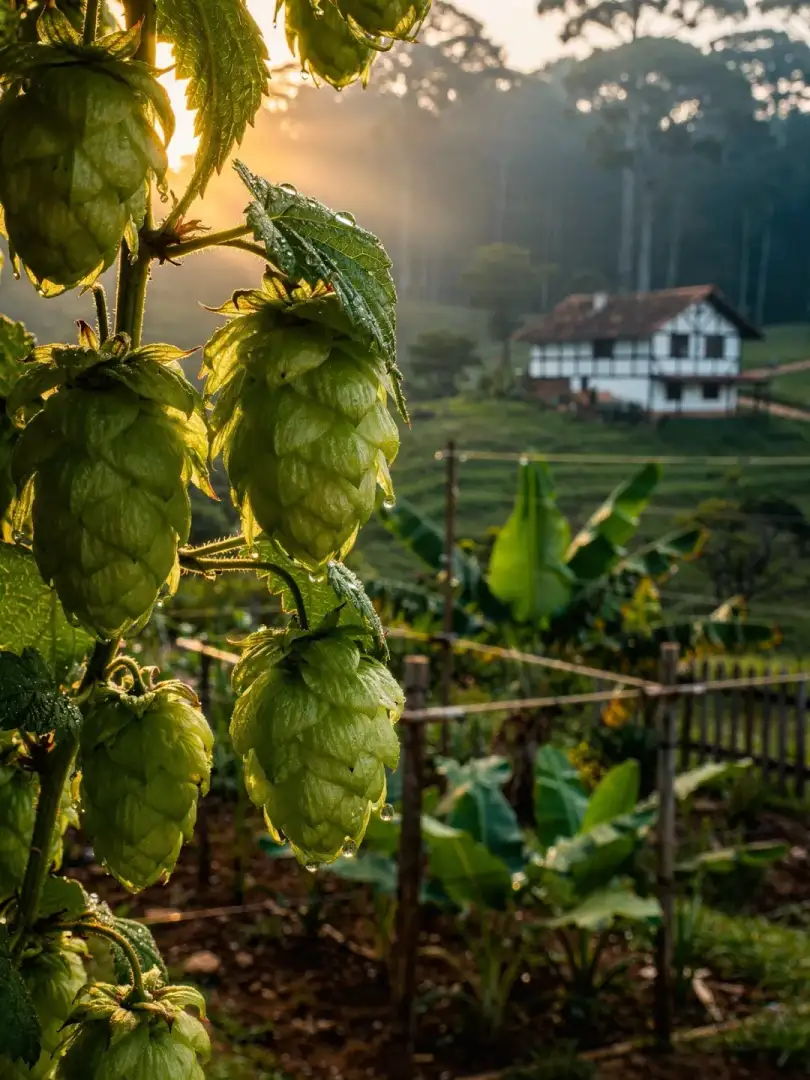
Hops
Hop growing is barely known in southern Brazil. Breweries in Blumenau source their hops mostly from abroad, especially from Germany and the USA. Those countries hold the world's largest growing regions, and from there come the varieties needed here too.
For the pale lager of Chopp, a gentle bitterness is enough. The hops should only balance the beer, not stand out. In a German-style Pils, they may come through more strongly, while in American-influenced beers like those from Lagunitas, hop aroma takes center stage.
In the Catharina Sour, hops stay deliberately in the background. According to style guidelines, bitterness is very low, between 2 and 8 IBU. That's the measure for bittering compounds: the lower it is, the less the hops interfere with the fruit. Acidity takes over the role bitterness usually plays.
Only occasionally are aroma hops added, contributing a touch of citrus or tropical scent without masking the acidity. That, too, is up to each brewery.
Bitterness and aroma are two different things. Bitterness comes from alpha acids that dissolve during the wort boil. Aroma comes from essential oils that evaporate during boiling and are therefore added late or even after fermentation. This is called dry hopping.
In Chopp, both are restrained; in the Catharina Sour, almost invisible; in American-style beers, by contrast, quite pronounced. To compare, it's best to try a pale lager and a hoppy beer side by side and pay attention to the finish on the palate.