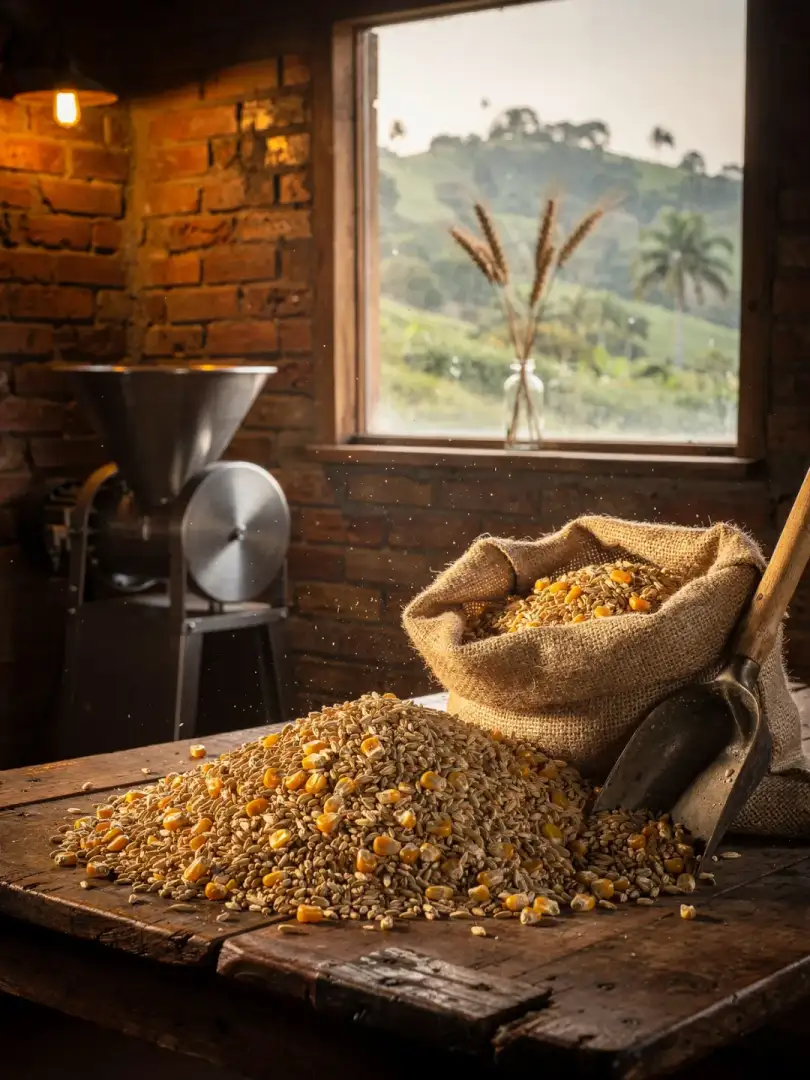
Barley, Corn, Wheat
Malt & Grain
Brazil is a country of corn and soy, not of malting barley. For pale lager, many large breweries therefore use corn or rice alongside barley malt. Both ingredients make the beer lighter, paler, and more drinkable, and they belong to the style of Brazilian Chopp.
Craft brewers in Santa Catarina more often rely on all-malt recipes. Barley malt is made by letting barley germinate and then kilning it, meaning drying it with warm air. A large share of the malting barley reportedly comes from abroad, including neighboring countries.
In the Catharina Sour, wheat plays the leading role. The style guidelines call for a pale, light wheat beer as the base, one that lets the acidity and fruit shine. The color stays pale, the body slender, so nothing masks the freshness.
Very dark roasted malts are the exception here. Anyone looking for roasted notes from Eisenbahn or small breweries will find them in a stout or porter rather than in the region's signature styles.
Corn and rice have a poor reputation in the industry, but they serve a purpose. They provide sugar for fermentation without weighing down the flavor, and they keep the color pale. In a hot country, that's an advantage: the beer doesn't feel heavy even at 30°C.
There are only a few maltings in southern Brazil, and craft brewers often buy their malt ready-made. Differences then arise mainly in the brewhouse, in the mash and the wort that later ferments. Brewers using wheat malt get more protein into the beer, which supports the head and gives the body a soft fullness.