From Abroad
Hops
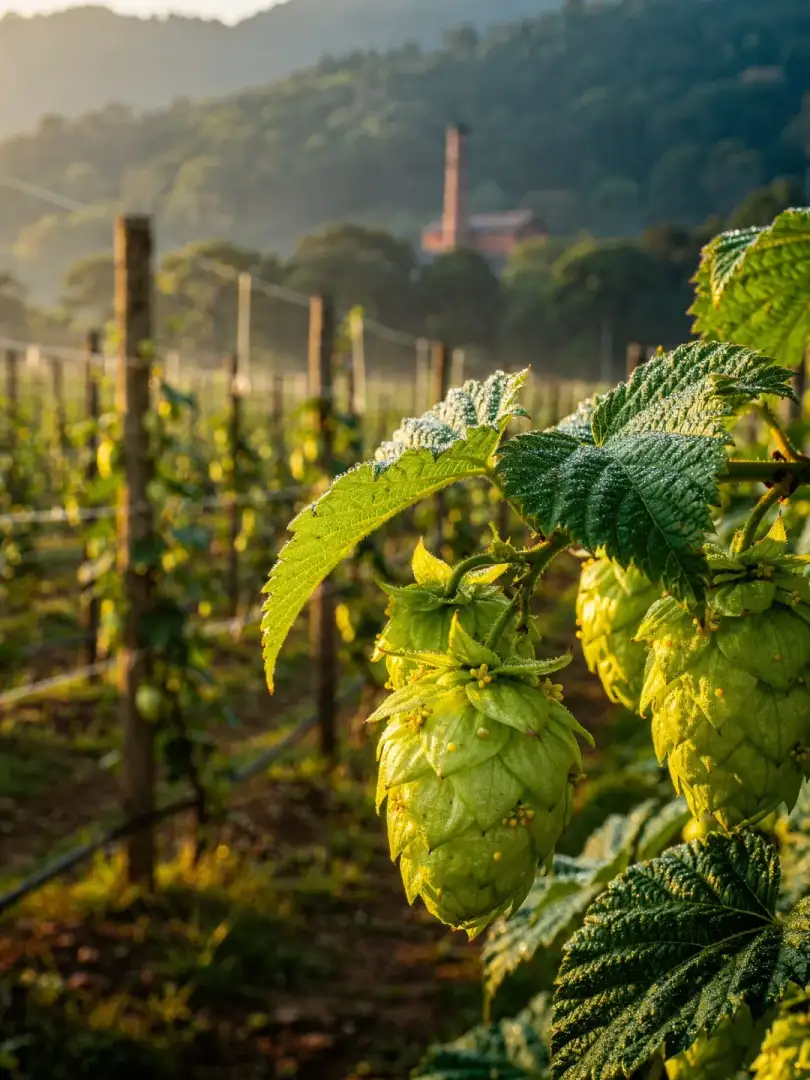
Does hops grow in Brazil? So far only in small experimental plots; breweries rely on imports. Hops need long summer days and a dormant winter, and the tropical and subtropical climate offers little of either. The major growing regions lie in Central Europe and North America, and that's where the hops for beer from Petrópolis come from.
Hops serve two purposes. Alpha acids from the cones make the beer bitter and help preserve it, while oils give it aromas of grass, flowers, or citrus. Bitterness is measured in IBU, a scale for bitterness. A pale lager in the international style usually sits at 18 to 25 IBU, a German pilsner at 22 to 40.
Bohemia calls itself a Pilsener, aligning with the Bohemian style. Saaz hops, a variety with a fine, spicy-floral aroma, are often cited for this style. Which varieties Bohemia actually uses isn't disclosed by the brewery, so we're left with the style description.
On the palate, hops barely register in beer glasses in Rio. Chopp is designed for thirst and heat, not meant to linger. The bitterness is subtle, and anyone used to a craft IPA will find it very restrained. Here the hops act more as a frame supporting the malt than something pushing to the forefront. That's intentional, since too much bitterness would disrupt the refreshment.
The counterpoint sits in the city's bars. Hop-forward beers from small breweries are now poured there too, but they remain the exception in everyday life.