Barley from Overseas
Malt & Grain
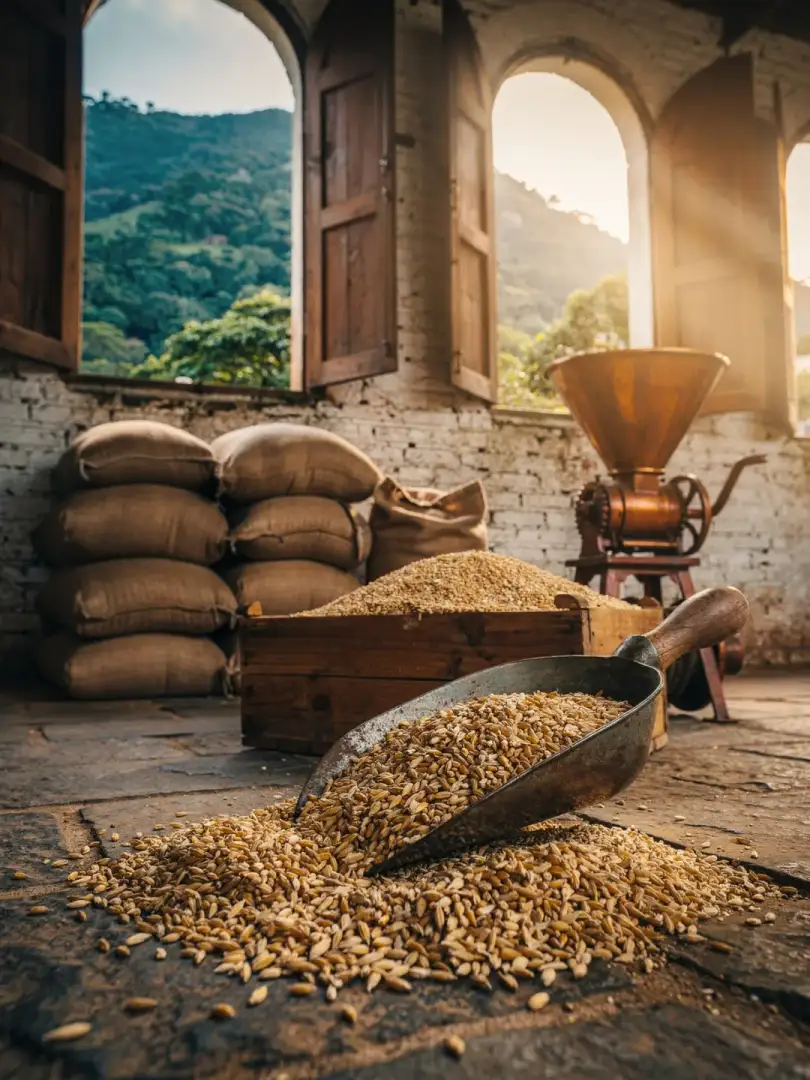
What grain is Brazilian beer made from? Mostly barley malt, imported from other countries. Brewing barley needs a temperate climate with cool winters, something largely absent from southeastern Brazil. A large share of the malt therefore comes from South America, chiefly Argentina and Uruguay, as well as from Europe.
Malt is barley that's allowed to germinate so it can convert starch into fermentable sugar, then dried in a kiln. The hotter the kiln, the darker and more roasted the malt becomes. For a pale lager like Bohemia Pilsener, gently kilned pilsner malt is used, contributing mostly bread and grain aromas.
Many Brazilian lagers also replace part of the malt with corn or rice. These additions, known in brewing terms as adjuncts, supply sugar but little flavor. This makes the beer lighter, drier, and clearer. In Germany this wouldn't be permitted under the Reinheitsgebot, but in Brazil it's standard practice.
Bohemia Pilsener has 5.0% ABV, placing it right in the middle of the range for a pale lager. The malt gives the beer its golden color and a soft, slightly bready body.
Unlike in Bohemia or Franconia, the barley here has no named local variety. The character of a beer from Petrópolis or Rio comes less from the grain than from the cold at which it's poured. The malt arrives at the brewery already kilned, where it's milled and mixed with warm water to form the mash.