Pilsener & Chopp
Beer Styles
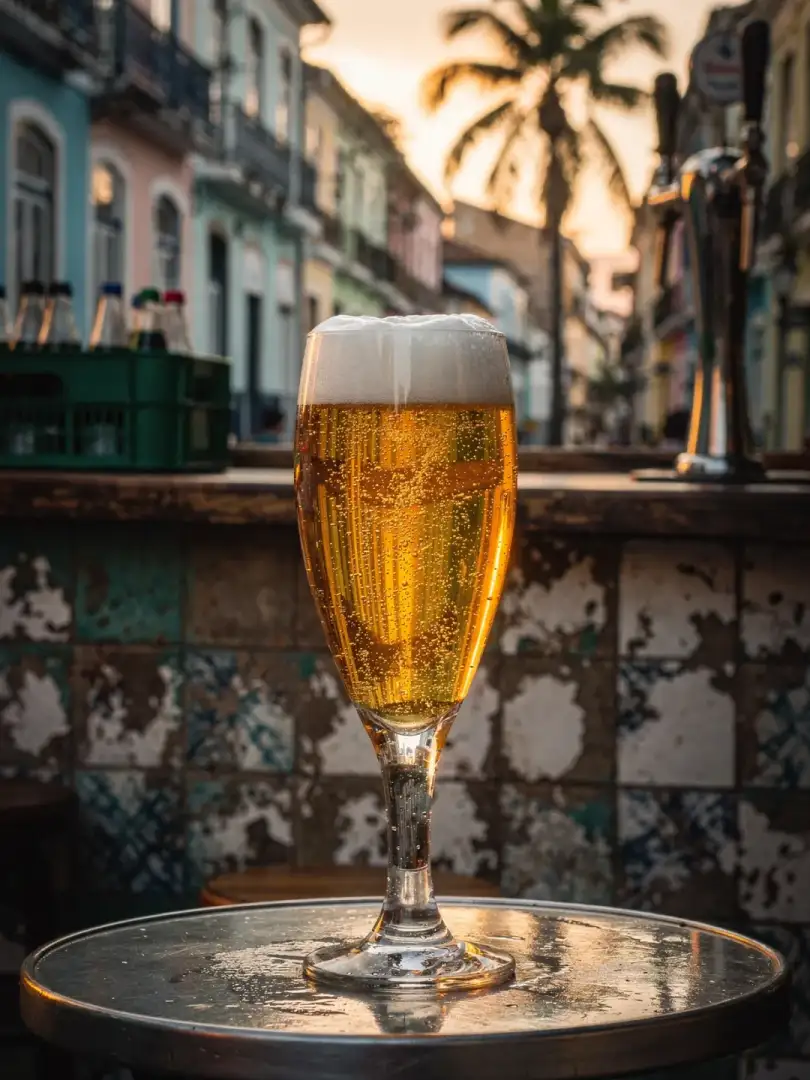
What is a chopp? In Rio, it's not a distinct beer style but a way of serving: a pale lager on draft, kept as close to zero degrees as possible, with a dense foam crown called colarinho, literally "collar." It usually means a beer from the big brands like Brahma, served in a small glass. Order a "chopp" and you'll get draft beer; say "cerveja" and you'll usually get a bottle or can.
What is a Pilsener, as Bohemia calls it? The name traces back to Pilsen, where the first pale bottom-fermented beer was brewed in 1842. In Brazil, "Pilsener" carries a broader meaning: it refers to a golden lager that's noticeably lighter and milder than a German pils or a Bohemian one.
The difference lies in bitterness and body. A German pils comes in at 22 to 40 IBU with a dry, bitter edge, while an international pale lager sits at 18 to 25 IBU and tastes gentler. Beer from Rio mostly belongs to the latter group, classified by style judges as International Pale Lager. Bohemia, at 5.0% ABV, sits between the two and leans slightly closer to German pils.
This suits the climate. Drinking in 35°C (95°F) heat calls for something lean that doesn't cling or linger. The chopp ritual is built around this too: icy, with foam that protects the beer from warmth and air, not just decoration. Let your chopp sit too long and you end up drinking a warm, flat beer—and that's exactly what nobody in Rio wants.
International Pale Lagerbottom-fermented
- Original gravity
- 10.5–12.4 °P
- Alcohol
- 4.5–6 % vol
- Bitterness
- 18–25 IBU
- Colour
- 4–12 EBC
Straw to golden, lean, light hopping, dry finish.