Barley and Adjuncts
Malt & Grain
Where does the barley for Chinese beer come from? Largely from abroad. China is considered the world's largest importer of brewing raw materials, and for barley, Australia was long the main supplier: before 2019, over 70 percent of imported barley came from there. Today Australia and Canada share the market; for the 2025/26 financial year, the industry cites 67 percent for Australia and the rest for Canada.
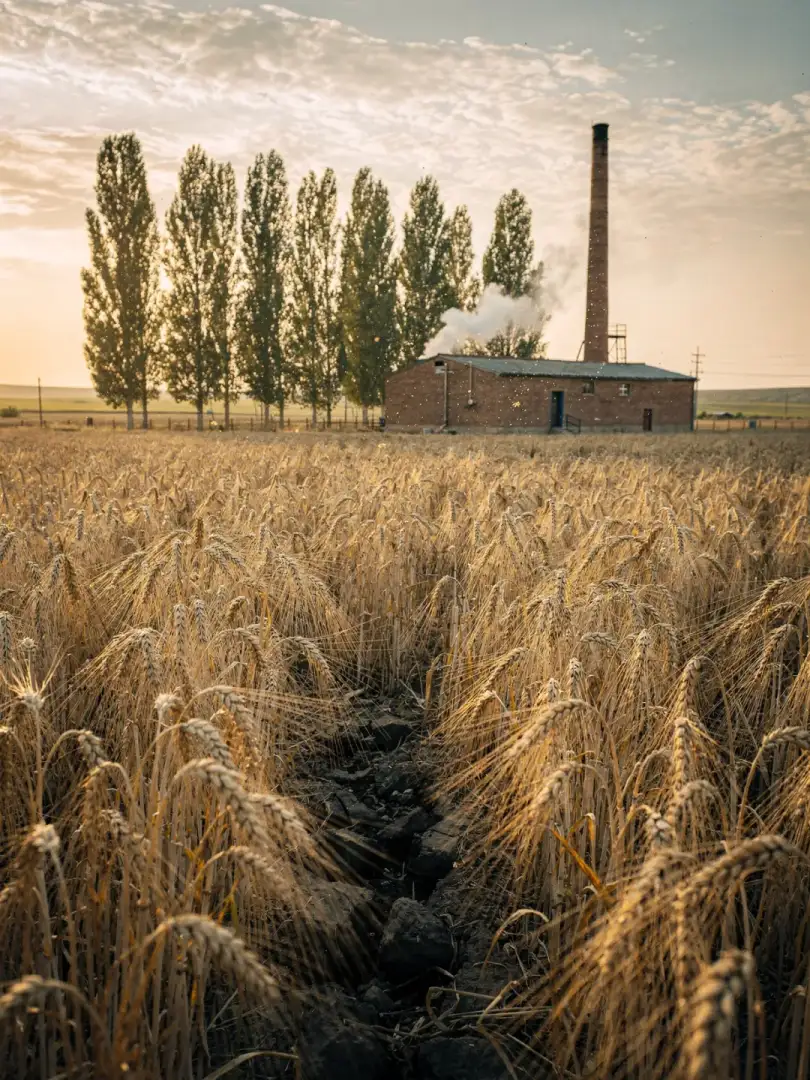
Within the country, brewing barley grows mainly in Xinjiang, Gansu and Inner Mongolia, sown in spring and harvested in summer. Brewers' demand exceeds the domestic harvest. That's why corporations seek partnerships with farming operations to breed and grow their own varieties.
Barley becomes malt by moistening the grains until they germinate, then drying and kilning them. Kilning, meaning drying with hot air, determines the color: for pale lagers, the malt stays light and tastes of bread and biscuit. For this region, that's the norm, roasted aromas have no place here.
Besides barley malt, adjuncts like rice or corn are common in Chinese lager beers. They make the beer lighter and drier and keep the color pale. The BJCP, the American guideline for beer styles, explicitly describes such international pale lagers as having a light body and restrained malt character.
Anyone drinking a Harbin Beer or a Snow therefore doesn't taste bold grain, but a smooth, mild malt note. That's not a weakness, it's exactly what this style demands: a beer that works in heat and cold, with food and after work.