Seidla, Stein, Zwickelhahn
Tasting
A fresh Kellerbier smells of bread crust and a touch of yeast; in the glass it appears pale to amber and lightly hazy. The first sip is soft, the carbonation gentle, the finish moderately bitter. Dark Kellerbier adds caramel, bread crust, and a touch of sweetness on top.
Four breweries serve as examples here: Brauhaus Höchstadt's Kellerbier, called Kellerberg; the Kellerbier 1747 Original from Brauerei Heller in Herzogenaurach; the beers of Brauerei Zwanzger in Uehlfeld; and the Privatbrauerei Hofmann in Gutenstetten. According to the brewery, Heller's Kellerbier won an award at the European BeerStar in 2016.
Besides pale and dark versions, Zwanzger also produces creative beers with honey, elderflower, or lemon balm, while Hofmann brews an India Pale Ale. These beers show that the country breweries can do more than Kellerbier, without neglecting it.
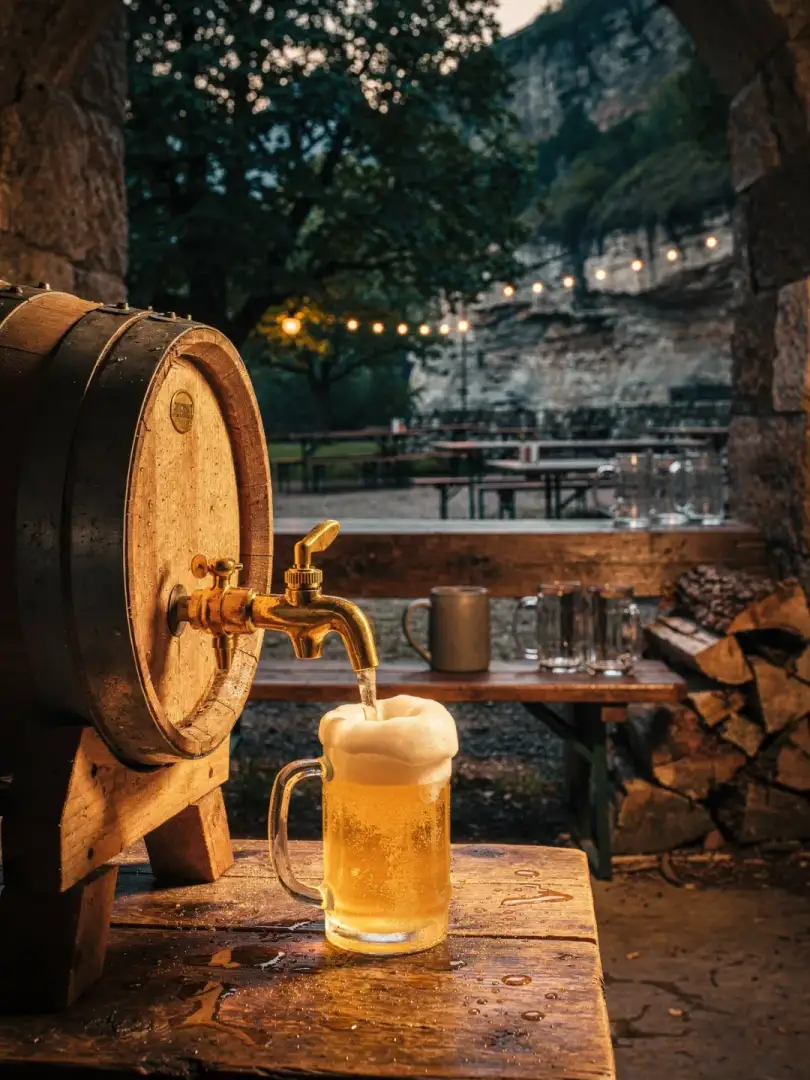
Traditionally it's served in a Seidla, a half-liter glass, or in a stone mug that helps keep the beer cool. The ideal serving temperature is around 7 to 9°C (45–48°F), cool but not ice-cold, otherwise the malt and yeast notes fade away.
It's usually poured straight from the cask, often without the tall head you'd expect from a Pils. The cask is tapped and the valve opened without added carbon dioxide pressure, and the glasses are filled calmly and evenly. A fine crown of foam is desirable; a towering one is not. Anyone trying a Kellerbier for the first time should drink it slowly and pay attention to the yeast: it gives the beer its full body, and in the dark version, its bread and caramel aroma.