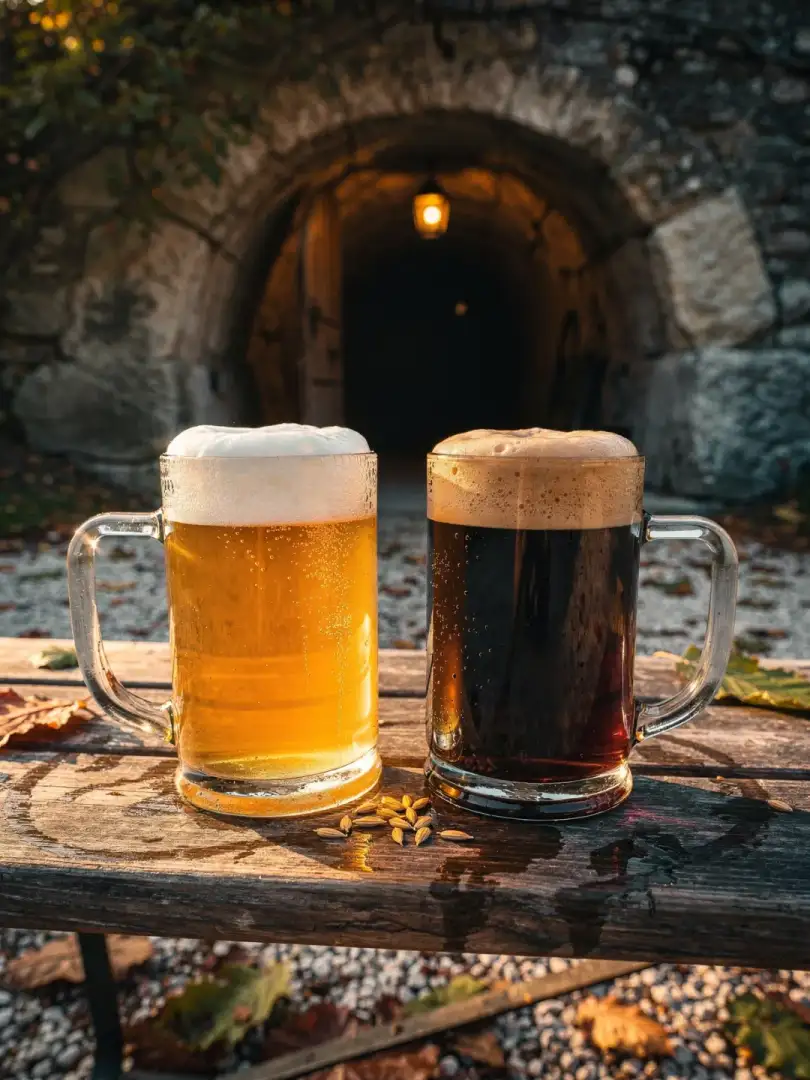
Kellerbier and Zwickel
Beer Styles
So what exactly is Kellerbier? It's not a style with its own set of specifications, but rather a way of serving beer: unfiltered, bottom-fermented, and fresh from the lagering cellar. The BJCP competition guidelines list it among the historical beers and require it to meet the specifications of its underlying base style, whether Helles, Märzen, Pils, or Dunkel.
How does Kellerbier differ from a Helles? In the recipe, often barely at all; in the glass, quite noticeably. The Helles is clear and effervescent, while the Kellerbier is hazy, softer, with more yeast character and a bread-crust note. And what's the difference from a Zwickel? Zwickel is the sample, Kellerbier the name used for sale, though today the two terms have largely blended together.
In the Aischgrund, Kellerbier comes in two colors. The pale version is golden to amber and mild, the dark one is chestnut brown with caramel and a light sweetness. Rotbier, well known in Nuremberg, plays no role here, and smoked beer remains firmly associated with neighboring Bamberg.
It's not true that cellar culture here is closely tied to any single brand. Brauhaus Höchstadt, Brauerei Heller with its Kellerbier 1747, and the small country breweries of the Steigerwald all pour their own Kellerbier, and each tastes a little different depending on malt, yeast, and lagering time.
Alcohol and strength: a pale Kellerbier usually sits at just under or around 5% ABV. Darker, noticeably stronger variants or a Bockbier are the exception and, under German beer regulations, must have an original gravity of at least 16%, meaning the sugar dissolved from the malt before fermentation.
Pale Kellerbierbottom-fermented
- Original gravity
- 11–11.9 °P
- Alcohol
- 4.7–5.4 % vol
- Bitterness
- 16–22 IBU
- Colour
- 6–10 EBC
Follows the specifications of Helles as its base style, but unfiltered, naturally hazy, bready, with low bitterness.