Open Vat
Yeast & Fermentation
In Swabia, yeast decides whether a beer tastes like a Weizen or a Lager. Weißbier is top-fermented: the yeast collects at the top during fermentation and works at around 18 to 24 degrees Celsius. This produces fruity esters and phenols reminiscent of banana and clove. Helles, by contrast, is bottom-fermented with lager yeast at noticeably cooler temperatures and therefore tastes clean and calm.
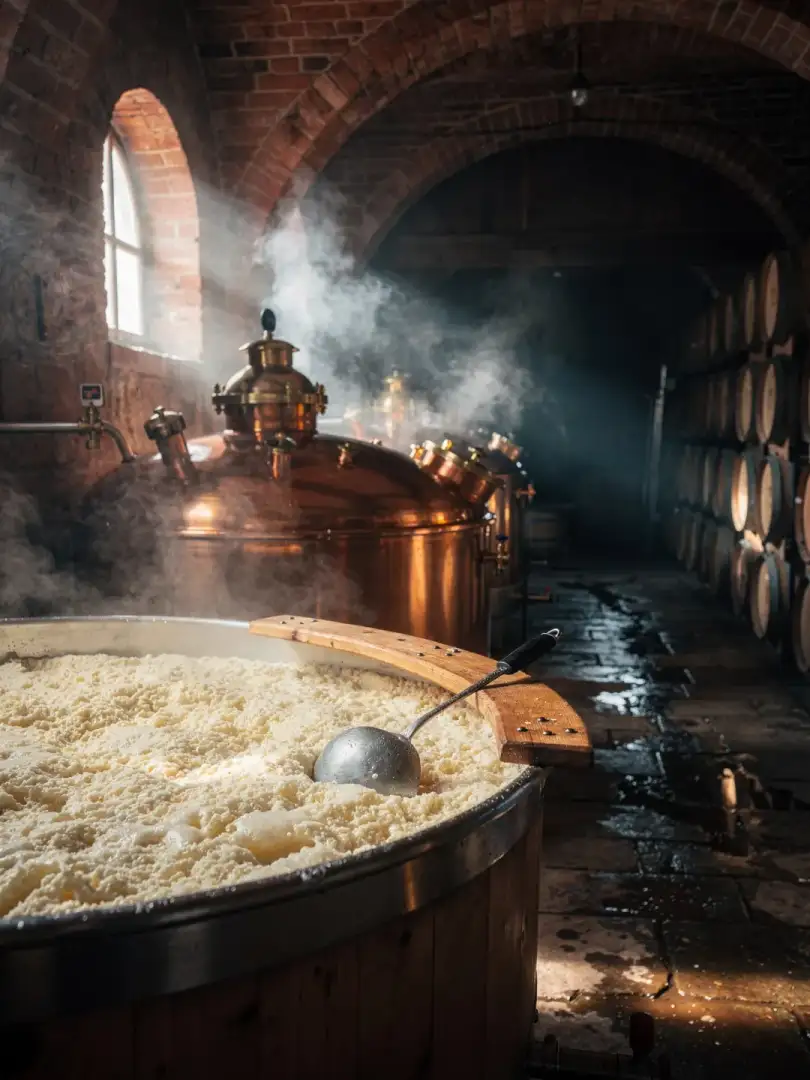
The Nördlinger Ries offers a vivid example of this. Maierbier, reportedly the smallest brewery in the Ries, ferments its pale Hefeweizen in an open vat. Excess yeast is skimmed off several times a day. The beer then matures in the bottle after filling, with the brewery describing this as following the example of the earliest Maier brewers.
Open fermentation has one drawback: foreign microbes can more easily get in, which is why it requires clean facilities and plenty of experience. On the plus side, the yeast rises visibly, and the brewer can judge the progress of fermentation by the foam. In large breweries today, beer usually ferments in closed tanks, since temperature and hygiene are easier to control there.
Bottle fermentation is its own subject when it comes to Weißbier. Before bottling, the finished beer gets a bit of fresh yeast or sugar, which continues working in the bottle and produces the carbonation. Hence the cloudiness: it consists of yeast that you deliberately drink along with the beer. Kristallweizen, by contrast, is a filtered Weißbier — clear, but without that soft fullness.
Helles, meanwhile, matures cold in the cellar for weeks after primary fermentation. During this time, yeast and sediment settle out, sulphur notes dissipate, and the flavor rounds out. Augsburg's breweries used to store their beer in cellars beneath the city, since it stayed cool there all year round. Today, refrigerated tanks take over this role.